6 07, 2025

Custom Aluminum Extrusions: Advancing Precision Manufacturing

2025-07-23T21:54:12+00:00July 6th, 2025|

A close-up view of a custom aluminum extrusion. The text on the left reads “Custom Aluminum Extrusions: Advancing Precision Manufacturing,” with Taber’s logo at the bottom.

Key Takeaways

  • Custom aluminum extrusion delivers precision, strength, and design flexibility across high-performance industries.
  • 6000 series aluminum alloys offer excellent extrudability, corrosion resistance, and structural integrity.
  • Advances in die design, automation, and additive manufacturing enhance efficiency and product complexity.
  • Extruded aluminum supports sustainability goals through recyclability and use in renewable energy and EV applications.

Custom aluminum extrusion is the modern evolution of a centuries-old practice — shaping metal through controlled heat and pressure to meet exacting standards. What began as a rudimentary technique is now a highly precise manufacturing method that produces lightweight, durable profiles for industries like aerospace, infrastructure, and electric vehicles. From streamlined designs to structural strength, extruded aluminum plays a critical role in advancing performance across sectors.

Materials Used in Custom Aluminum Extrusion

Different industries require specific mechanical properties, such as strength, flexibility, or corrosion resistance. The 6000 series alloys — especially 6061 and 6063 — are among the most commonly used due to their excellent extrudability, structural strength, and corrosion resistance. These alloys strike a balance that makes them ideal for applications in construction, automotive aluminum components, and industrial frameworks.

Core Manufacturing Process

  • Billet Preparation

The foundation of any successful aluminum extrusion lies in precise billet preparation. Aluminum alloy billets — cut to exact specifications — serve as the starting material. These billets are carefully heated to an optimal temperature range that allows for maximum plasticity without compromising mechanical strength. This process ensures the material flows efficiently during extrusion while maintaining structural integrity.

Throughout the preparation phase, billets undergo strict quality control to detect any inconsistencies in composition or dimensions. Even slight variations can affect extrusion performance and the final product’s reliability. Maintaining uniformity at this stage sets the tone for high-quality extruded aluminum profiles.

  • Die Design and Engineering

Die configuration plays a critical role in the custom aluminum extrusion process. Today’s engineers use advanced computer-aided design (CAD) systems to develop complex die geometries while predicting material flow under pressure. Through detailed flow simulations, they can strategically position bearing surfaces and feed ports to achieve even aluminum distribution.

Thermal management is another essential factor. By integrating heat-regulating features within the die, manufacturers maintain consistent temperatures during extrusion — ensuring uniform material flow, reduced defects, and a high-quality surface finish across all extruded aluminum profiles.

Extrusion Parameters in Custom Aluminum Extrusion

Precision control over key variables is essential to custom aluminum extrusion. Ram speed, typically between 5 and 100 mm/sec, must be adjusted based on alloy type and profile complexity. Container temperatures are held within ±5°F to preserve material quality and avoid defects.

Breakthrough pressure — usually ranging from 35 to 70 MPa — must be monitored closely to maintain consistent flow. Exit temperature control is equally critical, helping prevent surface imperfections and ensuring dimensional accuracy in the final extruded aluminum product.

What Are the Benefits?

  1. Strength-to-weight ratio: Tailored aluminum extrusions provide significant strength while maintaining a lightweight profile, making them perfect for situations where minimizing weight is crucial.
  2. Corrosion resistance: The natural oxide layer on aluminum provides inherent protection against corrosion, enhancing longevity.
  3. Thermal and electrical conductivity: Aluminum’s excellent conductivity makes extruded aluminum suitable for heat dissipation and electrical applications.
  4. Recyclability and sustainability: Aluminum is 100% recyclable without loss of properties, contributing to sustainable manufacturing practices.
A graphic illustration shows the lifecycle of an aluminum billet in the extrusion process. The stages include aluminum alloy chemistry, billet casting, aluminum extrusion process, delivery, use phase, and recycling.

Precision and Excellence

Delivering high-quality custom aluminum extrusions requires rigorous inspection at every stage. Dimensional accuracy, surface finish, and compliance with industry standards are closely monitored to ensure each product meets its intended performance criteria.

Developments in Extrusion Technology

Recent technological progress has improved the functionalities of custom aluminum extrusion:

  • Friction stir welding: This technology allows the joining of extruded aluminum components without melting the base material, resulting in superior weld strength.
  • Precision extrusions: These modern methods enable tighter tolerances and complex geometries, expanding the scope of aluminum extrusion applications.
  • Automation and industry 4.0: Integration of smart technologies, including sensors and real-time monitoring, ensures higher efficiency and precision in the aluminum extrusion process.

Global Market Overview

The market for custom aluminum extrusions continues to grow, driven by demand across key industries:

  • Market size: The automotive, construction, and electronics sectors will drive the global custom aluminum extrusion market to exceed $100 billion by 2027.
  • Industry demand and trends: The growing emphasis on lightweight materials, aluminum sustainability, and custom aluminum profiles has fueled innovation and demand in the extrusion market.
  • Regional trends: Asia-Pacific regions remain the largest market, with China accounting for a substantial share due to its robust manufacturing base.

Aluminum Extrusion in Sustainability and Environmental Impact

Custom aluminum extrusions align with the global shift towards sustainable practices. The process’s recycling capabilities make it environmentally friendly, with aluminum’s infinite recyclability reducing energy consumption and environmental impact. Notably, recycled aluminum requires only 5% of the energy used in primary production. Advances in extrusion technology further enhance energy efficiency by minimizing resource use while maintaining high performance.

Additionally, extruded aluminum profiles play a critical role in renewable energy projects, serving as essential components in solar panel frames and wind turbine systems.

Emerging Innovations in Custom Aluminum Extrusion

New technologies continue to expand the possibilities for custom aluminum extrusions:

  • Electric vehicles (EVs): Lightweight aluminum profiles improve range and efficiency by forming key structural and thermal systems in EV frames and battery enclosures.
  • Modular construction: Prefabricated, extruded aluminum components speed up construction timelines while supporting sustainability goals.
  • Additive manufacturing: 3D-printed dies and tooling enable faster turnaround, design flexibility, and reduced production lead times in the aluminum extrusion process.

Taber’s Leadership in Custom Aluminum Extrusion Technology

As custom aluminum extrusion evolves, Taber Extrusions remains a proven leader in the field. With decades of experience and advanced manufacturing capabilities, Taber applies deep technical expertise to optimize extrusion performance across industries.

Their commitment to quality is evident through robust control systems and ongoing process improvements. From aerospace and defense to infrastructure and energy, Taber delivers precision-engineered extrusion solutions tailored to meet the most demanding specifications — reinforcing its position at the forefront of the industry.

A promotional graphic for Taber Extrusions highlights their capabilities in the aluminum extrusion industry. It lists their partnership with National Material L.P., their diverse services including casting, extrusion, FSW, and value-added services, and their locations in Russellville, AR, and Gulfport, MS. The industries served include military & defense, guns & archery, aircraft & aerospace, naval marine, transportation, and architectural structures. The graphic includes the tagline “The Shape of Endless Possibilities” and features an illustration of various aluminum extrusions.

Take the Next Step in Precision Manufacturing

When precision matters, custom aluminum extrusion from Taber Extrusions delivers. With decades of experience and industry-leading capabilities, Taber’s technical team offers in-depth consultations to align extrusion design with exact application requirements. From complex geometries to high-performance alloys, Taber engineers develop optimized manufacturing solutions tailored to your most demanding projects.

Ready to get started?

Contact Taber Extrusions or fill out the form below to speak with an engineer and explore custom aluminum extrusion solutions built for your success.

Request A Quote

    CONTACT INFORMATION

    YOUR PROJECT NEEDS

    Please specify extrusion alloy and length below

    If you have design files for extrusion or FSW please upload below

    Excepted file formats: jpg, pdf, png.

    Please specify FSW alloy class, welding type and panel dimensions below.

    Alloy*

    Welding Type*

    Select Billet Size *

    6 01, 2025

    Not Just a New Year’s Resolution: Aluminum Extrusion Sustainability

    2025-06-16T14:08:22+00:00January 6th, 2025|

    Solar panels amongst greenery and trees with a city scape background. Taber’s logo and white text “Not Just a New Year’s Resolution: Aluminum Extrusion Sustainability” overlays the image.

    Is the concept of aluminum extrusion sustainability more than just a popular industry term? With the increasing emphasis on sustainability in global markets, the significance of aluminum extrusion in promoting sustainable practices has never been greater. This extends beyond just meeting environmental standards. It involves transforming how products are made, how resources are managed, and how industries adapt to the evolving demands for greener solutions. From automotive to renewable energy, construction, and more, aluminum extrusion offers a pathway to reducing carbon footprints and advancing sustainable development.

    This blog explores how aluminum extrusion contributes to sustainability. Utilizing aluminum reduces material usage, enhances energy efficiency, and creates recyclable products. Additionally, we will discuss the impact of supply chain management, including insights from a case study on sustainable practices from Taber Extrusions’ sister company, National Material Company (NMC). These factors illustrate how a holistic approach to aluminum extrusion can lead to a more sustainable future.

    Aluminum Extrusion: A Sustainable Material Solution

    Aluminum extrusion offers unique advantages when it comes to sustainability. The process of shaping aluminum alloy into profiles allows for the development of lightweight yet strong components. This makes it ideal for industries aiming to reduce material usage without sacrificing performance. This material solution is especially beneficial in applications requiring high-strength and durable products, such as aluminum for infrastructure, automotive, and renewable energy sectors.

    Industry-Wide Sustainability Initiatives

    The aluminum extrusion industry, led by organizations such as the Aluminum Extruders Council (AEC), actively promotes sustainability initiatives. These include energy-efficient production practices, widespread use of recycled materials, and industry-wide sustainability reporting through the Environmental Product Declaration (EPD). By participating in these programs, companies ensure that sustainability efforts extend beyond individual manufacturers and set industry standards for sustainable development.

    • Automotive Applications: Lightweighting for Efficiency

    In the automotive industry, aluminum extrusions have become indispensable for vehicle light-weighting initiatives to improve fuel efficiency and reduce emissions. Replacing traditional steel components with aluminum extrusion profiles significantly reduces weight and enhances overall vehicle performance. For instance, automotive aluminum is utilized in structural components like crash management systems, suspension parts, and battery housings for electric vehicles. This shift supports sustainability efforts and meets the stringent requirements of the advanced high-strength steel (AHSS) standards. Therefore, vehicles are ensured to maintain high safety and quality benchmarks.

    • Aluminum in Renewable Energy

    The development of sustainable products in the renewable energy sector heavily depends on aluminum extrusion. Solar panel frames, wind turbine components, and electric vehicle charging stations are examples of extruded aluminum being used to provide strength, resistance to corrosion, and a lower environmental footprint. By integrating aluminum into these applications, energy consumption during manufacturing and installation is significantly reduced. The entire process is then more eco-friendly. Moreover, aluminum’s recyclability is critical in minimizing waste and supporting a circular economy.

    • Expanding the Reach: Industries Served by Aluminum Extrusion

    Beyond automotive and renewable energy, aluminum extrusions are crucial in aerospace, defense, and marine engineering industries. For example, aluminum’s lightweight and high-strength properties in aerospace applications contribute to improved fuel efficiency and load capacity. In the defense sector, extruded aluminum is used in protective structures and components for military vehicles to ensure high performance and durability. Also, the marine industry utilizes aluminum for shipbuilding, where its corrosion resistance enhances longevity in harsh environments.

    Recyclability and the Circular Economy

    Aluminum is inherently sustainable due to its recyclability. Approximately 75% of all aluminum produced is still in use, showcasing its long-lasting value and efficiency. Recycling aluminum requires just 5% of the energy needed for primary production, which dramatically lowers the carbon footprint. This closed-loop approach ensures that the environmental benefits of aluminum extrusion are maximized across industries. Incorporating recycled content into the extrusion process further reduces the environmental impact and makes aluminum a key player in the global shift towards a circular economy.

    Research published in environmental science journals has shown that recycling aluminum results in significantly lower energy consumption than other metals, such as steel or copper. One study suggests that the process of recycling aluminum consumes just 5% of the energy needed for initial manufacturing. Thereby, this backs up broader initiatives to decrease industrial greenhouse gas emissions and preserve natural resources.

    The Role of Responsible Sourcing and Supply Chain Management

    Aluminum extrusion in sustainability extends to responsible sourcing practices and efficient supply chain management. Companies that prioritize sourcing ethically produced aluminum contribute to the broader industry initiative of transparent and accountable supply chains. This approach aligns with AEC’s EPD, which establishes uniform sustainability metrics across the industry and enables companies to achieve higher sustainability standards.

    Case Study: National Material Company (NMC) and Supply Chain Transparency

    A critical aspect of achieving sustainable aluminum extrusion is optimizing the supply chain to reduce waste and emissions. As detailed in a case study involving NMC, the integration of transparent supply chain practices was essential for addressing a customer’s request for a comprehensive global steel and aluminum parts supply chain footprint. The complexity of this task required NMC to analyze both direct and indirect emissions, as well as logistical processes. The company employed systematic approaches following GHG Protocol standards to accurately calculate emissions intensity based on the volume of metals processed.

    NMC’s experience highlights the importance of transparency in metal procurement, logistics, and processing to minimize embedded emissions. By collaborating with partners like Greenway Steel, NMC successfully demonstrates how thorough supply chain transparency can facilitate more efficient decarbonization efforts, ultimately paving the way for future sustainability targets in the metals industry.

    Partner with Taber Extrusions for Your Aluminum Extrusion Sustainability

    Taber Extrusions is a leader in the aluminum extrusion industry known for its commitment to sustainable manufacturing and product innovation. It serves industries including automotive, infrastructure, defense, and renewable energy with tailored aluminum extrusion solutions that adhere to the highest industry standards and focus on quality and environmental accountability. Offering vertically integrated services that encompass everything from billet casting to advanced machining, Taber’s facilities are equipped to handle the most demanding requirements.

    A technician wearing a hard hat, face shield, and protective gear, operating a liquid aluminum refining system (LARS).

    The company’s comprehensive approach to aluminum sustainability ensures that its processes meet and exceed regulatory standards. By continually seeking ways to enhance resource efficiency and reduce environmental impacts, Taber reinforces its position as a trusted partner for businesses looking to adopt more sustainable practices. Their dedication to sustainability extends to innovative design solutions and collaboration across industries to drive the next generation of green technology.

    Contact Taber today to learn how their solutions can help achieve your company’s aluminum extrusion sustainability objectives.

    About Aluminum Extrusion Sustainability Leader—Taber Extrusions

    Since 1973, Taber Extrusions has been a leader in the aluminum extrusion industry, renowned for innovation, quality, and exceptional service. As the only company in North America with a rectangular container, Taber can produce super-wide shapes and complex multi-void hollows, setting it apart in the market.

    Serving diverse industries such as aerospace, defense, infrastructure, and renewable energy, Taber combines technical expertise with a commitment to environmental responsibility. Headquartered in Russellville, Arkansas, with a regional sales office in Gulfport, Mississippi, Taber is dedicated to advancing aluminum extrusion sustainability and efficiency.

    Taber offers customized solutions that adhere to the highest industry standards, emphasizing quality and environmental stewardship. Their vertically integrated services—from billet casting to advanced machining—ensure superior products for any project.

    Partner with Taber Extrusions to create innovative and sustainable solutions for your next project.

    Taber follow us icon

    Follow Us On Social Media!

    1 02, 2020

    Aluminum Extrusion Leader Taber Extrusions Looks Ahead

    2020-02-01T20:39:14+00:00February 1st, 2020|

    “2020” written in shiny, silver-colored metal – with the inverted gold Taber Extrusions logo positioned underneath.

    As Taber Extrusions launches into 2020, we thought we’d take a look back at the last several years and the many ways Taber has progressed within the aluminum extrusion industry. Among many changes, Taber added an upgraded casthouse, expanded into micro extrusions; received various awards, began friction stir welding, and brought on a new business director. This has been a very exciting time, and we invite you to learn more about the innovations that are shaping endless possibilities in 2020 and beyond.

    Aluminum Casthouse

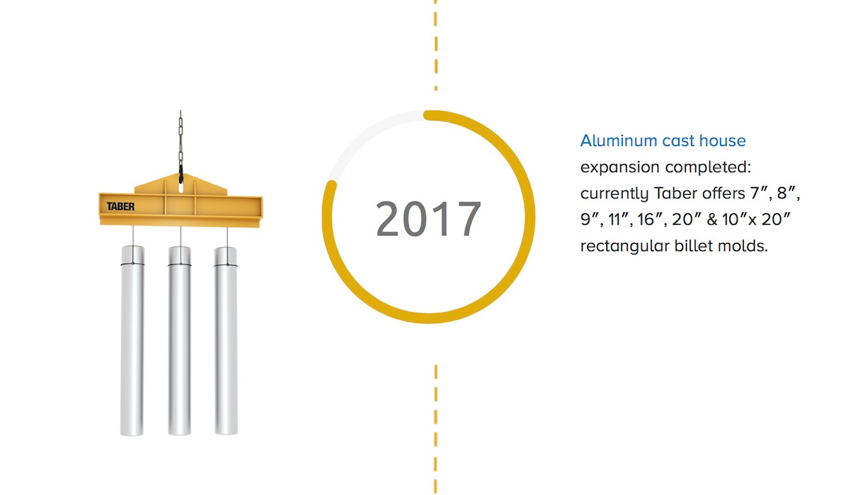
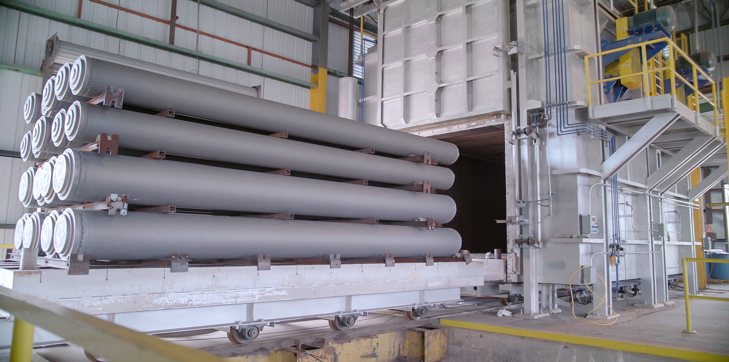
    Not long ago in 2017, Taber upgraded to their aluminum casthouse in Gulfport, MS. which integrates casting, extrusion, and in-house fabrication services. With this upgrade, Taber opened up opportunities in a variety of markets, with the sale of cast billet to outside extruders.  With this casthouse, Taber is targeting aerospace, automotive, and defense industries, all of which utilize aluminum at an accelerated rate. Taber’s new products are suitable for current and future U.S. infrastructure projects, such as the construction and improvement of bridges, decking, flooring, and railing for mass transportation projects.

    A 3D rendering of a yellow aluminum billet crane suspending 3 freshly casted shiny silver billets. Beside the image it reads: “currently Taber offers 7″, 8″, 9″, 11″, 16″, 20″ & 10″x 20″ rectangular billet molds.”

    Partnering with Almex USA, Taber developed a customized solution to meet Taber’s unique requirements and specifications. Almex supplied new equipment, including a casting line with a degassing and melt purification system, billet and slab tooling, automation technology, and a complete homogenizing line, as well as a new cooling water system.

    Benefits to Taber’s aluminum casthouse upgrade:

    • Increased Production. The CASTRIGHT II™ casting machine and new billet and slab tooling stations were adapted to fit the circular pit, and the casting tables were modified to have an oval shape with unique headbase configurations. Excel™ and Optima™ billet mold systems were installed for various sized billets. The quantity of billet produced with each cast has been enlarged, allowing increased production per drop.
    • Quality Control. A large part of Taber’s consideration during this upgrade was quality control. Taber now has a level pour (or, hot-top) mold table distribution system and a way to optimize mold lengths for consistent billet quality. Taber’s goal was safety and alloy versatility for high performance and yield, from conventional to the most demanding alloys. For the larger diameter aerospace grade products, Almex installed specialized water wiping technology in order to manufacture difficult to cast materials without the formation of stresses or cracks. With the new casting line, Taber increased monitoring and automation, and now has computer control of all critical casting and degassing parameters. Operators now interact with the system through an integrated SCADA control panel installed on the plant floor in order to monitor the correct mixture of several ingredients that make up the casting recipe. At the end of each cast, the system automatically generates a complete report of the heat number for reference and archival by quality control personnel. With this new system, Taber has not only achieved a greater level of quality control, but process transparency and product traceability.
    • Accuracy and Precision. An internally guided and double acting platen cylinder was installed, which has more loading capacity, guiding accuracy, and precision speed control (needed for hard alloys).
    • Consistency and Strength. The new casting line also includes a LARS® in-line degassing and purification system that refines and cleans the melt prior to casting. The LARS system mixes inert argon gas and a halogen gas into the molten aluminum through Almex’s patented in-situ gas preheating disperser system. This significantly reduces hydrogen and other impurities commonly found in liquid aluminum, including inclusions, nitrides, oxides, and alkali metals and also increases recovery through a minimal amount of dross creation. This high quality of the molten metal is, thus, dependably strong and consistent.
    • Environmentally Friendly. Taber rebuilt and integrated its water management system, which provides increased visibility of the water flow, temperature, quality, and maintenance. Water is discharged in a safe and controlled manner.

    16 fresh aluminum billets atop Taber’s casting table engineered to fit the existing circular casting pit.

    Ultra Precision® Extrusions

    In 2018, Taber added micro extrusion capabilities into their portfolio. Micro-extrusions are used in a number of industries, such as electronics, aerospace, medical, industrial, and military. The addition of small precision profiles will allow Taber to better serve existing customers and future partners such as – defense contractors, commercial aerospace engineers, and electronics designers.

    A 3D rendering of am 8-inch ruler with a variety of micro extrusion shapes fitting elegantly inside roughly a 1-inch white square, and the words “The Shape of Endless Possibilities, Ultra Precision® Extrusions, Taber”

    The micro-extrusion manufacturing lines have a production envelope with a circle size of 3 inches or less and a weight per foot of 1 lb. or less. Unlike traditional extrusion presses, these micro-extrusion presses are built in such a way to allow for the production of extrusions with wall thicknesses of 0.010 inches and tolerance capabilities of +/- 0.001 inches. This allows designers and engineers the freedom to engineer profiles that are impossible to extrude through conventional presses.

    The addition of  ultra precision® extrusions allows the company to enhance its business to provide a wider range of profile sizes and competencies which blend beautifully with the various sectors already being served by Taber.

    2018 NMLP Safety Award

    Taber Extrusions took home National Material L.P.’s 2018 Safety Excellence Award for exceptional safety management at their Russellville, Arkansas facility.

    Russellville Plant Manager Gavin Butterworth, Taber President Eric Angermeier, and Gulfport Plant Manager Mike Keenan standing with the NMLP Safety Award trophy during the 2018 holiday party.

    Taber’s safety management system includes:

    • Perpetual assessment & evaluation of existing safety policies
    • Process & workflow analysis
    • Establishment of safety work procedures
    • Safety training & meetings
    • Safety inspections
    • Maintenance regimens of plants, equipment, and processes
    • Identification of hazards & hazard analysis
    • Facilitation of occupational health programs
    • Emergency preparedness
    • Documentation control & management reviews

    2019 Taber Extrusions Recognized by Russellville for Energy Savings Excellence

    Taber Extrusions employees stand alongside Entergy and CLEAResult personnel in front of the Taber sign at their Russellville location. They are holding an extra-large check for $31,748 – representing Taber’s energy savings.

    Taber Extrusions created a plan to reduce power consumption by implementing energy efficient measures while participating in the Entergy Arkansas Energy Solutions Program assisted by CLEAResult consulting company.

    “I couldn’t be happier to assist Arkansas businesses reduce their power consumption by energy efficient measures. Every project that CLEAResult assists a customer with is a positive step in their energy reduction,” says Taylor Dumas, West Regional Account Manager at Entergy Arkansas Energy Solutions Program. “The Taber Extrusions project is one that greatly reduced power consumption, increases machine efficiency, and makes Taber Extrusions a ‘greener’ business by completing this project.”

    Taber’s commitment to energy savings still holds strong as they push forward into the future, making environmental accountability part of their company culture.

    Friction Stir Welding Technology

    In 2019, Taber  installed a new friction stir welding (FSW) line at its Russellville, Arkansas, manufacturing facility. Sometimes described as more of a forging process than actual welding – FSWis a solid-state joining technique used to join metals not easily fused with traditional welding. It is used in the aerospace, rail, automotive, marine, transportation, and other industries that use metals such as aluminum, copper and other metal alloys. The new FSW line that welds large, double-sided thick profiles, uses minimal cycles of the machine, which make it both efficient and precise. FSW also makes possible very high-quality welds with minimal distortion.

    The addition of friction stir welding illustrates how Taber has proven itself to be dedicated to the technological advances in the industry, economic development, and job production. The line enables the company to be a vertically integrated supplier of FSW panels and assemblies in North America, with capabilities including aluminum extrusions, fabrication, billet casting, and micro-extrusions.

    Already known for their wide range of capabilities, both broad and unique, the mayor of Russellville, Richard Harris, thanked Taber for choosing Russellville as their location, “The fact that you chose to expand and add new technology here is the highest compliment you can give the city and citizens where you live and work. Economic development and job creation is one of our top priorities. We congratulate Taber on this advancement.”

    Jeffrey Bladow: Director of New Business Development

    Photographic portrait of Jeffrey Bladow, Director of New Business Development, Taber Extrusions

    Taber’s rapid growth initiated the presence of Jeffrey Bladow, the company’s recently appointed Director of New Business Development. Hired to help lead business growth and assist in building strategy, Bladow has spent over 25 years in automotive design and manufacturing. He also has experience in structure design, high strength steel applications, and the launch of large capital projects. Like Taber, Bladow is comfortable solving multi-faceted problems. In his management style, Bladow encourages “critical thinking, continuous improvement, and a no-fear approach to growing and entering new markets.”  Taber feels lucky to have Jeffrey Bladow ushering us into a new decade.

    At Taber we believe the possibilities are endless.  We believe in the future.

    About Taber:

    Founded in 1973, Taber Extrusions originally pioneered a process for extruding rectangular billet which enables the company to extrude solid profiles up to 31 inches wide or hollows up to 29 inches. Taber expanded with the purchase of an extrusion facility in Gulfport, MS., in 1995 which houses a cast house and two additional presses, and multiple expansions of value added fabrication services. Taber continues to extrude billet in a wide range of alloys and sizes, including 7″billet molds, and has diversified its markets beyond military since its inception to include aerospace, automotive, marine, infrastructure, and sporting goods, among many others. For these markets, the company supplies extruded products in a variety of soft and hard alloys. In 2018, Taber added ultra-precision extrusions to their capabilities allowing them to further serve customers in electronics, computer, and medical industries. Today Taber is proud to announce yet another exciting launch into friction stir welding. Call us at (888) 984-9866, or request a quote today!

    15 01, 2020

    Joining Aluminum Extrusions Through Friction Stir Welding

    2020-01-15T19:32:51+00:00January 15th, 2020|

    Dramatic in-flight photo of two F-22 Raptor military aircraft speed through the sky on a clear day.

    What is Friction Stir Welding?


    Friction stir welding is the method of joining two pieces of metal with no extra filler or material by subjecting the components to heavy plastic deformation, at elevated temperatures, that are still lower than the melting point. A rotating tool is thrusted between the components and, as friction heat is generated, the tool produces a severe plastic deformation under high pressure, at which time the weld interfaces are stirred together, and a homogenous structure is formed, creating a defect-free bond.

    Why Friction Stir Welding?

    FSW is a method of welding that is being used as an alternative method to fusion welding and other types of arc welding.

    FSW vs. Fusion Welding  –  FSW offers three key benefits over fusion welding: metallurgical, environmental, and energy. The metallurgical benefits include: low distortion of workpiece (fine      microstructure, absence of cracking), good dimensional stability, and no loss of alloying elements. The environmental benefits include: no shielding gas required, no surface cleaning required, elimination of solvents required for degreasing, and consumable materials savings.  The energy benefits include: improved material use (joining different thickness), only 2.5% of energy needed for a laser weld, and decreased fuel consumption in light     weight, automotive, and ship applications. FSW is then, specifically because of its environmental and energy benefits, a more cost-effective method of welding. It is also a more economical choice due to low set up and training costs.

    Close angle of a shiny drill-like instrument, also known as a friction stir welder cone.

    FSW vs. Other Types of Arc Welding  –  The joining of aluminum extrusions in friction stir welding is a process that can be easily automated, making it an ideal solution for industrial use in manufacturing services such as the marine, aerospace, automotive, transportation, and rail industries. FSW welds have effectively been used in the marine industries in the fish freezer panels of ships, on the deck panels of helicopter landing platforms on ships, and it has been used in various amphibious assault ships. In aerospace, FSW has been used for structures such as the fuselage, fins, and wings that require high-strength aluminum alloys. In the automotive industries, FSW is used for aluminum engine cradles and suspension struts, as well as rear seats and exhaust gas recirculation coolers. The railway industry has utilized FSW to make roof and floor panels, as well as heat sinks for cooling the high-power electronics of locomotives.

    An aerial view of an amphibious assault ship with a landing and launchpad for fighter jets on the ocean.

    In military and defense, aluminum alloys are used as armor due to the combination of high ballistic performance and static strength that traditionally use MIG, gas metal arc, and tungsten arc welding. The reasons for the transition to FSW over the aforementioned arc welds are many — MIG welds cause stress corrosion at the weld toe, exfoliation occurring in the solution treatment, low ductility in butt welds, and liquidation due to the formation of low-melting point grain boundary. FSW welds are also more likely to pass the ballistic shock test.

    Why FSW at Taber? New Aluminum Joining Techniques at Taber


    In April of 2019, Taber Extrusions of Russellville, AR and Gulfport, MS announced the addition of Friction Stir Welding, “FSW,” capabilities to our existing portfolio which currently includes aluminum extrusions, fabrication, billet casting, and micro-extrusions. With the addition of in-house FSW capabilities, Taber is now a vertically integrated supplier of FSW panels and assemblies.

    Taber’s engineering and manufacturing teams collaborated with Bond Technologies to create a custom Linear Seam machine. Taber’s new FSW machine is capable of welding large, double-sided thick profiles with minimal cycles of the machine; less cycles means greater efficiency and more precise results.


    Taber offers quality custom extrusion design and advanced microextrusion capabilities and we are committed to providing our clients durable products that are both ecologically sound and cost effective. We chose FSW as a high-tech, alternative method to ensure a fast turn-around time, thereby reducing time to market.

    About Taber:

    Founded in 1973, Taber Extrusions originally pioneered a process for extruding rectangular billet which enables the company to extrude solid profiles up to 31 inches wide or hollows up to 29 inches. Taber expanded with the purchase of an extrusion facility in Gulfport, MS., in 1995 which houses a cast house and two additional presses, and multiple expansions of value added fabrication services.

    Taber continues to extrude billet in a wide range of alloys and sizes, including 7″billet molds, and has diversified its markets beyond military since its inception to include aerospace, automotive, marine, infrastructure, and sporting goods, among many others. For these markets, the company supplies extruded products in a variety of soft and hard alloys. In 2018, Taber added ultra-precision extrusions to their capabilities allowing them to further serve customers in electronics, computer, and medical industries. Today Taber is proud to announce yet another exciting launch into Friction Stir Welding.

    15 05, 2017

    Extruded Aluminum in High Demand, Expected to Grow, Says Market Reports

    2017-07-26T17:48:05+00:00May 15th, 2017|

    extruded aluminum

    According to a recent compilation from Research and Markets supported by a variety of other reports, extruded aluminum are on the upswing, which is great news for the aluminum industry. The primary force behind the projected growth is the automotive sector – in which aluminum –extruded products are desirable in the manufacturing of light-weight, high-strength products.

    “The global market for extruded aluminum is projected to grow from USD 34.48 billion in 2016 to reach USD 47.61 billion by 2021, at an estimated CAGR of 6.67%.” Says the recent report. In addition to the auto industry, “the market for aluminum-extruded products is also being driven by the growing demand in industries such as construction, aerospace & defense, and mass transport in both, developed and developing countries.”

    However, the quickest growing segment of extruded aluminum products are the mill-finished products. Their high performance in extreme conditions makes mill-finished products favorable in machinery and equipment, construction, and automotive.

    For more aluminum extrusion news, interesting stories, and Taber culture, visit the blog section of our website – or if you are interested in contacting us directly please e-mail info@taberextrusions.com or call us at 888-985-4913.

    27 01, 2017

    2016 Was A Great Year for Aluminum Markets

    2017-07-26T17:50:06+00:00January 27th, 2017|

    2016 was certainly an interesting year; between Brexit and the enormously capricious U.S Presidential election, a lot of folks in many industries of the world found it hard to shake uncertainty in their trust in market stability.

    Despite the overall negativity that seems to be extra pervasive as of late, the aluminum market has reason to remain optimistic- as 2016 showed consistent positive growth in all areas of the aluminum sector with aluminum prices rising by 15% over the course of the year, with 2017 showing no sign of slowing progress.

    Since Donald Trump’s win in the American presidential election, a variety of commodities have experienced a surge in price and overall positive market sentiment, aluminum included, with prices nearly breaching the $1,800 price level.

    There are a few key factors here that have effected aluminum prices. First, following Chinese curtailments in the 3rd quarter of the year, alumina appears to be inching towards a supply deficit. In addition, higher coal prices have also propped up aluminum’s market price. The cost curve for global aluminum shifted upward steadily after the 1st quarter, when China’s aluminum production slowed.

    And the overall positive trends are showing no signs of stopping going into 2017.

    Back in December 2016 the U.S Federal Reserve hiked the interest rate by 0.25%- a move which would seem to indicate that they believe in the overall world economy strengthening, with anticipation for more rate hikes in 2017. US aluminum demand could potentially be impacted by this hike. As the U.S dollar becomes a stronger currency, commodities tend to drop in price; but a stronger dollar also makes American aluminum costlier in foreign countries.

    Furthermore, President Donald Trump’s proposed infrastructure investments could mean a lot of business for industries like steel and aluminum- as investments in bridges, highways, and power grids could boost the demand for extruded aluminum. Of course, it’s hard to tell whether or not all or any of these projects will pass through.

    Taber Extrusions is looking forward to another year and another opportunity to prove that we have the broadest capabilities in the aluminum extrusion industry and aluminum fabrications services that are second to none. Are you ready to make 2017 another great success?

    For more information or to request a quote, please call us today ay (800) 563-6853 or e-mail us at info@taberextrusions.com

    12 01, 2017

    How Extruded Aluminum Saved the Canoe

    2017-01-26T23:37:27+00:00January 12th, 2017|

    canoe-1668538_960_720The canoe is one of the oldest seafaring vessels in human history, but did you know that its history is inextricably linked with that of the American aluminum industry? Without innovations in extruded aluminum shapes, we might not have the modern canoe we know and love today. It all started after World War II, when the U.S. had been producing record amounts of extruded aluminum for the war effort. After the need for automotive and aerospace parts began to lessen, manufacturers and extruders needed to come up with a new use for the material. Enter: the humble canoe.

    Nowadays we think of aluminum as a common metal with many household and recreation applications, including but not limited to water sports. However, because aluminum is not a naturally occurring resource but an alloy made up of multiple elements, there was time before the 1940s when finding the right applications and demand for aluminum shapes was a tricky proposition. World War II changed the U.S. economy and workforce forever by employing millions of recession-stricken Americans for primarily manufacturing-based jobs to aid in the war effort. One such employer was called Grunman, a major supplier of aluminum aircraft for allied forces. After the war, Grunman needed to find a way to stay in business while providing extruded aluminum shapes for the public at large. One of Grunman’s employees, an avid outdoorsman, first came up with the idea of an aluminum canoe after struggling with his traditional canvas and wood constructed model. Aluminum, he proposed, would be significantly lighter, watertight, and easy to manufacture using Grunman’s advance techniques gleaned from extruding military aircraft parts. The gamble paid off, and the canoes quickly became Grunman’s most popular product.

    Today aluminum is still one of the most commonly found materials for personal watercraft, and Taber is proud to contribute to this legacy of innovation, ingenuity, and American manufacturing. Visit our site here to learn about some of the other industries we serve besides marine; including automotive, aerospace, and agricultural markets. No matter how unique your idea, Taber’s team of metallurgists and engineers are ready to make it a reality. Get in touch today!

    Go to Top