3 04, 2026

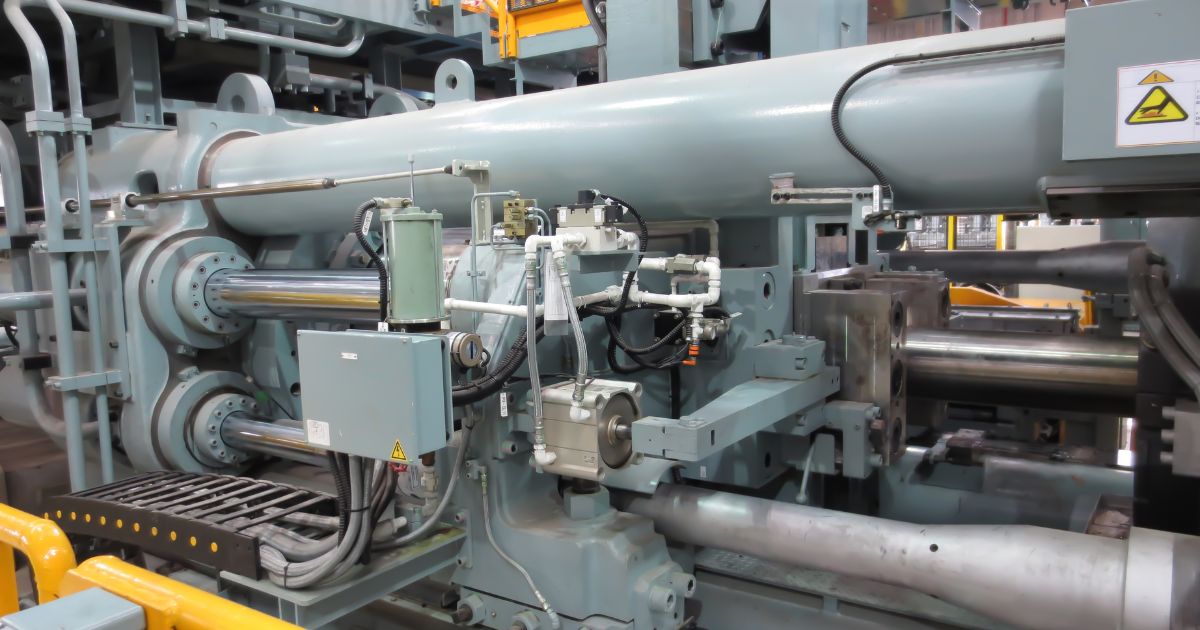
Inside the 10,000-ton Press Driving the Future of Aluminum Extrusion Profiles

2026-04-03T03:29:36+00:00April 3rd, 2026|

Digital circuitry background with icons of an airplane, naval ship, and excavator representing aerospace, marine, and heavy industrial aluminum extrusion applications.

Key Takeaways:

  • Engineering teams often face design limitations when sourcing large aluminum extrusion profiles, forcing compromises like welded assemblies, added weight, and increased failure points.
  • A 10,000-ton aluminum extrusion press removes these constraints, enabling larger, more complex, and monolithic profiles with tighter tolerances and improved structural performance
  • By combining high-tonnage extrusion with integrated fabrication, manufacturers can reduce assembly, accelerate production timelines, and deliver consistent, high-performance components for aerospace, defense, and heavy industry.

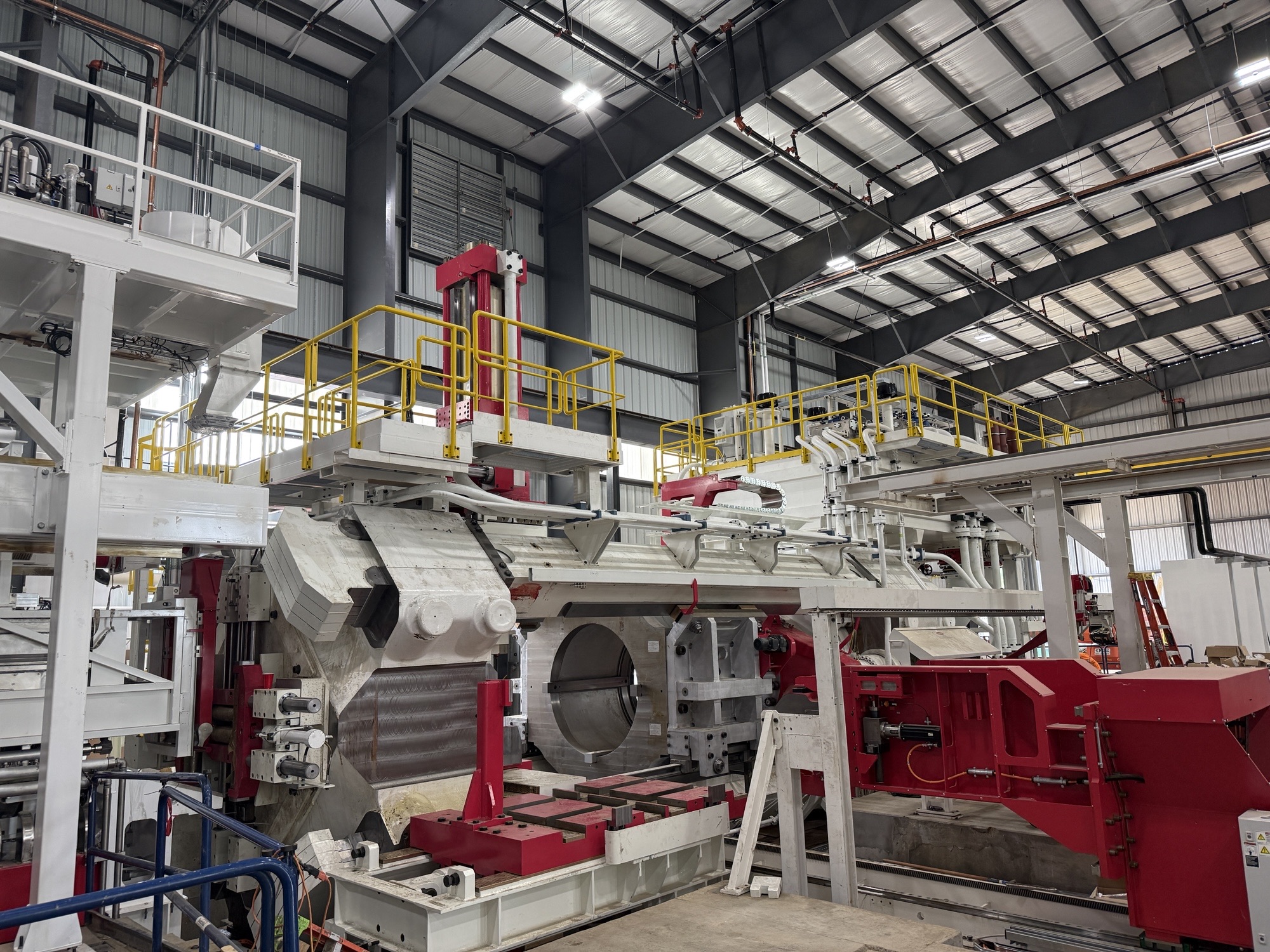
Aluminum extrusion profiles are redefining what is possible in modern aerospace, defense, and heavy industry manufacturing. Demand for integrated, monolithic structures now exceeds traditional fabrication limits. As a result, extrusion capability and available press force have become critical constraints. High-performance profiles require immense power and complex tooling; however, a 10,000-ton direct press changes the equation. Operating at unprecedented scale, it enables wider cross-sections, tighter tolerances, and the precise forming of hard alloys once considered impractical. Moreover, higher tonnage improves grain structure reliability, bridging the gap between ambitious design and manufacturable reality.

Why Press Size Matters for Aluminum Extrusion Profiles

Aluminum extrusion relies on controlled deformation. Billet temperature, alloy chemistry, die design, and press force determine final profile quality. When press capacity is limited, compromises such as thicker walls, segmented assemblies, secondary weldments, and longer lead times are often introduced.

A 10,000-ton press removes many of these constraints. Larger cross-sections can be produced, and tighter dimensional control is maintained. In addition, metal flow is kept uniform across wide or complex profiles. This capability is essential in aerospace manufacturing, where long structural members reduce fasteners and failure points. Likewise, in defense manufacturing, strength-to-weight ratios and repeatability must be achieved without variation.

Other advantages include more refined grain structure due to the higher force, as well as improved mechanical consistency. For heavy industry applications such as cranes, transportation infrastructure, and energy systems, fewer joints and simpler assemblies are realized. Therefore, lifecycle performance is enhanced. Press manufacturers such as SMS group design these systems for reliability and automation at extreme tonnage, so consistent production at scale can be sustained. These advantages aren’t just theoretical; they directly expand what engineers can design and manufacture.

Large Aluminum Extrusion Profiles: What Becomes Possible at 10,000 Tons

At 10,000 tons of force, aluminum extrusion profiles move beyond traditional size and complexity limits. Larger cross-sections, wider circumscribing circles, and tighter tolerances become achievable in a single pass, even with high-strength alloys like 2024 and 7075. This enables engineers to replace multi-part assemblies with monolithic components, reducing welds, minimizing failure points, and improving overall structural performance in demanding aerospace, defense, and heavy industrial applications.

The Physics of Force: Hard Alloys and Complex Geometries

Now, the primary challenge in high-performance extrusion is flow stress. Soft alloys like 6063 flow easily through dies. However, hard alloys used in aerospace manufacturing (such as 2024 and 7075) exhibit significant resistance. These materials exhibit high flow stress values, requiring high specific pressure to achieve plastic deformation without tearing or surface defects.

A 10,000-ton press provides the necessary specific pressure to push these “stiff” alloys through complex dies at reasonable speeds. This capability is distinct from simple tonnage since it relates to the container size and the reduction ratio. With a 10,000-ton force applied to a standard 16-inch billet, the specific pressure on the dummy block increases dramatically, optimizing the physics of the extrusion cycle.

This high-pressure environment yields two specific engineering benefits:

  1. Refined grain structure: Higher pressure promotes complete recrystallization during extrusion. This creates a uniform grain structure from the front to the back of the profile. In defense manufacturing, this consistency is critical for ballistic and structural integrity.
  2. Wider circle sizes: The combination of high force and large billet containers enables profiles with circles up to 20 inches or wider. This enables designers to create single-piece bulkheads, floor beams, or vehicle chassis components that previously required welding multiple smaller extrusions together.
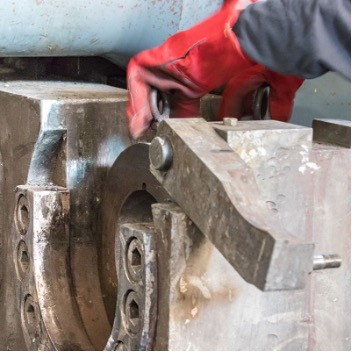
An operator with safety gloves places a profile die inside an aluminum extrusion press

For the engineer, this eliminates the heat-affected zones (HAZ) associated with welding. The fatigue points inherent in mechanical fasteners are also removed. The result? A monolithic component with superior fatigue life and load-bearing capacity.

What a 10,000-ton Press Enables in Practice

The operation of North America’s largest aluminum extrusion press relies on control at scale. Modern 10,000-ton systems integrate advanced automation and closed-loop controls. Such systems maintain consistency from the first billet to the last. This level of precision is essential when producing the largest aluminum profiles for regulated industries.

State-of-the-art press lines prioritize reliability and expand the design envelope, allowing engineers to focus on performance rather than manufacturing constraints.

Specifically, for the aerospace and defense industry, domestic access to this extrusion capacity is critical. Proximity supports program stability and compliance, while also ensuring long-term sustainment. This availability aligns with broader U.S. industrial base priorities emphasizing resilient, onshore manufacturing.

Applying These Capabilities: From Concept to Fabrication

Advanced extrusion profiles create the most value when backed by strong fabrication expertise. Complex profiles often require precision machining, controlled heat treatment, and carefully managed finishing to protect structural integrity. When extrusion and fabrication are integrated, large profiles move efficiently from the press to the final component without unnecessary delays or risk.

An end-to-end approach becomes even more important as part sizes increase and tolerances tighten. Handling is minimized, feedback loops are shortened, and qualification timelines move faster. Furthermore, this integration supports faster qualification for demanding applications.

Bridging the Capability Gap

Only a select number of facilities operate at the scale required to produce the largest aluminum extrusion profiles in North America. Even fewer combine that level of press capacity with the fabrication expertise needed to support aerospace, defense, and heavy industrial applications.

A graphic of the Taber Extrusions with the title, "Something is Coming" and a black cover concealing the state-of-the-art press line

For engineering teams, early validation is critical. Reviewing real-world extrusion examples and feasibility data can help prevent costly redesigns and ensure that complex geometries remain manufacturable at scale.

As profile size and complexity increase, the difference between concept and execution often comes down to access to high-tonnage extrusion and integrated downstream capabilities. With the right extrusion partner, complex structural designs become scalable, manufacturable solutions.

Push past design limits with extrusion power built for scale. Fill out the form below to partner with Taber Extrusions and bring your most demanding structural components to life.

Request A Quote

    CONTACT INFORMATION

    YOUR PROJECT NEEDS

    Please specify extrusion alloy and length below

    If you have design files for extrusion or FSW please upload below

    Excepted file formats: jpg, pdf, png.

    Please specify FSW alloy class, welding type and panel dimensions below.

    Alloy*

    Welding Type*

    Select Billet Size *

    ANY CUI OR FCI DATA IS STRICTLY PROHIBITED FROM BEING UPLOADED DIRECTLY THROUGH THIS FORM. IF YOU NEED TO SHARE ANY SENSITIVE DATA PLEASE CONTACT A TABER SALES TEAM MEMBER AND THEY WILL PROVIDE A SECURE METHOD OF SHARING ANY SENSITIVE INFORMATION.

    16 03, 2026

    Ultra-Precision Extrusions for Aerospace Equals Lightweight Precision at Scale

    2026-03-17T15:49:34+00:00March 16th, 2026|

    Close-up of a plane wing in the sky with aluminum extrusion profiles aligned to a ruler, highlighting ultra-precision, scalable, lightweight aerospace manufacturing.

    Key Takeaways:

    • Interface control is a critical challenge in aerospace design. Weight must be reduced without sacrificing structural integrity, and uncontrolled interfaces often lead to fit issues, rework, and schedule delays.
    • Ultra-precision extrusions consolidate complexity into a single profile. Tight tolerances, thin walls, and integrated features reduce part count, minimize interfaces, and improve repeatability at scale.
    • Find ultra-precision capability with production-ready consistency. A vertically integrated process, tight tolerance control, and aerospace alloy expertise enable fully qualified components, not just raw profiles.

    Ultra precision extrusions are increasingly specified for aerospace applications as a definitive solution to the ongoing challenge of interface control. In this sector, mass reduction is continually required, yet structural integrity cannot be compromised. As a result, greater design emphasis is being placed on aerospace aluminum extrusion for components that must remain lightweight, repeatable, and production-ready. Discover how Ultra-Precision Extrusions® differ from conventional processes and where they are applied across structural, system, and electronic use cases. Additionally, critical manufacturing specifications are reviewed to help minimize part count, reduce interfaces, and prevent late-stage production issues.

    Defining the Difference: Ultra-Precision Extrusions® in Aerospace

    This manufacturing category occupies a distinct niche, as the process is engineered to exceed standard “near-net” definitions. Rather than relying on multiple machined features and complex assemblies, critical geometry is maintained within a single, continuous profile over its full length. Consequently, when tolerance failures occur in flight hardware production, the cost extends well beyond immediate scrap. Downstream effects are often triggered, including fit issues, rework, nonconformances, and schedule disruption.

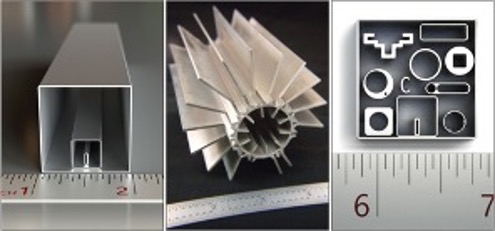
    Within high-performance aerospace programs, strict “key characteristics” are therefore prioritized to govern assembly function, including datum surfaces, mating grooves, thin-wall channels, and alignment features. To support these requirements, Ultra-Precision Extrusions® are produced in profiles fitting within a 3-inch circle, with minimum wall thicknesses of 0.010 inches and standard tolerances of ±0.003 inches. Moreover, key characteristic tolerances as tight as ±0.001 inches and surface finishes of 32 RMS or better can be achieved. These capabilities define a class of aerospace components that demand high repeatability without reliance on extensive post-machining. Critical features must be inspectable using intended metrology (CMM access, optical, probes) without fixturing that distorts thin walls. Neglecting this step often results in parts that are manufacturable but difficult to measure accurately at production rates.

    To leverage these capabilities, engineers must address two primary realities:

    • Design for verification: Critical features must be inspectable using intended metrology (CMM access, optical, probes) without fixturing that distorts thin walls. Neglecting this step often results in parts that are manufacturable but difficult to measure accurately at production rates.
    • Functional subsystem integration: This approach aligns lightweight aerospace materials with manufacturing efficiency. Thin-wall channels function as structural ribs, cable guides, fluid passages, or thermal paths within a single profile. Correct implementation reduces part count and minimizes interface risks.

    For additional background on how precision extrusion programs are framed, review current standards for Ultra Precision aluminum extrusions and discussions on custom aluminum extrusions in precision manufacturing.

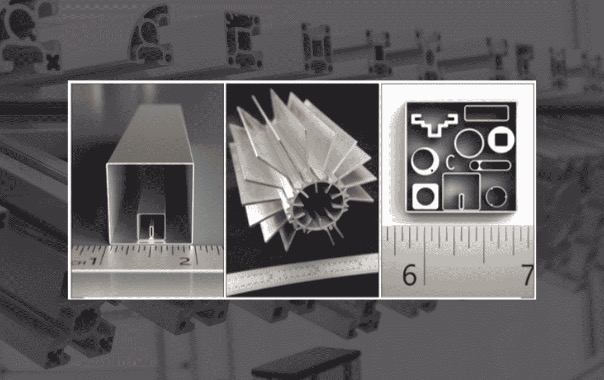
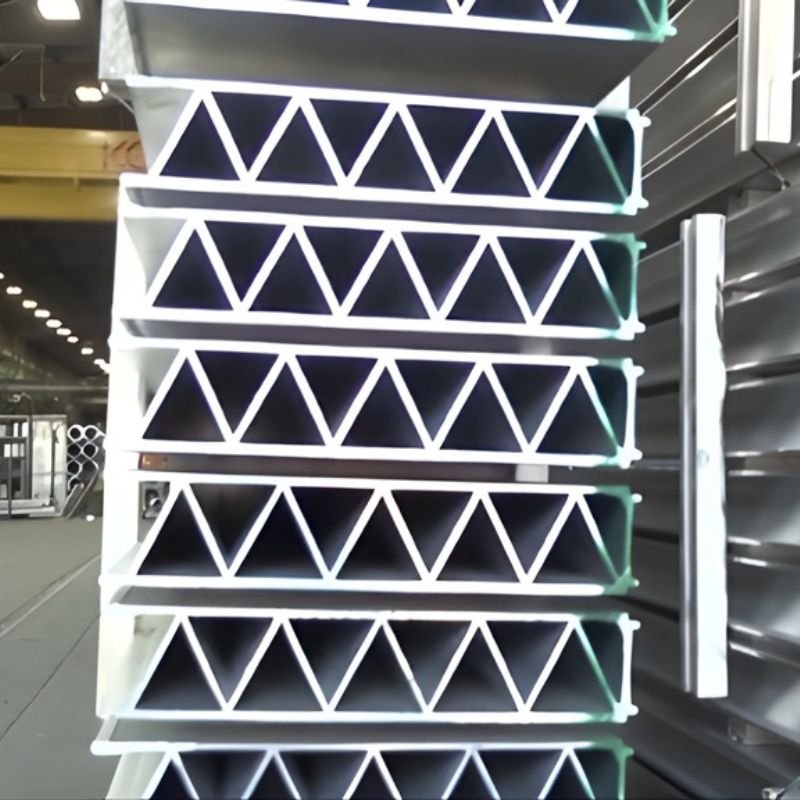
    Three aluminum extrusion profiles shown with rulers for scale, highlighting complex hollow, finned, and multi-shape designs achievable with ultra-precision extrusions.

    Where Ultra-Precision Extrusions® Deliver Leverage in Aerospace: Structures, Systems, and Electronics

    • Structural components (aircraft and space)

    Aerospace aluminum extrusion technologies are widely applied in programs requiring lightweight, stiff geometries with stable interfaces maintained over long lengths. Components such as rails, frames, stiffeners, brackets, and sub-structure elements are commonly produced to align precisely with fasteners, skins, or composite interfaces. Beyond initial fit, fatigue and damage tolerance requirements place added pressure on geometry control and repeatability. Compliance must be demonstrated over the component’s service life, not just at first article. Accordingly, guidance such as FAA AC 23-13A underscores how structural evaluation is directly linked to long-term durability expectations.

    • Specialized system components (missiles, UAVs, aircraft subsystems)

    In this category, extrusion processes are often leveraged to mitigate packaging and integration risk. Many aerospace “systems” parts present dense design challenges, including actuator housings, sensor mounts, guides, retainers, frames, and protective channels that must endure vibration and thermal cycling while maintaining tight alignment. Through ultra-precision profiles, multiple machined pieces and brackets are consolidated into a single geometry. As a result, fastener counts are reduced and variability in assembly torque is minimized. With rising demand across defense programs such as hypersonic weapons and space systems, schedule pressure and domestic sourcing constraints further elevate the value of a scalable, consolidated process.

    • Electronics and thermal applications (spacecraft and avionics)

    Electronics packaging introduces additional requirements for dimensional control and thermal management. Precision extrusions are therefore selected for housings, rails, and heat-sink geometries where channel consistency directly affects airflow, conduction paths, and assembly fit. To support these designs, material properties must be defensible and well-documented. References such as NIST material data provide a credible foundation for evaluating the thermal and physical characteristics of common alloys, including 6061-T6, which is widely used in structural and thermal aerospace applications.


    Across all three use cases, corrosion control remains a practical requirement for aluminum systems operating in demanding service environments. Guidance such as FAA AC 43-4B informs how operators and MRO organizations approach corrosion prevention. In turn, these expectations shape coating selection, surface treatments, and finishing strategies during the design phase.

    Taber Extrusions: Ultra-Precision Capability at Production Scale

    When an aerospace engineering team specifies complex micro-geometries, the critical inquiry is rarely regarding simple feasibility. Rather, the focus is on whether the supplier can consistently maintain key characteristics, validate compliance, and sustain delivery schedules during production ramp-up.

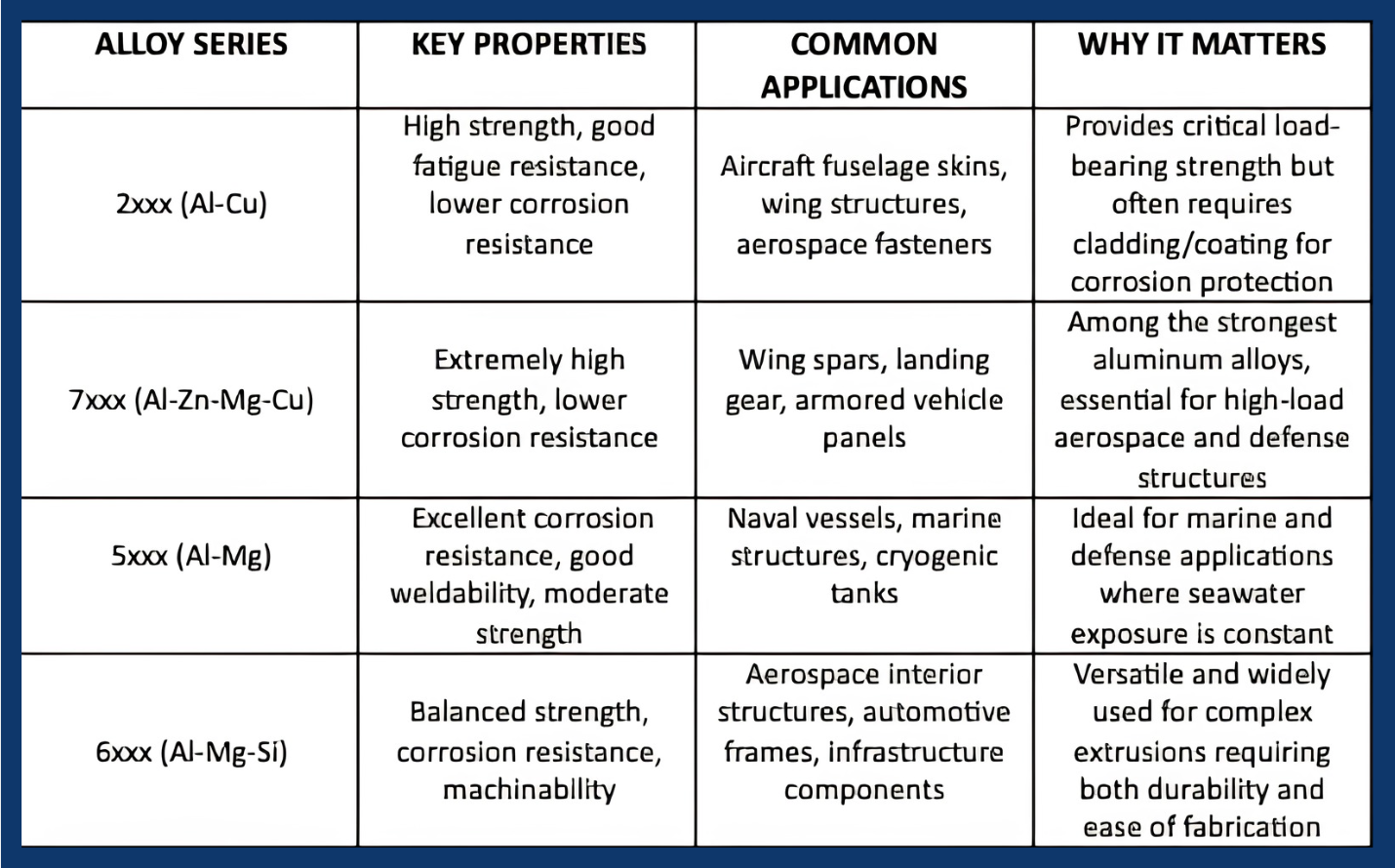
    Taber Extrusions’ Ultra-Precision Extrusions® capability is purpose-built for micro-extrusion programs requiring tight tolerances and thin-wall geometries. To support early design planning, concrete capability markers, such as minimum wall thickness and key characteristic tolerances, are published within the company’s corporate brochure. In addition, comprehensive alloy family support across the 2xxx, 5xxx, 6xxx, and 7xxx series is outlined. A vertically integrated manufacturing model is also maintained, extending beyond extrusion into fabrication and machining. As a result, fully qualified components can be delivered when program requirements extend beyond a raw profile.

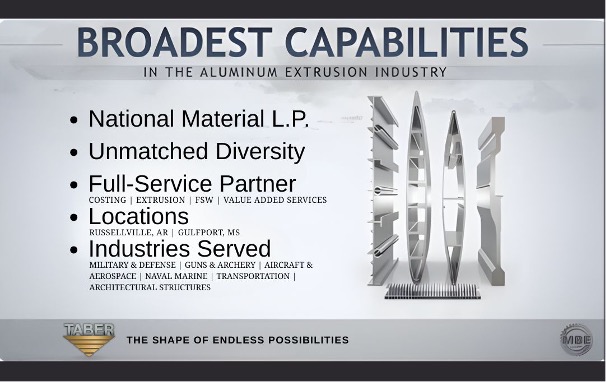
    A promotional slide features the NMLP logo and highlights aluminum extrusion capabilities across multiple industries, including aerospace and defense. The layout emphasizes ultra-precision extrusions as part of a full-service offering that includes casting, friction stir welding, and value-added services.

    For evaluators assessing potential fit, Taber provides detailed context on the industries it serves, along with specific resources for ultra precision aluminum extrusions and custom extrusion processes.

    Download the capabilities overview to use as a Request for Quote (RFQ) or Design for Manufacturing (DFM) checklist: Taber Extrusions corporate brochure (PDF). If a program requires high-performance aerospace parts where weight optimization, interface control, and repeatability are mandatory, early engagement is critical.

    Review geometry, key characteristics, and inspection strategies before design freeze to mitigate downstream costs. Fill out the form below to contact Taber today!

    Request A Quote

      CONTACT INFORMATION

      YOUR PROJECT NEEDS

      Please specify extrusion alloy and length below

      If you have design files for extrusion or FSW please upload below

      Excepted file formats: jpg, pdf, png.

      Please specify FSW alloy class, welding type and panel dimensions below.

      Alloy*

      Welding Type*

      Select Billet Size *

      ANY CUI OR FCI DATA IS STRICTLY PROHIBITED FROM BEING UPLOADED DIRECTLY THROUGH THIS FORM. IF YOU NEED TO SHARE ANY SENSITIVE DATA PLEASE CONTACT A TABER SALES TEAM MEMBER AND THEY WILL PROVIDE A SECURE METHOD OF SHARING ANY SENSITIVE INFORMATION.

      8 03, 2026

      How Large Aluminum Extrusions Support Military, Naval, and Government Infrastructure Projects

      2026-03-08T23:37:16+00:00March 8th, 2026|

      A naval vessel with metal structural components to show the use of large aluminum extrusions in military and government infrastructure projects.

      Key Takeaways:

      • Large structural aluminum extrusions improve durability and readiness by reducing welds, minimizing fatigue points, and enhancing corrosion resistance in defense and naval applications.
      • Press size and container capacity determine feasibility, enabling wide, thick-wall profiles that eliminate multi-part assemblies and improve structural continuity.
      • Compliance, traceability, and domestic production are critical, as government infrastructure programs require controlled metallurgy, documentation, and supply chain resilience.

      Large aluminum extrusions support defense, naval, and government infrastructure programs that operate under heavy loads and harsh environments. Over long service cycles, structural reliability must be maintained. These extrusions combine mechanical strength with corrosion resistance in a manufacturable form. However, extrusion size, wall thickness, and production capacity must align with military and naval requirements. As a result, press capability and profile scale directly influence structural performance and mission readiness.

      Why Structural Aluminum Extrusions Matter in Defense and Government Infrastructure

      Structural aluminum profiles are essential in defense manufacturing, reducing part count and eliminating unnecessary welds. Consolidation improves structural continuity and enhances fatigue performance, critical for armored vehicles and modular defense facilities.

      Moreover, corrosion resistance is crucial for naval aluminum extrusions and coastal installations. Long-term resistance to saltwater and atmospheric exposure is provided by commonly used aluminum alloys. Standards for naval engineering emphasize corrosion control, and maintenance cycles and fleet readiness are directly affected by material durability, as noted in the U.S. Government Shipbuilding Industry report.

      Aluminum’s role in defense is also codified in federal policy. Extrusions are identified as essential to military systems and industrial resilience in the Federal Register report on aluminum imports, and domestic production capacity is highlighted in the Department of Defense’s FY20 Industrial Capabilities Report. Integrated features, such as mounting channels and load paths, are built into structural profiles. In response, reliability is increased, fabrication complexity is reduced, and government contract requirements for consistency and traceability are met.

      Thick-Wall and Wide Structural Aluminum Profiles in Critical Applications

      Thick-wall aluminum extrusions are needed when stiffness and load-bearing capacity must be achieved without secondary reinforcement. Defense platforms and infrastructure systems face dynamic loads and thermal cycling. Using thick-wall profiles ensures dimensional stability is maintained.

      Similarly, wide-profile aluminum extrusions provide large-scale structural support. In shipbuilding, broad sections allow continuous deck beams and superstructure components to be produced with fewer joints. Assembly is streamlined, improving structural continuity and reducing maintenance risk. Material continuity is emphasized in government shipbuilding standards, especially for vessels with long service lives.

      Research on alloys such as 6061 shows that properly processed extrusions retain mechanical integrity under demanding conditions. In fact, a peer-reviewed study confirmed that performance is maintained even under environmental stress. Consequently, wide aluminum profiles combine structural reliability with manufacturability, reducing lifecycle costs for infrastructure and marine applications.

      Why Press Size and Container Capacity Define Infrastructure Readiness

      Only select extrusion facilities can produce structural aluminum profiles at infrastructure scale. Press size and container capacity set the limits for maximum profile width and alloy consistency in a single extrusion.

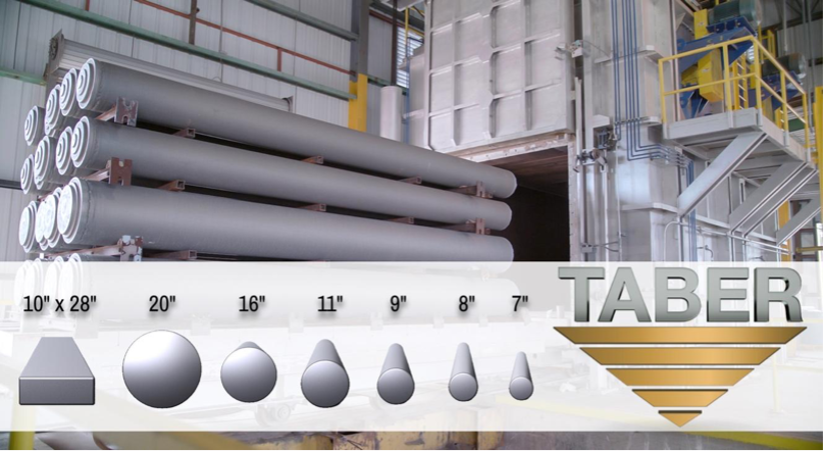
      For example, a 16-inch press with 20-inch and 28-inch containers allows wide structural members and thick-wall profiles to be produced. These dimensions often exceed standard commercial equipment limits. Without sufficient press tonnage, multi-part assemblies must be used, which adds fabrication steps and raises quality risks. Structural-scale extrusion, however, ensures members are dimensionally stable as-extruded.

      Additionally, when paired with integrated aluminum fabrication services, extrusions become complete systems. Advanced joining techniques, such as friction stir welding, are employed to create high-strength joints that surpass traditional fusion welding. In many defense applications, performance advantages of these methods have been documented in industry publications.

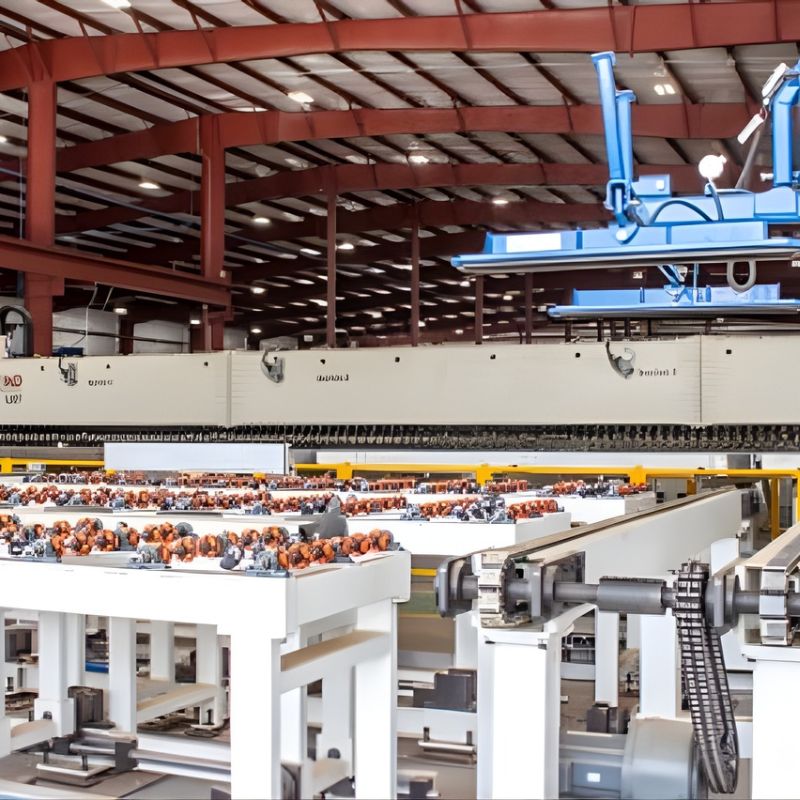
      Friction stir welding equipment on an industrial floor processing large aluminum extrusions for defense and marine applications.

      Compliance, Traceability, and Domestic Manufacturing Alignment

      Aluminum extrusions for government contracts must comply with strict standards for material traceability and domestic sourcing. For structural-scale profiles, process control becomes even more critical, and profile size and mechanical consistency must be maintained across heavy cross-sections.

      Congressional reporting on the defense industrial base highlight aluminum extrusions as a key element of domestic manufacturing. National security relies on manufacturers capable of delivering precision-engineered components within U.S. borders.

      Therefore, procurement professionals should assess extrusion size capabilities and integrated production systems, including billet casting and quality management. Suppliers that control the full production chain help minimize supply risks for long-term government infrastructure programs.

      What Infrastructure Buyers Should Evaluate

      When sourcing large aluminum extrusions for military, naval, or government infrastructure applications, decision-makers should assess:

      • Maximum press size and container capacity.
      • Ability to produce thick-wall aluminum extrusions.
      • Alloy range and metallurgical control.
      • Integrated aluminum fabrication services.
      • Experience with defense and infrastructure programs.
      • Compliance with government contract documentation standards.

      These criteria define manufacturing capability and long-term infrastructure performance.

      Why Taber Extrusions Fits These Requirements

      Where does Taber Extrusions fit in? The company supports defense and government infrastructure programs by producing structural aluminum extrusions at its Russellville, Arkansas facility. Equipped with 16-inch press capacity and 20-inch and 28-inch containers, the operation can produce wide sections and thick-walled components that meet infrastructure-scale requirements.

      Taber operates an integrated production platform that features an aluminum casthouse, extrusion operations, and friction-stir welding capabilities. Vertical integration supports alloy control and compliance documentation across defense aluminum manufacturing programs.

      Stakeholders can review Taber’s full capabilities overview to understand available extrusion sizes and alloys: https://taberextrusions.com/taber-extrusions-capabilities/

      Looking for large aluminum extrusions built for government, military, or marine applications? Work with an extrusion partner equipped to handle wide profiles, thick walls, and demanding compliance requirements without compromising precision or delivery.

      Fill out the form below to get started with Taber Extrusions.

      Request A Quote

        CONTACT INFORMATION

        YOUR PROJECT NEEDS

        Please specify extrusion alloy and length below

        If you have design files for extrusion or FSW please upload below

        Excepted file formats: jpg, pdf, png.

        Please specify FSW alloy class, welding type and panel dimensions below.

        Alloy*

        Welding Type*

        Select Billet Size *

        ANY CUI OR FCI DATA IS STRICTLY PROHIBITED FROM BEING UPLOADED DIRECTLY THROUGH THIS FORM. IF YOU NEED TO SHARE ANY SENSITIVE DATA PLEASE CONTACT A TABER SALES TEAM MEMBER AND THEY WILL PROVIDE A SECURE METHOD OF SHARING ANY SENSITIVE INFORMATION.

        25 02, 2026

        Taber Extrusions Media Coverage: Featured by the Chamber of Commerce

        2026-02-25T17:31:14+00:00February 25th, 2026|

        Taber Extrusions is proud to be recognized for its contributions to the industry and community. President Chuck Stout was recently featured by the Russellville Area Chamber of Commerce, highlighting our commitment to quality, innovation, and local business leadership. Below is the Chamber’s feature post highlighting this coverage.

        Taber Extrusions featured by Russellville Chamber of Commerce Facebook post

        Featured by the Russellville Area Chamber of Commerce

        Taber Extrusions is proud to share a recent interview featuring our President, Chuck Stout, conducted by the Russellville Area Chamber of Commerce. In this conversation, Chuck discusses Taber’s continued investment in Russellville, Arkansas. In addition, he mentions the company’s focus on large aluminum extrusions, and the strategic decision to expand operations with the addition of a 10,000-ton, 16-inch extrusion press.
        During the interview, Chuck highlights how Taber identified a growing demand for large, complex profiles and recognized an opportunity to strengthen domestic supply. After evaluating multiple locations for expansion, the company ultimately chose to remain in Russellville due to its pro-business environment. Furthermore, Russellville also has strong community support, and access to a reliable and upskill-ready workforce.

        He also emphasizes the collaborative support Taber has received from local and state leadership, educational institutions, and community partners. From workforce development to infrastructure coordination, the Russellville community has consistently demonstrated a shared commitment to industrial growth and high-quality job creation.

        Beyond business considerations, Chuck reflects on the personal impact of living and working in Russellville. Having lived in many places throughout his military and professional career, he notes that the community’s welcoming culture, especially its acceptance and support for families, including those with special needs, has made a lasting impression.

        As Taber Extrusions continues to expand its capabilities and serve industries requiring large-scale, high-performance aluminum extrusions, Russellville remains a critical part of that growth story.

        Taber follow us icon

        Follow Us On Social Media!

        17 02, 2026

        When Medical Meets Military Needs, Microextrusions Matter

        2026-02-24T22:57:54+00:00February 17th, 2026|

        Promotional graphic featuring metal microextrusions as a textured backdrop, overlaid with icons representing medical and military sectors.

        Key Takeaways:

        • Miniaturization and mobility demand uncompromising performance. Medical and defense applications require ultra-precise, lightweight components that can withstand extreme conditions without sacrificing reliability.
        • Microextrusions solve the strength-to-size challenge. Precision profiles made from defense-grade aluminum and high-strength alloys deliver the rigidity, durability, and tight tolerances needed in mission-critical environments.
        • Taber delivers compliant, high precision microextrusion solutions. With decades of experience and full vertical integration, Taber supports both sectors with traceable materials, strict tolerances, and MIL-SPEC and medical-grade compliance.

        Microextrusions sit at the intersection of medical and military innovation, as the demands of battlefield medicine are often used to define the design parameters of advanced medical devices. Consequently, precision tubing and complex profiles are required to meet strict weight-reduction goals and micron-level tolerances. In both operating rooms and forward aid stations, reliability is treated as the primary specification. As a result, defense-grade materials and military aluminum are used to ensure structural integrity and consistent performance. This article, therefore, examines how precision extrusions and high-strength alloys support applications ranging from field surgery kits to ruggedized sensors in harsh operating environments.

        Bridging Medical and Military Requirements

        Microextrusions are used to meet simultaneous demands for dimensional reduction and structural rigidity as strict tolerances are enforced in both medical and military environments. In addition to facilitating miniaturization, components must be engineered to withstand thermal cycling, vibration, and corrosive exposure. As mobility becomes increasingly critical in modern field operations, lighter and more compact configurations are required without a loss in durability.

        Moreover, Department of Defense directives prioritize lightweight, high-performance materials to reduce personnel burden and increase system reliability. For this reason, military aluminum is selected for its superior strength-to-weight ratio, and precision extrusions are widely adopted in weapon systems, portable medical kits, and sensor housings.

        Within medical manufacturing, microextrusions are utilized as essential structural elements in endoscopic instruments and heat-exchange systems. While polymers are typically used for flexible internal tubing, aluminum microextrusions are implemented to provide rigid, lightweight frameworks for handheld surgical tools. Notably, research published by the National Institutes of Health indicates growing demand for smaller interventional tools, which in turn requires processes capable of producing thin walls without compromising tensile strength.

        Finally, defense-grade materials once limited to combat applications are increasingly incorporated into civilian healthcare systems. Ruggedized sensor housings are being adapted for emergency response equipment, enabled by microextrusion processes that support tighter radii and consistent tolerances at scale, thereby matching the durability expected of military hardware.

        Microextrusions in Battlefield Medicine and Field Surgery

        Battlefield medicine is governed by mobility, as medical kits are required to remain compact, transportable, and resilient under significant logistical strain. In alignment with Department of Defense priorities, portability and modular construction are emphasized for dispersed operations; therefore, microextrusions are relied upon to meet these specifications.

        Through microextrusion processes, precision tubing and profiles are produced to maintain the structural integrity of fluid pumps, medication manifolds, and compact sterilization units. Simultaneously, aluminum micro-profiles are used to frame diagnostic enclosures and reinforce handheld medical tools without increasing payload. Beyond this, these profiles are incorporated into field robotics, UAV-mounted sensors, and point-of-care diagnostic units, allowing effective triage in austere environments.

        In evacuation equipment design, microextruded components are applied to enhance portability and deployment speed. By means of thinner structural elements with higher stiffness-to-weight ratios, litter frames, diagnostic docks, and stabilization tools are made lighter and faster to deploy.

        According to battlefield trauma studies, dependable fluid management systems are critical to survivability in forward care stations. Microextruded aluminum components are implemented to reduce system footprints while maintaining durability. As techniques in field surgery continue to advance, greater demand is placed on ultra-thin, rigid structural tubing for portable medical equipment.

        Cross-Sector Innovation: Reciprocal Engineering Advances

        Technology transfer moves in both directions between the medical and defense sectors. First, strict tolerance requirements in medical device manufacturing push defense suppliers to refine their extrusion capabilities. Conversely, the ruggedness demanded by military hardware directly shapes the design standards of hospital-grade equipment. As a result, performance expectations continue to rise across both industries.

        Prominent examples of this cross-sector application can be seen in:

        • Ruggedized sensors originally developed for battlefield diagnostics now used in high-volume civilian emergency rooms
        • Field surgery kits built with military aluminum alloys first specified for aerospace applications to reduce weight
        • Defense R&D programs adopting medical micro-tubing flow-control standards for precision fluid delivery systems
        • Portable imaging devices designed around extruded framing architectures modeled after field sensor housings


        Federal initiatives further accelerate this integration by strengthening materials supply chains and advancing lightweight structural systems in defense manufacturing. In turn, the medical sector benefits from improved access to reliable, traceable, high-precision defense-grade materials.

        At the same time, sustainability mandates continue to align both industries. Enhanced extrusion efficiency reduces scrap, lowers energy use, and decreases long-term costs. Ultimately, medical OEMs minimize material waste while defense programs gain logistical efficiency and extended equipment lifecycles.

        Why Taber Extrusions Supports Both Sectors

        Taber Extrusions has decades of manufacturing experience, delivering ultra-precise aluminum extrusions and micro-aluminum extrusions for high-stakes applications. This dual experience supports engineers who require strict geometric tolerances, supply chain stability, and absolute material traceability.

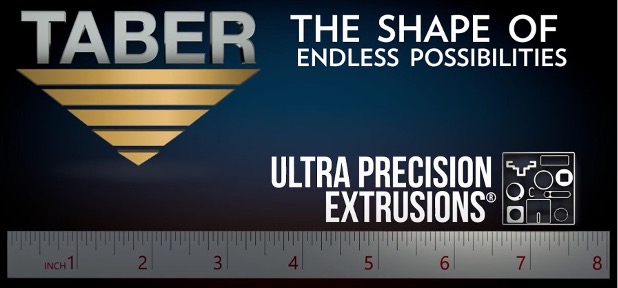
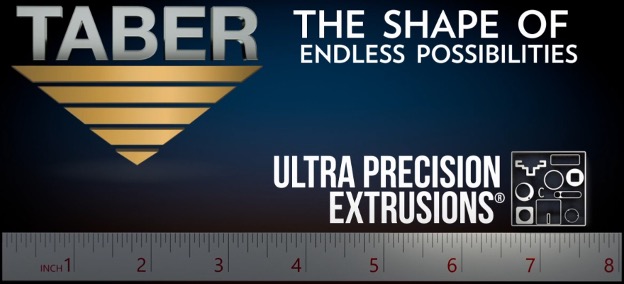
        Promotional graphic featuring the Taber logo, a ruler for scale, and a variety of precision-shaped aluminum profiles. Selected to emphasize the dimensional accuracy and design flexibility of microextrusions in ultra-precision manufacturing.

        For programs requiring microextrusion technology that can withstand extreme operational stress, Taber offers full vertical integration. In fact, the engineering team actively navigates the complex compliance landscapes of regulated medical environments and military specifications (MIL-SPEC), ensuring they incorporate these standards into their process.

        Taber defines reliability as a quantifiable manufacturing metric. For detailed specifications regarding extrusion sizes, alloy options, and fabrication tolerances, review their full capability guide or contact an engineer today to discuss program requirements.

        Ready to reduce size without sacrificing strength? Request a custom microextrusion quote below to get started with Taber!

        Request A Quote

          CONTACT INFORMATION

          YOUR PROJECT NEEDS

          Please specify extrusion alloy and length below

          If you have design files for extrusion or FSW please upload below

          Excepted file formats: jpg, pdf, png.

          Please specify FSW alloy class, welding type and panel dimensions below.

          Alloy*

          Welding Type*

          Select Billet Size *

          ANY CUI OR FCI DATA IS STRICTLY PROHIBITED FROM BEING UPLOADED DIRECTLY THROUGH THIS FORM. IF YOU NEED TO SHARE ANY SENSITIVE DATA PLEASE CONTACT A TABER SALES TEAM MEMBER AND THEY WILL PROVIDE A SECURE METHOD OF SHARING ANY SENSITIVE INFORMATION.

          17 01, 2026

          Micropress Technology: Revolutionizing Aluminum Extrusions

          2026-01-26T23:39:15+00:00January 17th, 2026|

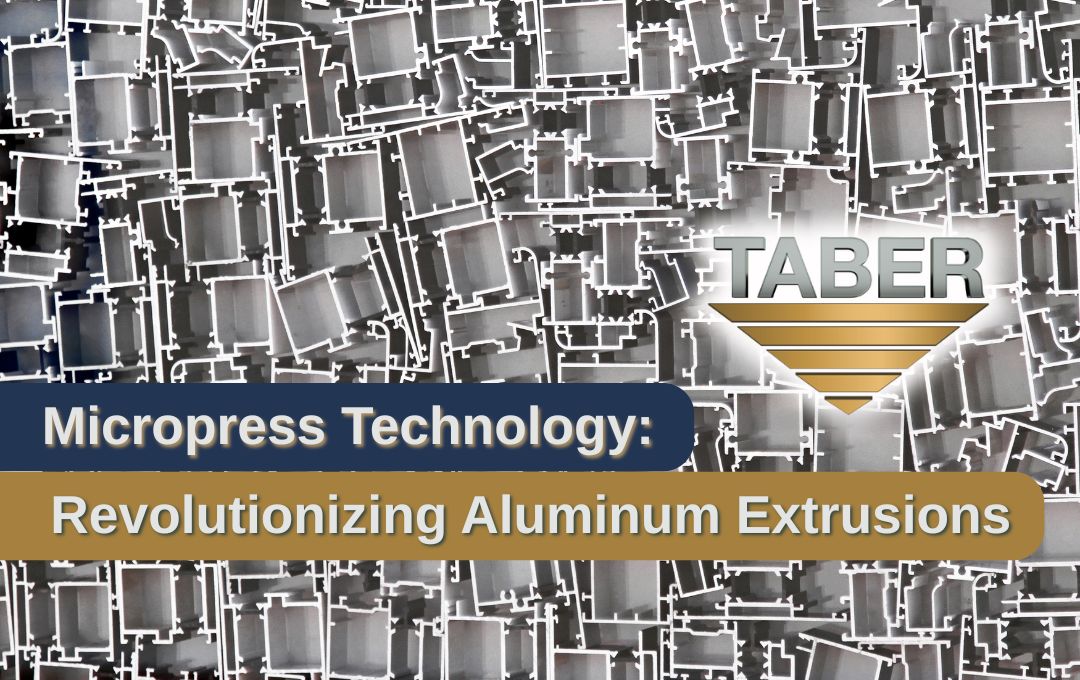
          This graphic features the Taber logo and the title “Micropress Technology: Revolutionizing Aluminum Extrusions” set against a background collage of complex, high-precision aluminum profiles. The visual underscores the variety of intricate shapes achievable with a micropress for aluminum extrusion.

          Key Takeaways:

          • The hidden challenge in modern manufacturing, from medical devices to aerospace electronics, depend on aluminum components so small and precise that traditional presses can’t produce them, quietly limiting innovation.
          • The technology redefining what’s possible is unlocking design freedom at microscopic scales, delivering tolerances, efficiency gains, and sustainability benefits.
          • The precision advantage behind the industry’s next breakthroughs, micro-scale extrusion processes, advanced tooling, and vertically aligned production models, allows manufacturers to achieve consistent, ultra-detailed profiles.

          Micropress for aluminum extrusion is transforming the manufacturing of ultra-precision aluminum profiles and intricate parts, a technology often overlooked in favor of larger presses. By enabling miniature extrusion production runs, micropresses push the boundaries of design and precision for sectors such as medical, aerospace, and high-performance electronics. This technology enhances accuracy, reduces waste, and allows greater design flexibility. Additionally, its integration within a vertically aligned manufacturing model demonstrates how complex industry demands can be met efficiently, shaping the future of precision aluminum extrusion.

          Precision in the Smallest Details: Why Micropress Technology Matters

          In aluminum extrusion, it is recognized that size does not always determine strength. Small press extrusion technology is often used to achieve what the largest presses cannot: dimensional accuracy and surface perfection on a micro scale. Profiles with wall thicknesses as thin as 0.020 inches and tolerances as tight as ±0.001 inches can be produced through the microextrusion process. For ultra-lightweight and compact applications, such as aluminum microtubing for medical catheters or precision electronics, these tolerances are critical to ensuring a perfect fit rather than a near match.

          As a matter of fact, research published in Coatings by MDPI indicates that energy consumption is significantly reduced when aluminum micro-extrusion is optimized with advanced tool coatings. This highlights a broader trend in manufacturing, where precision is paired with sustainable efficiency. By producing smaller profiles with less material waste and fewer reworks, micropresses for aluminum extrusion are aligned with Industry 4.0 and circular manufacturing objectives.

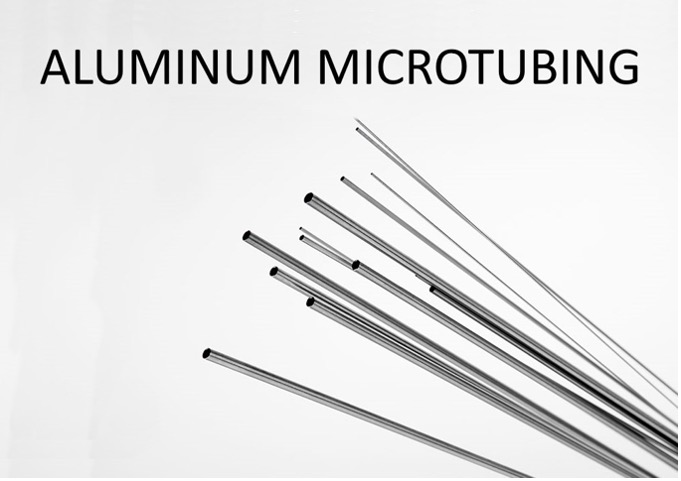
          A collection of fine aluminum microtubes under the heading “ALUMINUM MICROTUBING” showcases a key product made possible by the micropress for the aluminum extrusion process, emphasizing its ability to create components with extremely thin walls.

          Additionally, government-backed innovation projects, such as the National Renewable Energy Laboratory’s (NREL) Shear Assisted Processing and Extrusion (ShAPE), have shown that advanced extrusion techniques improve energy efficiency and metallurgical performance across aluminum alloys. These developments demonstrate that, even at the microscale, the technology contributes to the ongoing evolution toward sustainable, high-efficiency metalworking.

          From Microextrusion Manufacturing to Advanced Applications

          Precision microextrusion is used to enable complex geometries that were once considered unattainable. Through microextrusion manufacturing, intricate channels, ultra-thin fins, and internal cavities can be formed, which are essential for cooling systems, sensors, and lightweight structures. These capabilities are regarded as critical for next-generation products in aerospace, defense, electronics, and medical manufacturing.

          For example, according to this study, microextrusion and microstructure evolution in 6063 aluminum alloy has been shown to enhance microstructural control, yielding higher strength-to-weight ratios and smoother surface finishes. In medical microextrusions, these benefits are translated into safer, more consistent components in devices where precision is life-critical.

          Furthermore, aluminum microtubing is increasingly used in both fluid and electronic systems, driven by industries requiring exacting dimensions and seamless finishes at microscopic scales.

          In every case, micropress for aluminum extrusion is employed alongside large presses, providing complementary precision and nuance. While high tonnage is relied upon to deliver volume, micropresses are used to deliver exacting detail and preci

          Efficiency, Waste Reduction, and Sustainability

          A cleaner, leaner manufacturing cycle is supported by micropress technology. Because excess material is minimized during the microextrusion process, less scrap is produced, and fewer secondary operations are required. It has been shown in studies on microextrusion of aluminum 6063 that forming forces and energy demand are reduced compared to conventional-scale processes (MDPI, 2020).

          This efficiency is also extended beyond the press. Small-press extrusion technology is used to enable rapid prototyping and limited production runs, both of which are considered critical for innovation-driven sectors such as defense and medical device design. Tiny high-precision prototypes can be tested and validated by engineers before full production is scaled, allowing development cycles to be shortened and risk to be reduced.

          Beyond energy and waste reduction, sustainable manufacturing goals are advanced by micropress systems through the conservation of raw materials while exceptional accuracy is achieved. In this way, both lower per-unit costs and smaller environmental footprints are delivered, benefits increasingly recognized by regulators and global markets through sustainability standards and fair production (CBSA aluminum measures).

          Bringing Micropress Expertise to Modern Manufacturing

          While much of the industry looks to massive extrusion capacity as a benchmark of progress, Taber Extrusions takes a balanced view, understanding that innovation also happens in the finer details. As outlined in their Ultra-Precision Extrusions® overview, Taber’s micropress capabilities are engineered to meet the tightest tolerances demanded by advanced OEMs.

          Their microextrusion presses can produce complex, high-performance profiles with repeatable accuracy, while their vertical integration model ensures that every stage remains under strict quality control. For industries where precision and reliability are non-negotiable, Taber’s approach offers both.

          For engineers or procurement specialists looking to explore precision extrusion options, Taber provides design guides and technical resources on aluminum profiles. It’s an excellent starting point for understanding available shapes, sizes, and specifications before beginning a new design. When precision sets the standard, micropress technology stands out as an advanced and intelligent solution, not merely a smaller tool.

          Let’s discuss how microextrusion can advance your next project. Fill out the form below to connect with Taber Extrusions, a partner in aluminum innovation from large presses to the finest micro-scale solutions.

          Request A Quote

            CONTACT INFORMATION

            YOUR PROJECT NEEDS

            Please specify extrusion alloy and length below

            If you have design files for extrusion or FSW please upload below

            Excepted file formats: jpg, pdf, png.

            Please specify FSW alloy class, welding type and panel dimensions below.

            Alloy*

            Welding Type*

            Select Billet Size *

            ANY CUI OR FCI DATA IS STRICTLY PROHIBITED FROM BEING UPLOADED DIRECTLY THROUGH THIS FORM. IF YOU NEED TO SHARE ANY SENSITIVE DATA PLEASE CONTACT A TABER SALES TEAM MEMBER AND THEY WILL PROVIDE A SECURE METHOD OF SHARING ANY SENSITIVE INFORMATION.

            20 12, 2025

            In Focus Spotlights: 2025 Recap

            2026-01-06T00:15:08+00:00December 20th, 2025|

            A collage of the 2025 In Focus Spotlight employees that still currently work at Taber Extrusions to the left of the Taber logo highlighted under a spotlight graphic. The title "IN FOCUS SPOTLIGHTS: 2025 RECAP" are bolded underneath.

            In 2025, Taber Extrusions continued its tradition of celebrating the people who drive its success through its In Focus Spotlight series, highlighting a diverse group of dedicated team members whose expertise and passion strengthen the company’s culture and performance. This year’s spotlights featured seasoned industry professionals and core contributors alike: Lisa Fortner, a veteran sales leader bringing over three decades of experience to her role as Southeast National Account Manager; Tony Amendola, a deeply experienced National Accounts Manager helping shape customer relationships and support Taber’s growth initiatives; Micah Koch, a Human Resources Specialist committed to enhancing workplace culture and employee engagement; and Regina Tramel, an Inside Sales Representative whose extensive background in logistics and customer support underscores Taber’s commitment to service excellence.

            Together, their stories reflect the depth of talent and shared commitment to teamwork that define Taber’s success in 2025.

            Lisa Fortner, SE National Account Manager

            With decades of industry experience, Lisa Fortner brings a steady, relationship-driven approach to her role at Taber Extrusions. Known for her deep market knowledge and customer-first mindset, Lisa plays a key role in supporting long-term partnerships across the Southeast while representing Taber’s commitment to quality and consistency.

            “When I am not working, I can be found reading a good book by the water, crafting, traveling, decorating the house for the next holiday, or at a ballpark watching my grandson play baseball.” – Lisa Fortner

            Tony Amendola, National Accounts Manager

            Tony Amendola’s career reflects a passion for strategic problem-solving and building trust with customers nationwide. As a National Accounts Manager, he helps align customer needs with Taber’s extrusion capabilities, ensuring every partnership is backed by reliability, communication, and experience.

            I enjoy traveling with my family, golfing for leisure, landscaping projects, and volunteering for local underprivileged youth. – Tony Amendola

            Micah Koch, Human Resources Specialist

            As a Human Resources Specialist, Micah Koch focuses on cultivating a workplace where people feel supported, engaged, and empowered. From recruiting to employee development, Micah plays a vital role in shaping the culture behind Taber’s operational success.

            “I love being outdoors. I enjoy hunting, hiking, camping, boating, etc. I love spending time with family and friends. I also spend a lot of time working on my parents’ cattle farm, which I love.” – Micah Koch

            Regina Tramel, Inside Sales Representative

            Regina Tramel brings a strong background in logistics and customer service to her role in Inside Sales at Taber Extrusions. Her attention to detail and responsiveness help ensure customers receive the support they need every step of the way.

            In my free time, I love hanging out with my grandchildren and my mom: Claude (19), Riley (19), Bo (14) and Ada (6). I also enjoy fishing, shooting my bow, or junkin’. – Regina Tramel

            Continue discovering the people behind Taber Extrusions by exploring more stories from our In Focus Spotlight series. As we look ahead to the new year, we remain committed to growing our team with individuals who share our values.

            Interested in becoming part of the Taber team? Submit your resume to careers@taberextrusions.com

            Taber follow us icon

            Follow Us On Social Media!

            2 12, 2025

            Why Machining Capabilities Matter in Aluminum Fabrication

            2025-12-02T23:03:34+00:00December 2nd, 2025|

            A close-up of a CNC machine's precision cutting tool highlights a key process in aluminum fabrication. The title "Why Machining Capabilities Matter in Aluminum Fabrication" and the Taber logo are superimposed over the metallic components.

            Key Takeaways:

            • Integrated Aluminum Manufacturing Reduces Risk and Delays. A single-source approach aligns with lean manufacturing principles and supports just-in-time production.
            • In-House Machining Capabilities Ensure Superior Quality. Allows complete control over material properties and tolerances, delivering consistently precise, high-quality aluminum components.
            • Single-Source Operations Lower Costs and Improve Efficiency. Reduces redundant shipping, material waste, and administrative overhead, resulting in lower total project costs while maintaining strict quality standards.

            On a busy manufacturing floor, where machines hum and engineers troubleshoot delays, the root cause is often a fragmented supply chain rather than a technical failure. In today’s competitive market, understanding why machining capabilities are vital in aluminum fabrication is essential to overcoming challenges with lead times, cost, and quality. As projects grow more complex, separating extrusion from fabrication introduces inefficiencies that lead to costly delays. True efficiency is achieved when the entire process, from design to precision-machined components, is managed under one integrated system. This article serves as a guide to leveraging integrated aluminum manufacturing solutions, outlining key machining capabilities such as multi-axis CNC aluminum fabrication and large press extrusion that help ensure streamlined production and top-tier performance.

            The Strategic Advantage of Integrated Aluminum Fabrication

            In modern manufacturing, the shortest distance between two points is ideally a straight line, yet a fragmented supply chain often turns it into a winding road of inefficiency. When extrusion, machining, and finishing are handled by separate vendors, logistical hurdles and inconsistent quality are frequently introduced. Through a lean value-stream analysis, each handoff between vendors can be seen as non–value-adding activity that increases time and waste. By contrast, when these steps are integrated, unnecessary transportation and redundant quality checks are eliminated. As more companies reshore operations to strengthen domestic supply chains, this streamlined approach has been recognized as essential. A single-source supplier is therefore viewed as the optimal model for reducing waste and aligning with lean manufacturing principles.

            This integration has been shown to address three key manufacturing pain points:

            1. Supply Chain Risk and Lead Times: When multiple suppliers are involved, the risk of delays, miscommunication, and quality discrepancies is increased. By consolidating operations within an integrated facility, these risks are minimized, and lead times are significantly reduced, creating a more stable and predictable production flow suited to today’s just-in-time manufacturing demands.
            2. Quality Control and Consistency: When an aluminum profile is extruded and machined within the same facility, complete control over material quality is maintained. This integrated approach ensures a deeper understanding of alloy properties, resulting in tighter tolerances and superior precision aluminum fabrication. Accountability remains with one partner committed to consistent quality, often verified through ISO 9001 and AS9100 certifications.
            3. Total Project Cost: When services are consolidated under a single-source provider, redundant shipping costs, material waste, and administrative overhead are reduced. As a result, efficiency is increased, and the benefits are directly reflected in lower overall project costs and stronger bottom-line performance.

            A Checklist for Evaluating Essential Machining Capabilities

            The true value of a supplier is measured by the breadth and sophistication of its in-house capabilities. When a potential partner is evaluated, their ability to perform the following processes on-site is considered a strong indicator of capacity to handle complex projects:

            • Large Press Aluminum Extrusion Capabilities: Massive, intricate shapes can be produced in a single piece on a powerful extrusion press. This capability simplifies downstream machining, reduces assembly requirements, and enhances overall part strength and durability.
            • Precision Cutting, Punching, and Drilling: These foundational services must be performed with high accuracy to prepare extruded profiles for final assembly or more advanced machining.
            • Advanced Forming and Bending: Extrusions can be shaped and bent to precise specifications without compromising structural integrity, which is critical for automotive and aerospace applications.
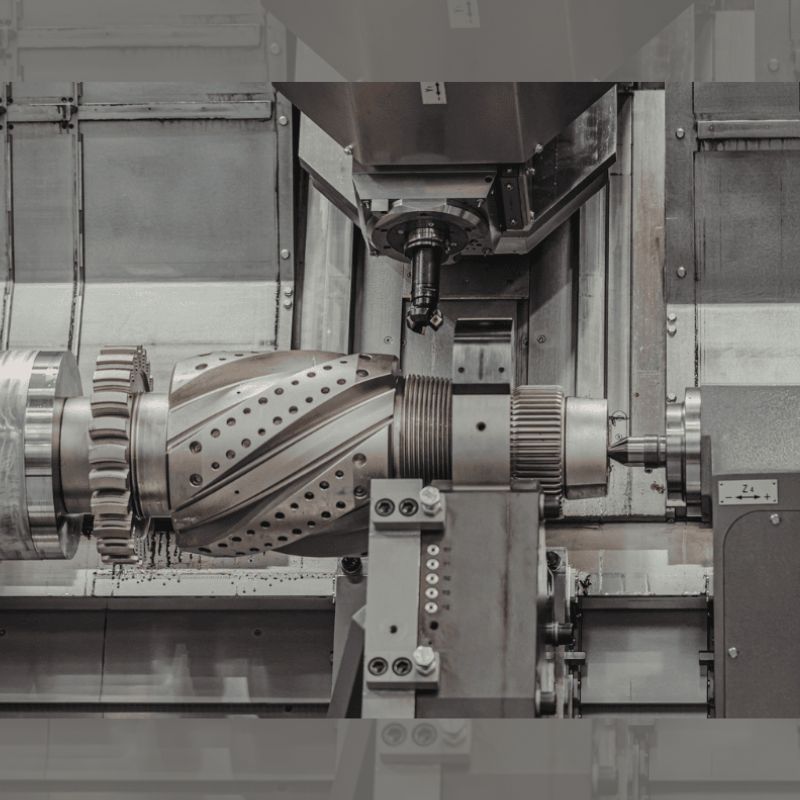
            • Multi-Axis CNC Machining: Considered the cornerstone of fabrication, complex aerospace bulkheads can be machined on a 5-axis center to tolerances as tight as ±0.002 inches, ensuring precision while maintaining strict industry standards.
            • Specialized Welding (Friction Stir Welding): For high-strength, safety-critical applications, advanced welding techniques are employed. FSW is used to produce stronger, more reliable bonds than traditional methods, making it essential for defense and marine components.

            Taber Extrusions: A Single-Source Partner for Integrated Manufacturing

            For over 50 years, Taber Extrusions has provided comprehensive, U.S.-based aluminum manufacturing solutions, exemplifying the benefits of an integrated partner. By housing world-class extrusion and fabrication under one roof, Taber directly addresses the quality, cost, and logistics challenges that modern OEMs face, embodying the principles of a streamlined supply chain recognized by industry authorities such as Thomasnet. Furthermore, this integrated power is anchored by some of the industry’s most advanced equipment. As highlighted in Business Focus Magazine, Taber’s large press aluminum extrusion capabilities include an 8,600-ton press that enables the delivery of complex, large-scale profiles that few other manufacturers can produce. Looking ahead, aluminum machining capabilities will be further expanded with the addition of a new 10,000-ton press in June 2026, providing enhanced scale and performance that will strengthen Taber’s value as a single-source partner.

            Complementing this raw extrusion power is a full suite of in-house fabrication services, from multi-axis CNC aluminum fabrication to advanced Friction Stir Welding. This deep, single-source capacity allows Taber to maintain exacting quality control from start to finish, delivering precision-machined components for the world’s most demanding industries. The proven ability to manage the entire production lifecycle provides a critical strategic advantage to partners in the military, aerospace, and transportation markets who require absolute reliability and adherence to critical project timelines.

            To learn more about the full range of services, download their corporate brochure.

            When your project demands reliability and precision, partner with an expert. Contact Taber Extrusions today by filling out the form below to discuss your aluminum fabrication needs.

            Request A Quote

              CONTACT INFORMATION

              YOUR PROJECT NEEDS

              Please specify extrusion alloy and length below

              If you have design files for extrusion or FSW please upload below

              Excepted file formats: jpg, pdf, png.

              Please specify FSW alloy class, welding type and panel dimensions below.

              Alloy*

              Welding Type*

              Select Billet Size *

              ANY CUI OR FCI DATA IS STRICTLY PROHIBITED FROM BEING UPLOADED DIRECTLY THROUGH THIS FORM. IF YOU NEED TO SHARE ANY SENSITIVE DATA PLEASE CONTACT A TABER SALES TEAM MEMBER AND THEY WILL PROVIDE A SECURE METHOD OF SHARING ANY SENSITIVE INFORMATION.

              17 11, 2025

              Aluminum Extrusion Solutions for Complex Design Challenges

              2025-11-18T02:03:14+00:00November 17th, 2025|

              A graphic featuring the text “Aluminum Extrusion Solutions for Complex Design Challenges” with the Taber logo centered below and stylized aluminum profiles along the bottom.

              Key Takeaways:

              • Ask the right questions early. Technical (tolerances, welding, secondary services) and business (lead times, incomplete specs) factors determine project success.
              • Incomplete specs are a major risk. Missing alloy, finishing, or machining details can delay delivery and drive redesigns.
              • Choose a partner that delivers advanced aluminum extrusion solutions with precision, compliance, and reliability.

              When projects are required to deliver more than simple shapes, aluminum extrusion solutions are recognized as the backbone of innovation. Meanwhile, engineers and procurement specialists are confronted with an ever-growing list of challenges, including tighter tolerances, multi-functional designs, stricter compliance requirements, and rising costs. The question is not whether aluminum extrusions can meet these demands, but whether both the technical complexity and business requirements of a project can be managed by an extrusion partner without unexpected issues arising.

              What Questions Should You Ask an Extrusion Partner?

              The success of an extrusion project hinges on asking the right questions up front. These go beyond “Can you make this shape?” and dive into both technical and commercial realities.

              Technical Questions

              • Can you produce precision aluminum extrusions at the required tolerance?
                • Some projects demand sub-millimeter accuracy. For example, micro-extrusion is crucial for aerospace and defense components, where even slight deviations can lead to functional failures.
              • Do you offer secondary services?
                • In-house aluminum fabrication and machining capabilities can eliminate supply chain risk by reducing the need to ship parts across multiple vendors.
              • What are your welding solutions?
                • Advanced processes, such as friction stir welding, enable the creation of strong, defect-free joints that traditional welding cannot achieve.

              Business Questions


              • What are your lead times, and how do you mitigate disruptions?
                • Supply chain resilience is no longer optional. With U.S. smelter output shrinking and energy competition rising (Reuters), procurement teams need assurance that partners can adapt quickly.
              • How do you handle incomplete specs?
                • A strong partner helps refine specs early, preventing cost overruns and delays later in the process.


              The Risk of Incomplete Specifications

              One of the most common pitfalls in extrusion projects is caused by incomplete or vague specifications. While a profile shape may be provided by engineers, alloy requirements, finishing needs, or machining details are often omitted. As a result, downstream challenges are created:

              • Incorrect alloys can compromise strength or corrosion resistance.
              • Overlooked finishing needs can delay final delivery.
              • Missing machining details often result in costly redesigns.

              Furthermore, the Aluminum Association emphasizes consistency in aluminum production and use, highlighting the importance of clear communication. The most effective way to avoid these issues is to partner with an extrusion provider that collaborates during the design phase, offering engineering support to guide alloy selection, tolerances, and secondary processes.

              Why These Questions Matter More Than Ever

              The demand for industrial aluminum extrusions is being observed to rise steadily. The U.S. market alone was valued at $6.78 billion in 2023, with growth expected to continue at a 7% CAGR through 2030 (Grand View Research). At the same time, domestic supply is placed under pressure, as only six smelters remain active in the U.S., down from 33 in 1980.

              For procurement officers and engineers, two key considerations are highlighted:

              1. Capacity is critical. Projects that are larger or more complex can be accommodated by extruders equipped with advanced presses.
              2. Collaboration is essential. When specifications are unclear, partners with deep technical expertise can bridge the gap, ensuring industry standards are met while maintaining timelines.

              Why Taber Extrusions Fits the Bill

              After asking the tough questions, you need a partner who can deliver on both the technical and business fronts. Taber Extrusions offers.

              This collage-style illustration showcases four advanced processes relevant to aluminum extrusion solutions: micro-extrusion, friction stir welding, aluminum fabrication, and a precision-engineered rectangular container. Each section highlights a distinct capability within high-tolerance metal manufacturing.
              • Broad alloy capabilities across 2XXX, 5XXX, 6XXX, and 7XXX series
              • Specialty processes, including friction stir welding and micro-extrusions
              • Integrated fabrication and precision machining services
              • A proven track record across aerospace, defense, transportation, and industrial markets.

              For engineers and procurement officers, this means fewer surprises and more reliable outcomes. Before committing to your next project, download Taber’s aluminum profiles resource, a starting point for understanding how different shapes and designs can support your goals.

              When specifications are incomplete or challenges are complex, Taber delivers custom aluminum extrusion solutions that balance technical precision with business realities. Contact Taber Extrusions today for a complimentary consultation or request a quote to get started.

              Request A Quote

                CONTACT INFORMATION

                YOUR PROJECT NEEDS

                Please specify extrusion alloy and length below

                If you have design files for extrusion or FSW please upload below

                Excepted file formats: jpg, pdf, png.

                Please specify FSW alloy class, welding type and panel dimensions below.

                Alloy*

                Welding Type*

                Select Billet Size *

                ANY CUI OR FCI DATA IS STRICTLY PROHIBITED FROM BEING UPLOADED DIRECTLY THROUGH THIS FORM. IF YOU NEED TO SHARE ANY SENSITIVE DATA PLEASE CONTACT A TABER SALES TEAM MEMBER AND THEY WILL PROVIDE A SECURE METHOD OF SHARING ANY SENSITIVE INFORMATION.

                17 10, 2025

                Advancing Aluminum Extrusion for Space and Defense

                2025-10-28T18:20:43+00:00October 17th, 2025|

                A graphic illustration shows a space shuttle lifting off next to the title ‘Advancing Aluminum Extrusion for Space and Defense,’ accompanied by three logos for Taber, SMD Symposium, and RE+.
                Image Attributions: SMD – https://smdsymposium.org/; RE+ Show – https://www.re-plus.com/

                Key Takeaways:

                • Challenges in aerospace and defense are increasing. Mounting issues with weight, structural integrity, and assembly complexity are faced when multi-part aluminum builds are used.
                • Single-piece aluminum extrusions offer clear advantages. Welds and fasteners are eliminated, resulting in improved strength, reduced weight, simplified supply chains, and enhanced thermal management.
                • Advanced press technology enables better designs. With the large-profile press line launching in 2026, Taber’s engineers are empowered to create stronger, lighter, mission-ready components with fewer constraints.

                Advances in aluminum extrusion for space and defense are being driven by design and manufacturing changes rather than incremental tweaks. Lighter, stronger, and more complex systems are now required. At events like the Space & Missile Defense Symposium and RE+ Show, the shift toward large, monolithic extrusions has been highlighted. Mission-critical demands make weight and structural integrity non-negotiable. Additionally, new large profile extrusion presses are being recognized as key to enabling previously impossible designs.

                Key Conversations from the 2025 SMD Symposium and RE+ Show

                The exhibition floors at the SMD Symposium and RE+ Show are often seen as predictors of the industry’s direction. In 2025, a clear message was conveyed: aerospace and defense design is being reshaped by component consolidation.

                For decades, complex structures were assembled from many small parts, which caused sourcing difficulties, lengthy assembly times, and joint failures. Now, large-profile aluminum extrusions are being used to replace full assemblies with single components.

                The benefits are clear:

                • Greater strength and stiffness than multi-part builds
                • Welds, bolts, and rivets are eliminated
                • Labor, inspection points, and assembly costs are reduced
                • Timelines are shortened, and reliability is improved in mission-critical systems

                The Strategic Imperative of Large Profile Aluminum Extrusions for Space and Defense

                A decisive shift toward large-profile components has been driven by benefits that address core aerospace and defense challenges. When single large extrusions are used instead of multiple smaller parts, several advantages are realized.

                • Enhanced structural integrity is achieved. Every weld, bolt, or rivet previously introduced potential stress points and failures. These weaknesses are removed by monolithic extrusions, with loads distributed evenly. Consequently, performance is improved in environments of extreme vibration, shock, and temperature changes.
                • Thermal management is improved. Heat is dissipated more effectively and evenly across single-piece extrusions. This capability is recognized as critical in electronics enclosures and in the thermal regulation of sensitive space-based equipment.
                • Weight and assembly costs are reduced. Fasteners, brackets, and overlapping materials added complexity and weight. By consolidating components, overall weight is lowered, touch labor and inspection points are minimized, and assembly time is shortened. Payload capacity and fuel efficiency are thereby enhanced.
                • Supply chains are simplified. Dozens of smaller parts previously created logistical challenges. When a single, complex aluminum extrusion is sourced from a qualified domestic manufacturer, procurement is streamlined, inventory is reduced, and supply chain resilience is strengthened—an outcome prioritized by U.S. Department of Defense programs in space and missile defense.

                Bridging the Gap: From Design Concept to Mission-Ready Component

                Until recently, demand for large, complex extrusions was greater than manufacturing capabilities. Full potential was enabled only when advanced metallurgical knowledge of specialized aluminum alloys and capable machinery were applied. Consequently, the development of cutting-edge manufacturing technology has been considered essential.

                High-strength, precision components are now being produced. Large billets are formed into intricate profiles under immense, uniform pressure, while tight tolerances are maintained along the entire length. This capability is regarded as foundational for next-generation airframes, military vehicles, and naval components.

                A seamless pipeline is being established. From digital design to finished, mission-ready parts, defense-grade aluminum extrusion manufacturers are enabling a fully integrated process.

                Partnering with Taber, a Leader in Advanced Aluminum Extrusion

                Taber Extrusions continues to support aerospace and defense. For decades, critical components have been delivered, and with cutting-edge machinery with a 16 inch container launching in 2026, evolving needs are being addressed once again.

                Key challenges are being directly tackled. Fewer design constraints are provided for engineers, stronger and lighter structures are enabled, and a direct path from design to deployment is created.

                Through cutting-edge extrusion technology and one of the largest profile aluminum press, Taber is empowering defense and aerospace engineers to bring ambitious designs to life — with the required strength, precision, and reliability.

                A graphic of the Taber Extrusions with the title, "Something is Coming" and a black cover concealing the state-of-the-art press line

                Take the Next Step

                The industry is moving quickly. For OEMs and engineers, the time to begin design collaboration is now. By engaging an extrusion partner early in the design phase, you can optimize your final component for performance, manufacturability, and mission success.

                Contact Taber Extrusions or request a quote below to begin your consultation and leverage the next generation of aluminum extrusion for space and defense.

                Request A Quote

                  CONTACT INFORMATION

                  YOUR PROJECT NEEDS

                  Please specify extrusion alloy and length below

                  If you have design files for extrusion or FSW please upload below

                  Excepted file formats: jpg, pdf, png.

                  Please specify FSW alloy class, welding type and panel dimensions below.

                  Alloy*

                  Welding Type*

                  Select Billet Size *

                  ANY CUI OR FCI DATA IS STRICTLY PROHIBITED FROM BEING UPLOADED DIRECTLY THROUGH THIS FORM. IF YOU NEED TO SHARE ANY SENSITIVE DATA PLEASE CONTACT A TABER SALES TEAM MEMBER AND THEY WILL PROVIDE A SECURE METHOD OF SHARING ANY SENSITIVE INFORMATION.

                  Go to Top