6 09, 2025

Where to Buy Aluminum Extrusion in the U.S.: From Ultra-Precision to the Largest Profiles

2025-09-29T14:46:27+00:00September 6th, 2025|

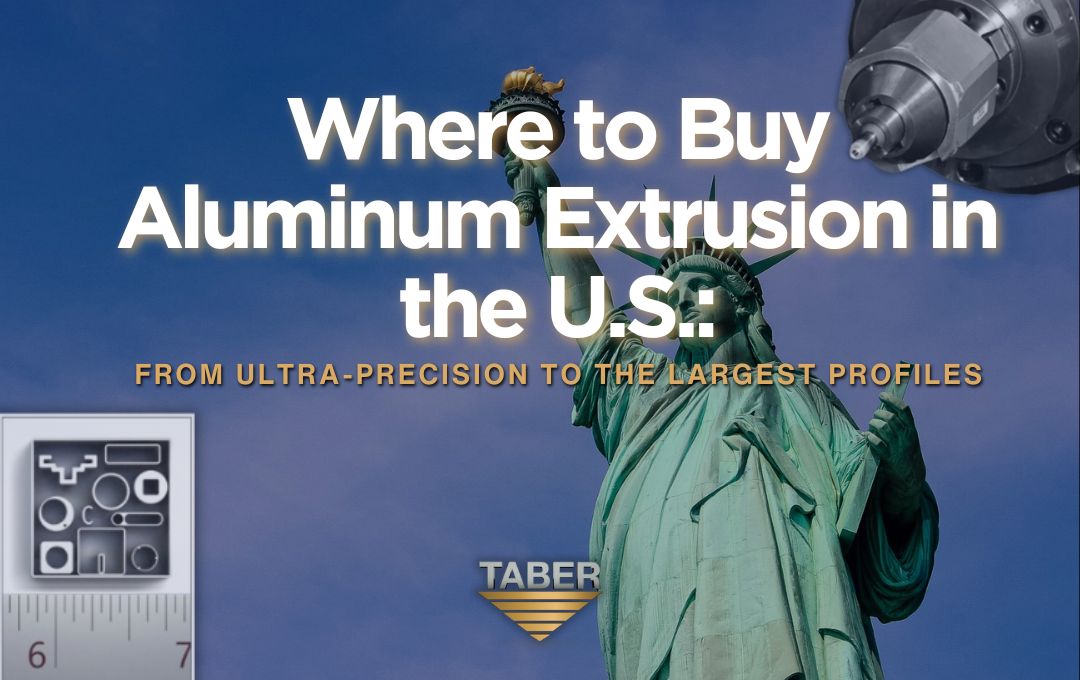
A digitally designed graphic features the Statue of Liberty beneath bold white text reading “Where to Buy Aluminum Extrusion in the U.S.” A subheading in gold references ultra-precision and large profiles, with the Taber logo centered below. Supporting visuals include a precision ruler, extrusion profile icons, and a machining spindle, reinforcing the theme of U.S.-based manufacturing and aluminum extrusion sourcing.

Key Takeaways

  • When you buy aluminum extrusion, choose a supplier that can deliver both large-scale and ultra-precision profiles—Taber is one of the few that does both.
  • Certifications matter: Look for AS9100, ISO 9001, and ITAR compliance for high-stakes industries.
  • Domestic sourcing provides faster lead times, regulatory compliance, and supply chain resilience.
  • Integrated post-processing like CNC machining and friction stir welding reduces costs and ensures quality.

“Where can you buy aluminum extrusion in the U.S.?”

For OEMs, engineers, and procurement teams, this is more than a purchasing question—it’s a critical decision affecting tolerances, reliability, and delivery timelines. From EV battery enclosures to satellite substructures, the right extrusion supplier ensures both performance and supply chain stability.

The Challenge of Sourcing U.S. Aluminum Extrusions with Precision or Scale

When sourcing aluminum extrusions domestically, two main challenges dominate:

While many aluminum extrusion suppliers in the U.S. claim a range, only a few deliver true versatility, supporting both structural and high-tolerance requirements under one roof.

According to the Aluminum Association, U.S. extruders must now contend with reshoring-driven demand, shorter lead time expectations, and increasing design complexity. This convergence of size and precision requirements elevates the need for specialized press technology and die control systems.

Consumers looking to buy aluminum extrusion should evaluate:

  • Press size & container capacity – Can the supplier produce extreme profile widths?
  • Alloy flexibility – Do they extrude specialized alloys for strength, conductivity, or corrosion resistance?
  • Certifications – AS9100, ISO 9001, ITAR registration, and DFARS compliance.
  • Post-processing – In-house CNC machining, friction stir welding, and assembly capabilities.

In aerospace alone, defense contractors are leaning on domestic extrusion suppliers to meet Buy America Act (BABA) requirements and control the aluminum extrusion supply chain more tightly. Manufacturing USA reinforces this by spotlighting reshoring as a resilience strategy, not just a cost move.

End-User Industries Driving Precision and Scale Demands

The pressure isn’t theoretical. Consider the following applications:

  • Satellites and UAV systems require extrusions with sub-millimeter accuracy, lightweight alloys, and stringent testing compliance.
  • Automotive OEMs, especially in EV platforms, need consistent extrusions for battery housing trays, crash rails, and structural frames, often in large format.
  • Defense and marine platforms demand large aluminum extrusion profiles that are rugged, weldable, and corrosion-resistant, often machined after extrusion.
  • Infrastructure megaprojects and rail systems benefit from wide-section aluminum extrusion that replaces steel for weight reduction.
This is a layout showing industrial-grade machines and aluminum profiles arranged for precision manufacturing. It highlights technical processes and finished extrusions useful for buyers evaluating where to buy aluminum extrusion products.


These industries are no longer settling for suppliers that only meet half the needs. Aluminum extrusion capabilities extend beyond shape to certifications, integrated machining, traceability, and digital quality control.

Take friction stir welding, for example. A supplier offering this post-extrusion process can reduce assembly costs and distortion risk. Although not every buyer needs it, knowing your supplier can scale with you matters.

The best certified aluminum extrusion companies:

  • Source billets from traceable, vetted mills
  • Align with ITAR, ISO, AS, and DFARS standards
  • Invest in real-time inspection systems and ERP-integrated traceability
  • Minimize lead times by controlling processing and logistics in-house

One advantage of sourcing within the U.S. is control. You avoid transoceanic delays, tariffs, and geopolitical volatility. And for buyers bound to BABA or other domestic preference requirements, American-made aluminum extrusions aren’t optional but mandated.

The latest expansion investments by domestic leaders show the growing demand for extrusion partners with vertical integration and project agility.

By participating in major industry events like the RE+ Show—the largest clean energy event in North America—Taber stays at the forefront of innovation in the solar and clean energy markets. This means Taber’s clients benefit from a partner who is continuously investing in advanced capabilities, including a future new press and expanded cutting and machining processes, to deliver higher precision, efficiency, and scalability for their projects.

Why U.S.-Made Extrusions Still Matter

Benefits when you buy aluminum extrusion from U.S. suppliers include:

  • Faster lead times and closer engineering collaboration.
  • Regulatory alignment with U.S. standards.
  • IP protection through domestic manufacturing.
  • Sustainability via recycled billet and reduced carbon footprint.

Setting the Standard

Taber Extrusions meets both ends of the spectrum—producing the largest profiles in North America while achieving Ultra-Precision Extrusions® tolerances for aerospace, defense, and medical applications.

With facilities in Russellville, AR and Gulfport, MS, Taber offers:

From prototype to full-scale production, Taber delivers scale, precision, and compliance—all under one roof for anyone looking to buy aluminum extrusion in the U.S.

Learn more about Taber’s aluminum extrusion capabilities and how they serve the next generation of engineered components.

Request A Quote

    CONTACT INFORMATION

    YOUR PROJECT NEEDS

    Please specify extrusion alloy and length below

    If you have design files for extrusion or FSW please upload below

    Excepted file formats: jpg, pdf, png.

    Please specify FSW alloy class, welding type and panel dimensions below.

    Alloy*

    Welding Type*

    Select Billet Size *

    28 11, 2023

    Micro Aluminum Extrusions: Best-Known Applications

    2023-11-28T21:00:21+00:00November 28th, 2023|

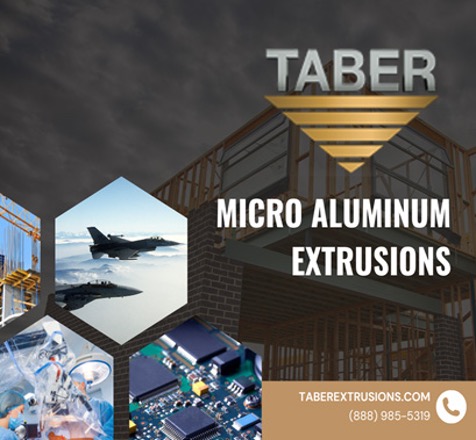
    Taber Extrusions’ company logo is above the headline “MICRO ALUMINUM EXTRUSIONS.” Four frames display the industries that Taber specializes in: jets (aerospace), motherboard (consumer electronics), hospital staff in an operating room (medical), and a construction site (industrial). Taber’s contact information is in the bottom right corner.

    When it comes to high-quality precision extrusions, Taber Extrusions is at the forefront of industries like aerospace, medical technology, and consumer electronics. While their miniature extrusions may be small, they offer a large range of functions and benefits. This makes them invaluable in modern manufacturing processes. In this post, we’ll dive into the best-known applications for micro aluminum extrusions, and how they’re changing the game in some of the world’s most important industries.

    What Are Micro Aluminum Extrusions?

    Micro aluminum extrusions are like miniature sculptures hewn from aluminum, the versatile metal that’s shaped modern progress. Taber’s expertise lies in transforming raw aluminum into highly specialized micro extrusions, meticulously tailored for each industry’s unique demands. Whether it’s about designing miniature extrusions for intricate electronics, crafting aluminum microtubing for medical devices, or engineering extrusions that navigate the skies and roads, micro aluminum extrusions are the invisible heroes behind cutting-edge innovation. To learn more about the logistics of micro extrusions, watch Taber’s informational video here.

    Advancing Medical Technology

    One of the biggest sectors that benefit from micro aluminum extrusions is the medical technology industry. These small-scale extrusions are the go-to choice for medical companies  looking to manufacture life-saving devices. Due to the superior properties of aluminum, micro aluminum extrusions is the discerning choice.

    What’s more, they are perfect for medical applications. Their precision-quality means that they can be produced to extremely tight tolerances. At Taber Extrusions, we’ve seen firsthand how micro extrusion technology has transformed the medical device market. Micro aluminum extrusions makes complex devices a reality.

    A heatsink nested on an exposed computer’s motherboard.

    Essential in Consumer Electronics

    Another area where micro extrusions are essential is in the area of consumer electronics. Aluminum microtubing, which is strong and lightweight, has been used in a variety of products. Among the list are heat sinks on many circuit boards as well as cell phones, laptops, gaming consoles, and fitness trackers. As devices become smaller and more complex, ultra-precision aluminum extrusions have become a crucial component. For manufacturers looking to maximize both function and form, these extrusions are indispensable. Companies like Taber Extrusions are leading the charge in developing new ways to use micro extrusions in the consumer electronics sector.

    Critical in Defense and Aerospace

    The aerospace industry is another area where micro aluminum extrusions play a vital role. Whether it’s for public transportation or military applications, the aerospace sector demands incredibly high-quality components that can survive under extreme conditions. With their corrosion resistance, strength, and lightweight properties, these extrusions can deliver the performance that this industry requires. Such extrusions are also used in defense applications like armored vehicles, missiles, and guns.  Where strength and durability is needed, micro extrusions are an ideal choice.

    The interior of an airplane cockpit showcasing various screens and dashboard components.

    Versatile in Industrial Applications

    There are many other industries in which micro aluminum extrusions are utilized. This includes construction, where precision extrusions are used to create everything from gutters to window frames. Additionally, U.S. aluminum extrusions are used in the automotive industry to create lightweight components that can help improve fuel efficiency. Furthermore, in the manufacturing sector, micro extrusions are at the forefront of the drive towards miniaturization. Micro parts and intricate shapes are becoming increasingly common in all types of products, from heavy-duty equipment to industrial machinery.

    Micro Aluminum Extrusions Are EVERYWHERE

    In conclusion, micro aluminum extrusions are a versatile and essential component for many industries. If your interest lies in exploring micro aluminum extrusion applications or in finding the top aluminum extrusion company, your search ends here!

    At Taber Extrusions, we’re proud to be leading the way in this exciting industry. Our top-quality products have helped our clients achieve their goals time and time again.


    More About Taber Extrusions

     Established in 1973, Taber Extrusions holds its origin in pioneering the process of extruding rectangular billets. This unique capability empowers the company to craft solid profiles spanning up to 31 inches in width and hollow structures reaching 29 inches. The growth trajectory continued with the acquisition of an extrusion facility in Gulfport, MS, in 1995. This facility houses a cutting-edge cast house, two additional presses, micro-extrusion capabilities, and an expanded fabrication area that has seen multiple augmentations over the years.

    Follow Taber Extrusions

    LINKEDIN: https://www.linkedin.com/company/taberextrusions/

    FACEBOOK: https://www.facebook.com/taberextrusions/

    TWITTER: https://twitter.com/taberextrusions

    YOUTUBE: https://www.youtube.com/@TaberExtrusions

    Interested in becoming a part of the Taber Team?  Submit your resume to careers@taberextrusions.com.

    3 04, 2022

    Our Top Aluminum Microextrusion Blogs of All Time

    2022-07-08T17:14:48+00:00April 3rd, 2022|

    Blue shaded gradient over a photograph of a bridge tower and its suspension cables on the left and the U.S. flag on the right. Taber’s logo is at the very top and beneath it are the words, “The Shape of Endless Possibilities.” The logos designating minority-owned business enterprise (ISO 9001, AS 9100, NADCAP, and ABS-certified) are across the bottom in white print.

    A lot has been said about the future of nano and microtechnology. This area of aluminum extrusion, which focuses on creating ever smaller products, promises solutions to age-old problems. On the silver screen, sci-fi productions have shown nano bots crawling into humans as a futuristic form of medicine. The Terminator film franchise explored the military potential of nano technology in a self-healing liquid metal of robots. Yet, examples like these are not actually all that farfetched. From self-healing metal to invasive medicine, a whole new realm of possibilities has been opened by tiny manufacturing.

    At Taber, we are part of this revolution with our microextrusions. Like conventional aluminum extrusions, microextrusions are pushed through a die. Unlike conventional extrusions, the entire extrusion process is performed at a submillimeter level. In other words, the resulting product’s cross section can fit through a 1-millimeter square. Our microextrusions have found application in a wide range of industries, which we have previously explored in a series of articles on these miniscule creations.

    1) Taber: Microextrusions for Defense and Aerospace

    6 military jets flying across a blue sky above two military vehicles (tank and a ship) facing away from each other. The words “Taber: Microextrusions for Defense and Aerospace” are in black above the ship.

    Taber Extrusions has experienced many evolutions since its founding in the early 1970s. Taber pioneered a process for extruding rectangular billet of solid profiles up to 31 inches wide or hollows up to 29 inches. Since then, it increased Taber’s billet capacity, alloy range, and ability to reuse materials. Within the last decade, fabrication capabilities were upgraded, friction stir welding was added, and of course, microextrusions became an offering. Lightweight, strong, and widely functional, microextrusions are perfect for military and aerospace components. Interior aircraft systems, AC condensers, communication systems, and firearm components all use microextrusions. Read more about it here.

    2) Process, Benefits, and Examples of Medical Microextrusions

    A darkened photograph of a medical room with a bunch of white medical appliances. The words, “Process, Benefits, and Examples of Medical Microextrusions” are positioned on top of the photo in white.

    You don’t have to go in for a colonoscopy to understand the benefit of smaller medical tools. The microextrusions used in medicine include components that overwhelmingly support cardio- and neurovascular procedures, drug delivery, IV procedures, and other procedures that require work on a micro level. An added challenge for medical manufacturing is that conventional extrusion machinery is not quite precise enough, so it calls for special machinery. Medical microextrusions are created at a very slow rate to maintain the physical properties of the delicate material and create ultra-precise extrusions.

    3) Microextrusions in the Consumer Electronics Sector

    A lengthwise photograph of an open computer motherboard with all the different ports and circuits exposed, many of which are made of aluminum microextrusions. In the center of the photo are the words, “Microextrusions in the Consumer Electronics Sector” in white text.

    The most widespread and easy-to-spot place where miniature extrusions are making a difference in consumer products is in electronic products. Portable, durable, and complex, computational devises like laptops and smartphones have increasingly smaller parts. From enclosures to motherboards and LED profile bays, microextrusions have become a fundamental part of electronic devices. This article outlines more aspects of consumer electronics that use precision aluminum extrusions in their design.

    Often used in medical and surgical procedures, microtubing is a highly-valued type of microextrusion. Aluminum can provide three times as much volume per pound as other metal products – so when too much weight is detrimental, aluminum is an obvious choice. Aluminum is also anti-corrosive, making it an ideal material for many types of environments.

    A metal ruler lying flat on the surface of a table showing a length of 8 inches, while several aluminum microtubes are suspended above the ruler and the words “Aluminum Microtubing Rapidly Developing in Sync: Microextrusions” are in black above the ruler and on top of the tubes.
    Blue shaded gradient over a photograph of a bridge tower and its suspension cables on the left and the U.S. flag on the right. Taber’s logo is at the very top and beneath it are the words, “The Shape of Endless Possibilities.” The logos designating minority-owned business enterprise (ISO 9001, AS 9100, NADCAP, and ABS-certified) are across the bottom in white print.

    This last blog outlines Taber’s capabilities, ranging from friction stir welding to microextrusions. Through Taber’s unwavering commitment, present and future customers can expect expanded extrusion solutions, programs, and services in the coming years… and find endless possibilities. Read more about it here.

    Despite its broad application in today’s products, the potential of microextrusions is still just being explored. As miniature aluminum extrusions become smaller and more precise, industries will continue to find new ways to create futuristic solutions to modern problems. Taber offers the highest levels of quality and the broadest range of capabilities in the industry, designed to be ready for whatever design tomorrow brings.


    Taber Extrusions: Summary

    Founded in 1973, Taber Extrusions originally pioneered a process for extruding rectangular billet, enabling the company to extrude extra-large aluminum extrusion profiles up to 31 inches wide or hollows up to 29 inches. Taber expanded with the purchase of an extrusion facility in Gulfport, MS, in 1995, which houses a state-of-the-art cast house and two additional presses, micro-extrusion capabilities, and the fabrication area has been expanded multiple times.

    Taber continues to extrude billet in a wide range of alloys and sizes and has diversified its markets beyond the military since its inception to include aerospace, automotive, marine, infrastructure, and sporting goods, among many others. With in-house casting solutions, ultra-precision extrusion manufacturing, friction stir welding capacities, and a full range of hard and soft aluminum alloys, Taber continues to align itself as an industry leader in having the broadest available capabilities.

    Today, Taber Extrusions is proud of its recently added VF-12 CNC machining line and a complete offering of extruded aluminum components, value-added machining services, and raw material supply to the North American market. Adding these capabilities to a growing portfolio propels Taber into the future in a quest to continuously improve the quality and service we provide to our customers.

    Thank you for your continued support of Taber Extrusions, LLC. If you have any questions, please visit taberextrusions.com or contact one of Taber’s regional sales managers.

    Follow Taber Extrusions

    LINKEDIN: https://www.linkedin.com/company/taberextrusions/

    FACEBOOK: https://www.facebook.com/taberextrusions/

    TWITTER: https://twitter.com/taberextrusions

    1 03, 2021

    Taber: Microextrusions For Defense and Aerospace

    2021-03-01T20:55:09+00:00March 1st, 2021|

    Two images side-by-side, on left: long-range radar antenna used to track space objects and ballistic missiles. On right: A military radar antenna which rotates steadily, used for aircraft detection.

    Like conventional aluminum extrusions, microextrusions are pushed through a die. Unlike conventional extrusions, the entire extrusion process is performed at a submillimeter level. In other words, the resulting product’s cross section can fit through a 1-millimeter square. Since microforming was first explored in 1990, several microextrusion processes have been developed and found to be especially valuable in the defense and aerospace industries.

    “Taber was originally recognized for our large shapes and now we are establishing ourselves as microextruders. Since we’ve added microextrusions, friction stir welding, and billet casting, we’re pretty much spanning the gamut of aluminum extrusion competence,” says Jason Weber, VP of Sales and Marketing at Taber Extrusions. “We were already well-versed within the defense and aerospace markets but adding miniature aluminum extrusions to our capabilities has allowed us to become a one-stop shop for our customers in those industries. Our diversification has opened the door wide for our customers.”

    Three side-by-side images illustrating how strikingly small microextrusions are. Various aluminum profiles are lined up creatively next to measuring rulers.

    Taber Extrusions has experienced many evolutions since its founding in the early 1970s. Established in Russellville, AR, Taber pioneered a process for extruding rectangular billet, able to extrude solid profiles up to 31 inches wide or hollows up to 29 inches. Since then, the Gulfport, MS facility was added, which increased Taber’s billet capacity, alloy range, and ability to reuse materials. Within the last decade, fabrication capabilities were upgraded, friction stir welding was added, and of course, microextrusions became an offering.

    MICROEXTRUSIONS FOR DEFENSE AND AEROSPACE

    For which type of end-use applications are Taber’s microextrusions being utilized?


    Defense


    Precision is a must for military, defense, and firearms manufacturing – requiring strength, complexity, and tight tolerances. Aluminum’s high strength-to-weight ratio makes it the ideal material for many defense product applications such as:


    • Communications systems
    • Electronics thermal management/enclosures
    • Guidance systems
    • Radar systems
    • Weapons systems
    • Firearms components and accessories
    A U.S. Air Force T-38 Talon, British Royal Air Force Eurofighter Typhoon, French Air Force Dessault Rafale, and U.S. Air Force F-22 fly in formation above the clouds on a sunny day.

    Aerospace


    From the Wright brothers to NASA, aluminum has helped make it possible for humans to fly above the Earth onward to explore other galaxies. Aluminum’s minimal maintenance, lightweight with high strength, flexibility at low temperatures, and ability to engineer a wide range of functionality into components, makes it an obvious choice for solutions in aircraft and aerospace.  For the most part, microextrusions function out of site and you’ll never know they are all around you. However, they serve a crucial role in aerospace:


    • Interior aircraft systems
    • Supplemental oxygen systems
    • Electrical/Communication Systems
    • Passenger Comfort Systems
    • Coolant radiators
    • Oil coolers
    • Transmission coolers
    • Intercoolers
    • AC condensers
    • Passenger service systems
    • Other fluid/gas systems

    As aluminum has played an important role in the defense and aerospace applications for many years, a new generation of aluminum-lithium alloys are offering aircraft manufacturers even more savings when it comes to weight and fuel. Beyond aluminum’s high strength-to-weight ratio and excellent formability, its anticorrosive properties make it a top choice. When aluminum is exposed to air, it forms a hard microscopic oxide coating, sealing it from the environment. This tight oxide bond is a compound not found in nature, but an aluminum alloy created to provide a long-lasting protective solution. These unique properties allow microextrusion manufacturers like Taber Extrusions to furnish extremely strong, precise, and long-lasting miniature extrusions to end users in a wide range of markets.

    Taber’s Miniature Extrusion Capabilities

    • Up to 0.8 In2 cross sectional area
    • Special cases down to 0.075 In2
    • Profile circle size up to 3″
    • Minimum wall thickness possible to 0.010” (select cases)
    • Key characteristic tolerances possible ±0.001” (select cases)
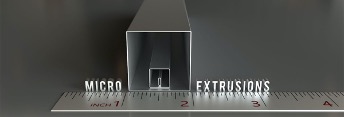
    : The word “microextrusions” reflects on a metal ruler up to the 4-inch mark, with 3 sizes of square hollow-shaped miniature extrusions lined up against the 1-2-inch marks.

    More About Taber Extrusions: 

    Founded in 1973, Taber Extrusions originally pioneered a process for extruding rectangular billet which enables the company to extrude solid profiles up to 31 inches wide or hollows up to 29 inches. Taber expanded with the purchase of an extrusion facility in Gulfport, MS, in 1995 which houses a new state-of-the-art cast house and two additional presses, microextrusion capabilities, and the fabrication area has been expanded multiple times.

    Taber continues to extrude billet in a wide range of alloys and sizes and has diversified its markets beyond military since its inception to include aerospace, automotive, marine, infrastructure, and sporting goods, among many others. For these markets, the company supplies cast and extruded products in a variety of soft and hard alloys.

    Today, Taber Extrusions has completed the addition of in-house friction stir welding capabilities, and carries on their offering of extruded aluminum components, value-added machining services, and raw material supply to the North American market – making them a vertically integrated supplier of FSW panels and assemblies never before seen in North America.

    Follow Taber Extrusions

    LINKEDIN: https://www.linkedin.com/company/8843183/

    FACEBOOK: https://www.facebook.com/taberextrusions/

    TWITTER: https://twitter.com/taberextrusions

    Interested in becoming a part of the Taber Team?  Submit your resume to careers@taberextrusions.com.

    Become a customer today! Visit us or request a quote: https://taberextrusions.com or call us at (888) 985-5319.

    18 02, 2021

    Aluminum Microtubing Rapidly Developing in Sync: Microextrusions

    2021-02-18T21:00:51+00:00February 18th, 2021|

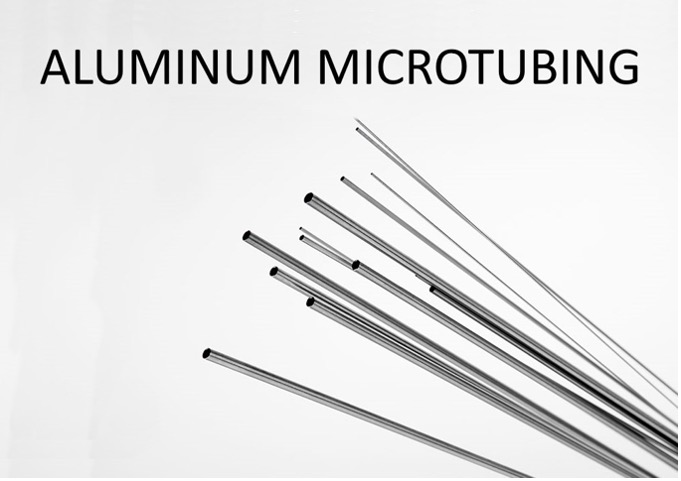
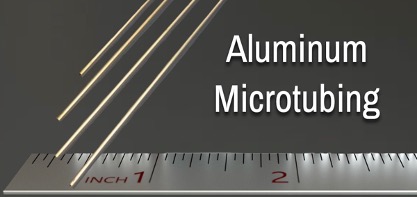
    3D Rendering of a silver ruler measuring approximately 2 inches of space, with 4 tiny aluminum tubes jutting down from the top of the image, barely taking up a few millimeters on the ruler. The words “Aluminum Mictotubing” appear to the right in white.

    Recent advancements in extrusion have allowed for aluminum microtubing products to be used in medicine and surgical applications. Specifically, microextrusions have allowed for OEM’s to request microtubing with dimensions previously thought impossible.

    With continued advancements in several industries, aluminum microtubing has become increasingly more complex and smaller in size. New and advanced processes have placed an urgency on manufacturers to produce smaller and smaller microtubing with safer and more durable materials.

    OEMs are primarily focused on miniaturizing their devices and providing new features, but reducing cost is also a large concern. Before, these OEMs relied on traditional injecting molding to complete these projects. However, with the increasing popularity of microextrusions, OEMs now have much more flexibility in cost and design.

    The use of aluminum microtubing is useful in this regard. Aluminum can provide three times as much volume per pound as other metal products – so when weight is a factor, it is an obvious choice.

    Aluminum’s natural corrosion resistance makes it suitable to many types of environments and its ability to transmit heat rapidly make it ideal for heat transfer processes. On top of this all, aluminum tubing is readily bent, formed, and welded.

    Per Medical Design Briefs:

    “From a challenge standpoint, material is a key factor… running products on a micro level requires materials to be processed at extremely low output levels, thus creating the potential for high shear and material degradation.

    Unlike traditional extrusion, which processes a large amount of material quickly, microextrusion processes a small amount of material slowly to get the desired physical and performance attributes.

    In addition to the benefits provided by the reduction in size, another plus is to have the ability to build in advanced steerable capabilities, enhanced with… features to aid in complex procedures. This type of structure can be produced in multilayer size, with enhanced performance in many areas. Depending on the application and device, you can modify configurations to aid the designers even further.”

    TABER’S MICROEXTRUSION PROCESS

    Taber’s aluminum ultra-precise extrusions are produced through a proprietary technique that delivers features, tolerances, and surface finishes previously considered to be impossible. This unique extrusion process continues to excite design engineers, offering an additional design alternative for the production of precision aluminum components. Industries most commonly using microextrusions include computer, electronics, aerospace, medical, industrial, and military.

    About Taber Extrusions: 

    Founded in 1973, Taber Extrusions originally pioneered a process for extruding rectangular billet which enables the company to extrude solid profiles up to 31 inches wide or hollows up to 29 inches. Taber expanded with the purchase of an extrusion facility in Gulfport, MS., in 1995 which houses a new state of the art cast house and two additional presses, micro-extrusion capabilities, and the fabrication area has been expanded multiple times.

    Taber continues to extrude billet in a wide range of alloys and sizes, and has diversified its markets beyond military since its inception to include aerospace, automotive, marine, infrastructure, and sporting goods, among many others. For these markets, the company supplies cast and extruded products in a variety of soft and hard alloys.

    Today, Taber Extrusions has completed the addition of in-house Friction Stir Welding capabilities, and carries on their offering of extruded aluminum components, value-added machining services and raw material supply to the North American market – making them a vertically integrated supplier of FSW panels and assemblies never before seen in North America.

    A SPECIAL NOTE ON VIRUSES AND BACTERIA IN RESPECT TO ALUMINUM SURFACES:


    At this time of extreme health concern, specifiers must carefully consider how material choices may impact the spread of viruses, bacteria, and infectious diseases in healthcare facilities and other public spaces.

    While much about the coronavirus is still under investigation, research has demonstrated significant differences in the longevity of viruses on various surfaces, and there are a variety of treatments that appear to further reduce the growth and survival of viruses and bacteria, enhancing the surface’s ability to destroy pathogens.

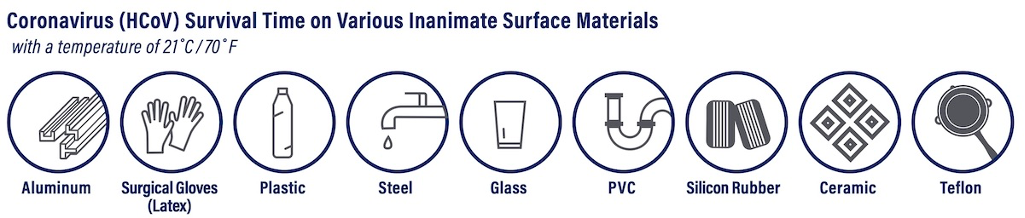
    A major research study published in the Journal of Hospital Infection tested human coronavirus strains for longevity on various material surfaces and found that the virus lasted only two to eight hours on aluminum, but days on many other materials.

    We encourage you to access the full white paper on this topic which can be found at AEC.org

    An infographic consisting of icons depicting various surface materials (aluminum, surgical gloves, plastic, steel, glass, PVC, silicon rubber, ceramic, and Teflon) with the headline, “Coronavirus (HCoV) Survival Time on Various Inanimate Surface Materials”

    Follow Taber Extrusions

    LINKEDIN: https://www.linkedin.com/company/8843183/

    FACEBOOK: https://www.facebook.com/taberextrusions/

    TWITTER: https://twitter.com/taberextrusions

    Interested in becoming a part of the Taber Team?  Submit your resume to careers@taberextrusions.com.

    Become a customer today! Visit us or request a quote: https://taberextrusions.com or call us at (888) 985-5319.

    4 12, 2020

    Process, Benefits, and Examples of Medical Microextrusions

    2020-12-04T01:28:40+00:00December 4th, 2020|

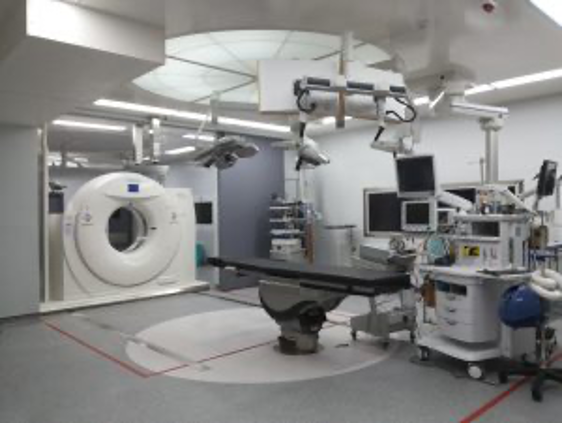
    A brightly lit medical office containing an MRI machine and various other high tech medical testing equipment.

    A SPECIAL NOTE ON VIRUSES AND BACTERIA IN RESPECT TO ALUMINUM SURFACES:


    At this time of extreme health concern, specifiers must carefully consider how material choices may impact the spread of viruses, bacteria and infectious diseases in healthcare facilities and other public spaces.

    While much about the coronavirus is still under investigation, research has demonstrated significant differences in the longevity of viruses on various surfaces, and there are a variety of treatments that appear to further reduce the growth and survival of viruses and bacteria, enhancing the surface’s ability to destroy pathogens.

    A major research study published in the Journal of Hospital Infection tested human coronavirus strains for longevity on various material surfaces and found that the virus lasted only two to eight hours on aluminum, but days on many other materials.

    We encourage you to access the full white paper on this topic which can be found at AEC.org.

    An infographic consisting of icons depicting various surface material (aluminum, surgical gloves, plastic, steel, glass, PVC, silicon rubber, ceramic, and Teflon.) with the headline, “Coronavirus (HCoV)) Survival Time on Various Inanimate Materials”

    Medical Microextrusions: Process, Benefits, and Examples

    Advancements in medical microextrusions technology in recent years have allowed manufacturers to create high quality products for the world of medical OEMs. With a range of dimensions that can reach as small as 0.024 in., OD with up to 6 lumens, and an ID range that can reach 0.003, it’s no surprise that many OEMs are turning to companies like Taber Extrusions that can provide products within these parameters. (Source: medicaldesignbriefs.com)

    In fact, micro-sized medical components are quickly becoming crucial to modern hospital safety and cost-efficiency. Whether it be for micro-tubing or micro sized components, the microextrusion process provides a number of benefits to engineers, OEMs, and patients.

    In the quest to create higher quality medical devices, companies are looking to enhance existing products (including catheters and precise flow restrictors) through miniaturization, while ultimately reducing the costs of production.

    Medical products that utilize microextrusion technology overwhelmingly support cardio-and-neurovascular procedures, drug delivery, IV procedures, and other procedures that require work on a micro level.

    By minimizing the impact of invasive procedures, the medical industry can reduce complications, make procedures faster and more efficient, and ultimately reduce patient in-time and overall healthcare costs.

    Closeup angle of a bundle of medical microextrusions with a blue overlay on the photo.

    WHAT’S THE MICROEXTRUSION PROCESS LIKE?

    Manufacturing the miniature components used in a medical microextrusion device poses a unique challenge for microextrusion providers. These components cannot be created using conventional extrusion machinery. Instead, they require precise, state-of-the-art equipment that allows for a high degree of precision and control over the process, as well as Engineers and technicians that possess deep knowledge of both the material and the process itself.

    However, at its core, the process is similar to that of regular extrusion.

    The material is either pushed forward (direct) or pulled through (indirect) a die orifice to create the shape required. Unlike macro-level extrusions, microextrusions are extruded at a very slow rate to maintain the physical properties of materials that are often delicate.

    Done properly, microextrusions can create end products that have complex cross sections and preserved chemical properties.

    BENEFITS TO OEMs

    Lower Time-to-Market

    In years previous, OEM’s requests for medical products would require them to re-outfit their existing extrusion machines, which would take more time and far less efficient. With many manufacturers outfitting themselves with microextrusion machinery, the time required to create the product is drastically reduced.

    Lower Costs

    As stated above, microextrusions can achieve their desired performance at fractions of the cost, due to the lower cost in materials that are used. As the development of the technology continues to improve, so to do the devices that are used in tandem with them. (i.e fibre optic cable, sensors, stints, etc.)

    Psychological benefit to patients

    A patient’s positive mental state can be a great asset to their recovery. Waning are the days of large, invasive medical devices that can cause patients discomfort. Smaller, less intrusive devices can go a long way. (source: Medical Plastic News)

    POTENTIAL APPLICATIONS

    • Infant/pediatric care
    • Heart leads
    • Neurological
    • Vascular Surgery
    • Catheters
    • Radiology
    • Urology
    • Oncology

    About Taber Extrusions

    Founded in 1973, Taber Extrusions originally pioneered a process for extruding rectangular billet which enables the company to extrude solid profiles up to 31 inches wide or hollows up to 29 inches. Taber expanded with the purchase of an extrusion facility in Gulfport, MS., in 1995 which houses a new state of the art cast house and two additional presses, micro-extrusion capabilities, and the fabrication area has been expanded multiple times.

    Taber continues to extrude billet in a wide range of alloys and sizes, and has diversified its markets beyond military since its inception to include aerospace, automotive, marine, infrastructure, and sporting goods, among many others. For these markets, the company supplies cast and extruded products in a variety of soft and hard alloys.

    Today, Taber Extrusions has completed the addition of in-house Friction Stir Welding capabilities, and carries on their offering of extruded aluminum components, value-added machining services and raw material supply to the North American market – making them a vertically integrated supplier of FSW panels and assemblies never before seen in North America.

    Follow Taber Extrusions

    LINKEDIN: https://www.linkedin.com/company/8843183/

    FACEBOOK: https://www.facebook.com/taberextrusions/

    TWITTER: https://twitter.com/taberextrusions

    Interested in becoming a part of the Taber Team?  Submit your resume to careers@taberextrusions.com.

    Become a customer today! Visit us or request a quote: https://taberextrusions.com or call us at (888) 985-5319.

    22 06, 2018

    Medical Microextrusions | Process, Benefits, and Examples

    2018-06-22T22:04:25+00:00June 22nd, 2018|

    medical microextrusions

    Advancements in medical microextrusions technology in recent years have allowed manufacturers to create high quality products for the world of medical OEMs. With a range of dimensions that can reach as small as 0.024 in., OD with up to 6 lumens, and an ID range that can reach 0.003, it’s no surprise that many OEMs are turning to companies like Taber Extrusions that can provide products within these parameters. (Source: medicaldesignbriefs.com)

    In fact, micro-sized medical components are quickly becoming crucial to modern hospital safety and cost-efficiency. Whether it be for micro-tubing or micro sized components, the microextrusion process provides a number of benefits to engineers, OEMs, and patients.

    In the quest to create higher quality medical devices, companies are looking to enhance existing products (including catheters and precise flow restrictors) through miniaturization, while ultimately reducing the costs of production.

    Medical products that utilize microextrusion technology overwhelmingly support cardio-and-neurovascular procedures, drug delivery, IV procedures, and other procedures that require work on a micro level.

    By minimizing the impact of invasive procedures, the medical industry can reduce complications, make procedures faster and more efficient, and ultimately reduce patient in-time and overall healthcare costs.

    WHAT’S THE MICROEXTRUSION PROCESS LIKE?

    Manufacturing the miniature components used in a medical microextrusion device poses a unique challenge for microextrusion providers. These components cannot be created using conventional extrusion machinery. Instead, they require precise, state-of-the-art equipment that allows for a high degree of precision and control over the process, as well as Engineers and technicians that possess deep knowledge of both the material and the process itself.

    However, at its core, the process is similar to that of regular extrusion.

    The material is either pushed forward (direct) or pulled through (indirect) a die orifice to create the shape required. Unlike macro-level extrusions, microextrusions are extruded at a very slow rate to maintain the physical properties of materials that are often delicate.

    Done properly, microextrusions can create end products that have complex cross sections and preserved chemical properties.

    BENEFITS TO OEMs

    Lower Time-to-Market

    In years previous, OEM’s requests for medical products would require them to re-outfit their existing extrusion machines, which would take more time and far less efficient. With many manufacturers outfitting themselves with microextrusion machinery, the time required to create the product is drastically reduced.

    Lower Costs

    As stated above, microextrusions can achieve their desired performance at fractions of the cost, due to the lower cost in materials that are used. As the development of the technology continues to improve, so to do the devices that are used in tandem with them. (i.e fibre optic cable, sensors, stints, etc.)

    Psychological benefit to patients

    A patient’s positive mental state can be a great asset to their recovery. Waning are the days of large, invasive medical devices that can cause patients discomfort. Smaller, less intrusive devices can go a long way. (source: Medical Plastic News)

    POTENTIAL APPLICATIONS

    • Infant/paediatric care
    • Heart leads
    • Neurological
    • Vascular Surgery
    • Catheters
    • Radiology
    • Urology
    • Oncology

    About Taber Extrusions

    Founded in 1973, Taber Extrusions originally pioneered a process for extruding rectangular billet which enables the company to extrude solid profiles up to 31 inches wide or hollows up to 29 inches. Taber expanded with the purchase of an extrusion facility in Gulfport, MS in 1995 which houses a new state of the art cast house, two additional presses, and a fabrication area that has been expanded multiple times. Taber continues to extrude billet in a wide range of alloys. and sizes.

    Taber Extrusions has recently purchased the Exact Manufacturing division of Lou-Rich, Inc. which will now expand Taber’s capabilities to include ultra-precision aluminum extrusions®.

    Today, Taber Extrusions is proud to announce expanded capabilities to include aluminum ultra-precision extrusions®.

    Follow Taber Extrusions

    LINKEDIN: https://www.linkedin.com/company/8843183/

    FACEBOOK: https://www.facebook.com/taberextrusions/

    TWITTER: https://twitter.com/taberextrusions

    Interested in becoming a part of the Taber Team?  Submit your resume to careers@taberextrusions.com.

    Go to Top