

Key Takeaways:
- Large structural aluminum extrusions improve performance and simplify assembly. Larger profiles reduce welds, decrease part counts, and enhance structural integrity in demanding defense and marine environments.
- Advanced extrusion technology enables greater design freedom. High-tonnage presses and integrated fabrication support larger, more complex aluminum components with consistent quality.
- Supply chain reliability is now a strategic advantage. Domestic manufacturing capabilities help defense and marine programs reduce sourcing risks and maintain production continuity.
Defense and marine aluminum extrusions have moved well past standard specification work. Across naval vessels, defense vehicles, offshore systems, and critical infrastructure, aluminum is selected for its strength-to-weight ratio, durability, and corrosion resistance. Today’s program requirements demand more than the right material. Engineers now need larger profiles, tighter tolerances, and domestic sourcing reliable enough to support programs that span decades. The manufacturers that will win these contracts aren’t just sourcing aluminum. They’re sourcing capability from domestic producers with larger presses, the metallurgical range to run hard alloys, and the fabrication depth to deliver integrated structural assemblies, not just profiles.
Why Defense and Marine Applications Depend on Large Aluminum Extrusions
Modern defense and marine systems demand materials that can withstand harsh operating conditions while minimizing weight. As a result, large structural aluminum extrusions are increasingly being specified for applications where performance, reliability, and manufacturability are critical.
In naval environments, marine grade aluminum extrusions provide excellent corrosion resistance while supporting structural efficiency. Likewise, defense programs benefit from lightweight components that improve mobility, fuel efficiency, and payload capacity without sacrificing strength.
As designs become larger and more integrated, engineers are moving away from multi-piece assemblies whenever possible. Instead, large aluminum profiles can be used to reduce welds, eliminate mechanical fasteners, and simplify manufacturing. This approach improves structural continuity and reduces potential failure points throughout the lifecycle of the component.
Organizations responsible for military modernization continue to emphasize the importance of strengthening domestic manufacturing capabilities and securing critical material supply chains. Recent investments by the U.S. Department of Defense highlight the growing focus on improving domestic aluminum production capacity and long-term industrial resilience.

The Value of Large-Scale Extrusion Manufacturing
As defense and marine structures increase in size, extrusion capability becomes a key factor in design flexibility. Larger presses allow manufacturers to produce wider cross-sections, more complex geometries, and higher-strength profiles that previously required multiple fabricated components.
Higher-tonnage extrusion systems expand what engineers can accomplish through monolithic design. Larger profiles can be produced with greater dimensional consistency, reducing downstream fabrication requirements and improving overall structural performance.
Furthermore, high-capacity extrusion equipment supports the production of hard alloys and large structural members often required in defense aluminum manufacturing. These capabilities become especially important when components must withstand demanding load conditions while maintaining tight tolerances.
Why Corrosion is Critical in Defense and Marine Aluminum Extrusions
Marine environments present unique challenges for structural materials. Saltwater exposure, humidity, and long service lifecycles place significant demands on performance. Therefore, corrosion resistant aluminum extrusions are widely used throughout naval and marine platforms. Proper alloy selection, extrusion control, and finishing processes help maintain structural integrity while minimizing maintenance requirements.
Industry standards continue to guide material qualification and performance expectations for aluminum structures used in marine environments. Industry specifications such as ASTM B221 and the ABS Rules for Materials and Welding establish the material qualification benchmarks that aluminum extrusions must meet for use in naval and marine structural applications
For aluminum extrusions for naval applications, corrosion resistance must be balanced with strength, manufacturability, and long-term durability. When these factors are aligned, aluminum can provide significant lifecycle advantages over alternative materials.
From Large Profiles to Integrated Structures
Extrusion technology creates even greater value when paired with advanced fabrication capabilities. In many defense and marine programs, structural systems extend well beyond a single profile and require large integrated assemblies that perform reliably under sustained load conditions.
Friction stir welding makes this possible by joining multiple aluminum profiles solid-state — without the heat-affected zone degradation or distortion associated with conventional fusion welding. The result is a weld that preserves the base material’s mechanical properties, which matters considerably when structural panels must hold tight tolerances and maintain integrity across long service lifecycles.
In practice, this means shipboard deck panels, hull sections, and bulkheads can be produced as continuous welded assemblies from extruded profiles rather than built up from multiple fabricated components. The same approach applies to armored vehicle floors and structural underbody panels, where monolithic construction reduces weld joints, and with them, potential failure points under impact or dynamic load conditions.
For programs that prioritize weight reduction, structural continuity, and reduced assembly labor, the combination of large-profile extrusion and friction stir welding delivers measurably more than either process alone.
Supply Chain Reliability Is Now a Design Consideration
Material performance is only one part of the equation. Today, engineering teams must also evaluate sourcing strategies and manufacturing continuity.
The aluminum extrusion supply chain has faced increasing pressure from global disruptions, extended lead times, and capacity constraints. Consequently, many organizations are prioritizing domestic aluminum extrusion suppliers that can provide stable production, quality control, and long-term program support.
At the same time, manufacturing leaders are investing in digital technologies and process improvements to strengthen supply chain visibility and responsiveness. Industry initiatives focused on advanced manufacturing supply chain modernization continue to reinforce the importance of integrated, resilient production ecosystems.
For defense and marine programs that often span decades, supply chain reliability is increasingly viewed as a strategic requirement rather than simply a procurement consideration.
High-Strength Aluminum Performance for Demanding Environments
Defense and marine applications frequently require materials capable of handling extreme loads, harsh operating conditions, and long service lifecycles. Therefore, selecting the appropriate alloy and extrusion process is critical.
High-strength aluminum alloys provide exceptional mechanical performance when supported by the proper extrusion technology and metallurgical controls.
Many of the same principles apply to defense and marine programs, where structural integrity, weight reduction, and manufacturing consistency must all be achieved simultaneously. When combined with large-profile extrusion capabilities, these materials help unlock new design possibilities across demanding structural applications.
An Aluminum Extrusion Facility Positioned to Support Defense and Marine Programs
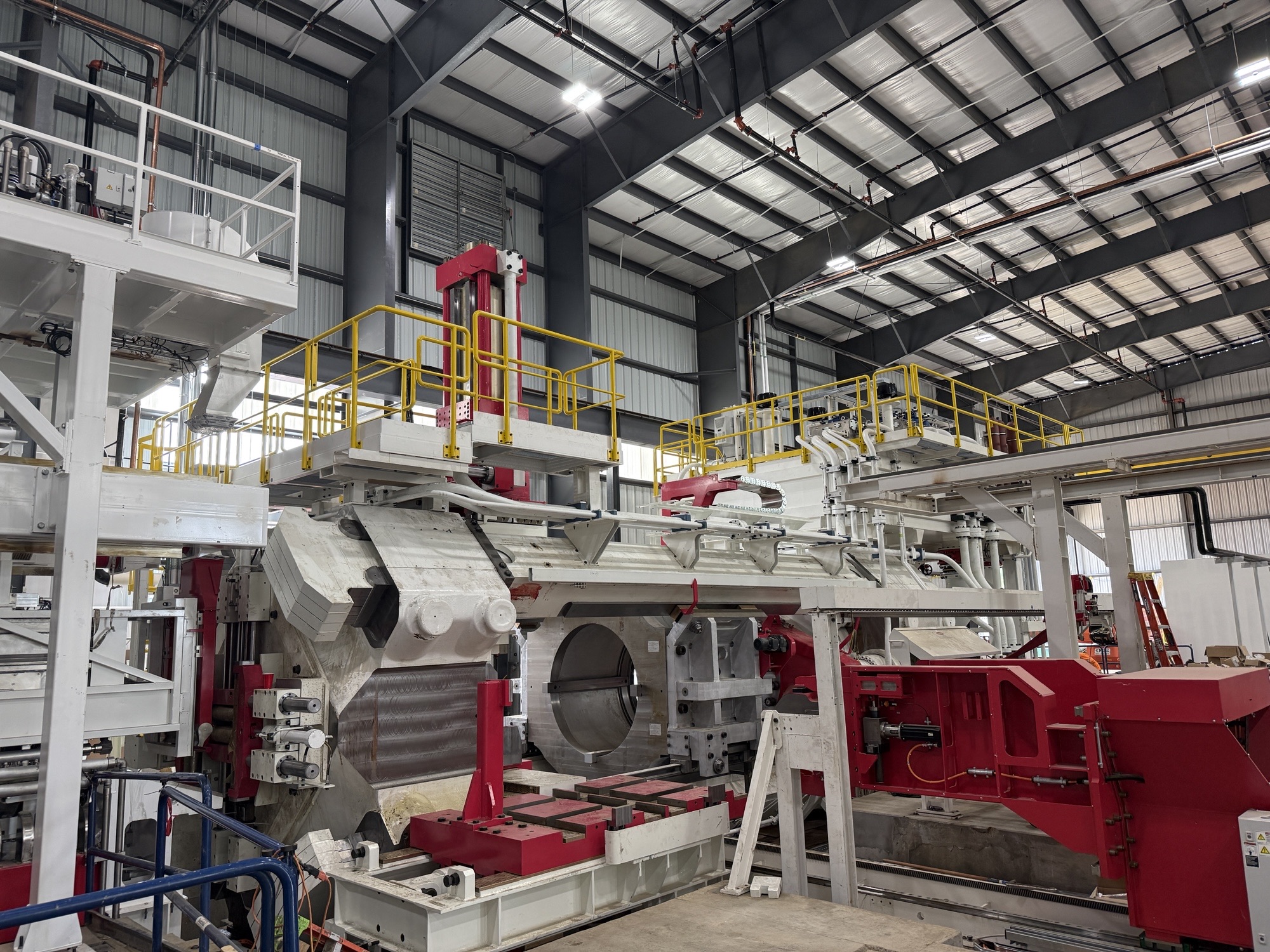
Taber Extrusions offers defense and marine aluminum extrusions through a vertically integrated manufacturing platform that includes billet casting, large-profile extrusion, fabrication, machining, and friction stir welding capabilities. With the launch of its new 10,000-ton direct press, one of the largest in North America, even larger aluminum profiles and more complex structural components can be produced domestically. As a result, customers gain access to scalable manufacturing capacity, enhanced design flexibility, and a reliable domestic supply partner for mission-critical defense and marine applications.
FAQ: Defense and Marine Aluminum Extrusions
Manufacturers should evaluate suppliers based on relevant quality management certifications, material traceability, testing capabilities, and compliance with applicable industry specifications. Depending on the application, standards such as AS9100, ISO 9001, ASTM material specifications, and military or naval requirements may all play an important role in ensuring consistent product quality and long-term program support.
Ideally, extrusion specialists should be involved during the initial design phase. Early collaboration can help optimize profile geometry, improve manufacturability, reduce material usage, and identify opportunities to consolidate multiple fabricated parts into a single extrusion, saving both time and cost later in the program.
The choice of alloy depends on the application’s strength, corrosion resistance, and weldability requirements. Alloys in the 5xxx, 6xxx, and 7xxx series are among the most specified for defense and marine applications because they offer different balances of structural performance, durability, and resistance to harsh operating environments.
Engineering defense or marine structures that demand more than standard profiles can deliver? Talk to our team about what’s now possible with North America’s newest large-capacity extrusion press.