NDAA Section 836 and Aluminum Extrusions: What Defense Contractors Must Know

You may have heard that NDAA Section 836 requires domestic aluminum sourcing. Here’s what’s actually true.
NDAA Section 836 directs the Department of War, formerly Department of Defense, to open a voluntary supplier registry by January 1, 2027, where suppliers attest to sourcing compliance. Two rules are confirmed in scope: specialty metals (10 U.S.C. §4863) and covered materials (10 U.S.C. §4872) and aluminum isn’t on either list. Those rules cover steel, titanium, zirconium, nickel and cobalt alloys, plus a short list of rare-earth magnets and minerals.
However, this guide does apply to aluminum extrusion buyers and suppliers just not through the specialty-metals route. Two frameworks are confirmed and already in motion: a July 2026 executive order requiring defense primes and subcontractors, at every tier, to map their supply chains and verify material origin, and standing Buy American Act domestic-content requirements. Those are what aluminum buyers should act on now.
If Section 836’s registry ends up accepting Buy American Act–based attestations, domestic aluminum suppliers may be able to register there directly. DoD hasn’t published that yet, so treat it as a secondary opportunity to watch, not a confirmed path.
Defense contractors sourcing aluminum extrusions have less than six months to get their supply chain documentation in order before January 1, 2027, when NDAA Section 836‘s registry opens and the executive order’s sourcing-waiver changes take effect. For procurement teams, the risk is straightforward: if material origin can’t be verified, suppliers may not qualify for defense programs, regardless of which specific registry or rule ultimately applies
This NDAA aluminum guide explains what Section 836 requires, how buyers should evaluate aluminum extrusion suppliers, and what steps should be taken before 2027 supplier qualification cycles begin.
What NDAA Section 836 Requires for Aluminum Sourcing
NDAA Section 836 opens a voluntary DoD registry for suppliers to attest sourcing compliance.
For aluminum procurement teams, three facts matter:
- Aluminum extrusions aren’t classified as a specialty metal under DFARS 252.225-7009 specifically. Although aluminum alloy fits the “alloy” definition, currently that clause covers steel, titanium, zirconium, and nickel/cobalt alloys.
- A July 2026 executive order requires defense primes and subcontractors, at every tier, to map their supply chains and verify material origin. This is what reaches aluminum extrusion suppliers today, independent of the Section 836 registry.
- Contractors must be able to document compliance through traceable material records.
This is general guidance based on publicly available federal sourcing regulations as of August 2026. Requirements are still being finalized. Speak with your legal counsel to confirm how they apply to your specific contracts. Read the DFARS specialty metals clause in full → · Read the July 2026 executive order in full →
WHAT BUYERS NEED TO VERIFY |
|
|---|---|
REQUIREMENT |
PROCUREMENT QUESTION |
| Material Origin | Where was the aluminum melted and cast? |
| Manufacturing Location | Where was the extrusion produced? |
| Traceability | Can the supplier provide heat-number tracking? |
| Documentation | Are CMTRs available upon request? |
| Supply Chain Records | Is chain-of-custody documentation available? |
Failure to verify these requirements can create sourcing delays, supplier qualification issues, and contract compliance risks.
What “Domestic” Actually Means for Aluminum Extrusions
One of the most common sourcing mistakes involves assuming a product qualifies as domestic simply because the extrusion press is located in the United States.
For aluminum extrusions, buyers should evaluate the entire manufacturing chain.
Domestic Aluminum Supply Chain
-
Billet Production: Where was the aluminum melted and cast?
-
Extrusion Manufacturing: Where was the profile extruded?
-
Material Verification: Can the supplier provide Certified Mill Test Reports (CMTRs)?
-
Traceability: Can the material be tracked through production using heat numbers and production records?
If any of these questions cannot be answered with documentation, procurement teams should investigate further before approving the supplier.
Documentation Procurement Teams Should Request
-
Certified Mill Test Reports (CMTRs)
-
Heat number records
-
Alloy certifications
-
Mechanical property reports
-
Chain-of-custody documentation
-
Material origin verification
The most common compliance gaps procurement teams encounter aren’t deliberate; they’re structural. An extruder operating a U.S. press may source billet from foreign mills because domestic supply is constrained or cost differences are significant. In other words, the extrusion is American-made, but the metal isn’t. In other cases, billet is re-melted or further processed domestically before extrusion, which can obscure the original cast origin and break the traceability chain even when suppliers believe they are compliant. A third scenario involves suppliers who have historically sourced domestically but cannot produce documentation to prove it: no CMTRs on file, no heat number records, no chain-of-custody paper trail. Each of these situations looks compliant on the surface until documentation is requested. By that point, qualification timelines are already compressed.
Many buyers discover compliance gaps only after requesting documentation. Material origin is often several tiers removed from the final extrusion supplier, making early verification essential.
What to Look for in an NDAA-Compliant Aluminum Extrusion Supplier
NDAA Section 836 aluminum compliance is only one part of supplier qualification.
Defense programs require suppliers that can provide compliant material, maintain traceability, and manufacture complex aluminum profiles at production scale.
SUPPLIER QUALIFICATION CHECKLIST |
||||
|---|---|---|---|---|
MATERIAL SOURCING |
QUALITY SYSTEMS |
ALLOY EXPERIENCE |
MANUFACTURING CAPABILITY |
SUPPLY CHAIN STABILITY |
| Domestic billet sourcing | AS9100D certification | 7075 | Large-profile extrusion capability | Multiple manufacturing facilities |
| Traceable material records | Aerospace quality management systems | 7050 | Complex hollow profile capability | Established domestic manufacturing history |
| CMTR availability | NADCAP accreditation where applicable | 5083 | Structural extrusion experience | Experience supporting aerospace and defense programs |
| Established compliance procedures | Documented inspection processes | 2000-series alloys | Tight-tolerance production capability | |
| Hard-alloy processing experience | ||||
A supplier that satisfies sourcing requirements but lacks aluminum extrusion manufacturing capability can still create program risk.
Why Hard Alloy and Large-Profile Capability Matters for Defense Programs
A fully qualified defense aluminum supplier must satisfy three requirements simultaneously: domestic sourcing, documented quality systems, and the manufacturing capability to produce the required alloys and profiles. Most domestic extruders meet the first requirement. Far fewer meet all three.
Many U.S. extrusion suppliers focus on commercial 6000-series profiles used in transportation, construction, and industrial applications. Defense and aerospace programs require significantly different capabilities such as hard alloys, large cross-sections, and dimensional tolerances that commercial presses aren’t built to hold.
COMMON ALLOY REQUIREMENTS |
|
|---|---|
ALLOY FAMILY |
TYPICAL DEFENSE USE |
| 7000-series | High-strength structural applications |
| 7050 | Aerospace structural components |
| 7075 | High-strength defense applications |
| 5083 | Marine and structural defense applications |
| 2000-series | Aerospace and specialized defense components |
Material selection is only part of the challenge. Profile geometry frequently determines supplier eligibility.
Defense programs may require:
-
Large structural shapes
-
Wide profiles
-
Complex multi-void hollow extrusions
-
High-strength hard-alloy components
-
Cross-sections exceeding 140 pounds per foot ( a capability held by very few domestic extruders)
Many domestic suppliers can manufacture standard commercial profiles. Far fewer can produce large-profile hard-alloy extrusions while maintaining the quality, dimensional control, and documentation required for defense aluminum extrusion applications.
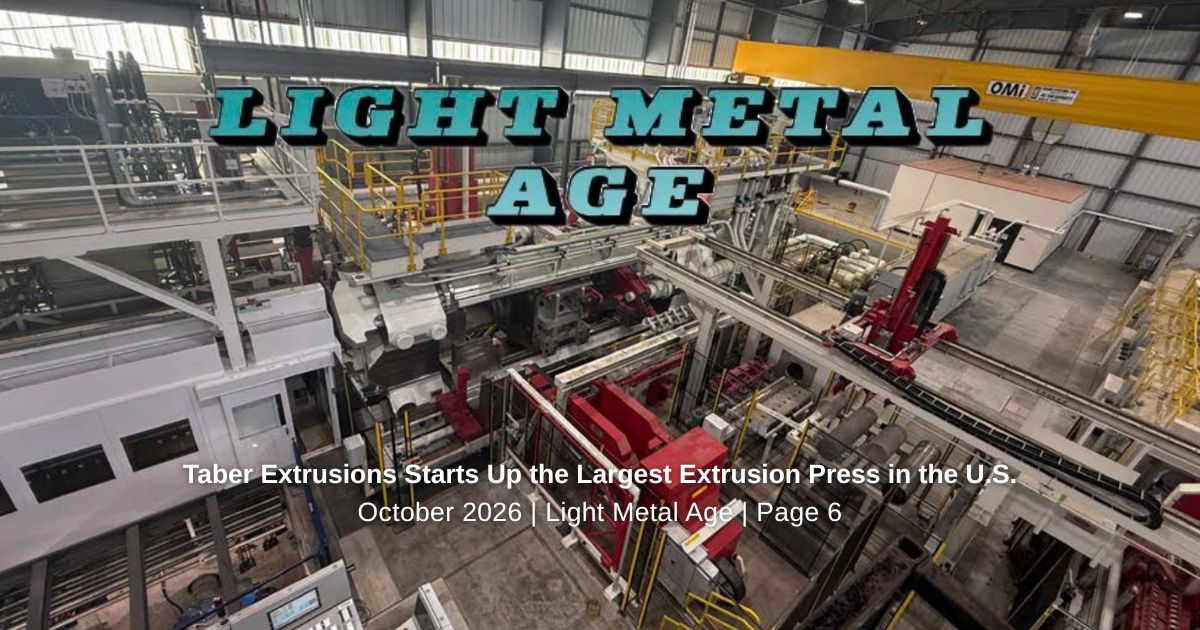
Manufacturers like Taber Extrusions, which operates dedicated hard-alloy presses and a new 10,000-ton press platform at U.S. facilities in Arkansas and Mississippi, represent the subset of domestic extruders with both the sourcing compliance and the manufacturing capability defense programs require.
The January 2027 Deadline: What Defense Buyers Should Do Now
January 1, 2027 is when the confirmed requirements take effect: the executive order’s supply-chain mapping and sourcing-waiver changes begin, and DoD’s Section 836 registry opens for the suppliers it’s confirmed to cover.
Supplier qualification commonly requires 90 to 180 days and may include:
-
NDA execution
-
Technical review
-
Sample production
-
Material testing
-
Quality audits
-
Internal approval processes
Organizations waiting until late 2026 may face supplier bottlenecks and compressed qualification schedules.
RECOMMENDED PROCUREMENT TIMELINE |
|
|---|---|
DATE |
ACTION |
| July-August 2026 | Audit current aluminum supply chain |
| August-September 2026 | Request CMTRs and sourcing documentation |
| September-October 2026 | Identify compliance gaps |
| October-November 2026 | Qualify alternate suppliers |
| January 1, 2027 | Compliance requirements take effect |
Four Actions to Take Immediately
-
Audit Current Suppliers: Document where aluminum is melted, cast, and extruded.
-
Request Supporting Documentation: Obtain CMTRs, material certifications, and traceability records.
-
Identify Supply Chain Risks: Determine whether any suppliers lack sourcing visibility or compliance documentation.
-
Begin Supplier Qualification: If gaps exist, start qualifying domestic alternatives before fourth-quarter procurement planning begins.
FAQ: NDAA and Domestic Aluminum Extrusion Sourcing
DFARS specialty-metals COTS exemptions apply to steel, titanium, zirconium, and nickel/cobalt alloys, not aluminum, which isn’t covered by that restriction in the first place. Consult your contracting officer or legal counsel on how Buy American Act and general domestic-sourcing rules apply to your specific aluminum COTS parts.
Procurement teams that cannot verify domestic sourcing face potential contract compliance risk and may need to qualify an alternate supplier before the next order cycle. The January 2027 deadline gives teams a limited window to identify gaps and begin qualification before fourth-quarter procurement planning begins.
Qualification timelines vary by program but commonly require 90 to 180 days. The process may include NDA execution, technical review, sample production, material testing, quality audits, and internal approval. Organizations beginning qualification in late 2026 risk compressed timelines ahead of the January 2027 deadline.
A domestic supplier melts and casts aluminum billet within the United States and performs the extrusion process at a U.S. facility. Foreign-cast billet that’s later extruded domestically doesn’t qualify as domestic. This standard comes from Buy American Act and general DFARS domestic-sourcing rules, not the specialty-metals clause (252.225-7009), which doesn’t cover aluminum.
NDAA sets the underlying policy; DFARS is how it shows up in individual contract clauses. For aluminum, the relevant DFARS provisions are the Buy American Act domestic-content clauses, not the specialty-metals restriction in DFARS 252.225-7009, which applies to steel, titanium, zirconium, and nickel/cobalt alloys instead.
Yes. Buyers should verify both billet origin and manufacturing location when evaluating compliance requirements.
Procurement teams typically request Certified Mill Test Reports (CMTRs), heat-number traceability records, alloy certifications, and supporting chain-of-custody documentation.
Not under what’s confirmed so far. The registry attests compliance with specialty metals and covered materials rules, and aluminum isn’t on either list. DoD hasn’t finished publishing the registry’s full eligibility criteria, so broader paths, like Buy American Act–based registration, aren’t confirmed yet. What is certain: aluminum extrusion suppliers are affected by a separate July 2026 executive order requiring supply-chain mapping and verification.
Preparing Your Aluminum Supply Chain for 2027
Defense procurement teams have a narrow window to verify aluminum sourcing, close documentation gaps, and qualify compliant suppliers before January 2027. Taber Extrusions has manufactured aluminum extrusions from domestically cast billets for more than 50 years, across two U.S. facilities in Russellville, Arkansas and Gulfport, Mississippi. With hard-alloy capability in 2000, 5000, and 7000-series alloys, large-profile extrusion exceeding 140 lbs./ft, and a new 10,000-ton press platform, Taber supports defense programs that require both domestic-sourcing documentation and manufacturing capability.
Buy American Act–compliant aluminum extrusions in hard alloys and large cross-sections, from domestic billets, at two U.S. facilities. Contact Taber to discuss your specifications.