2 12, 2025

Why Machining Capabilities Matter in Aluminum Fabrication

2025-12-02T23:03:34+00:00December 2nd, 2025|

A close-up of a CNC machine's precision cutting tool highlights a key process in aluminum fabrication. The title "Why Machining Capabilities Matter in Aluminum Fabrication" and the Taber logo are superimposed over the metallic components.

Key Takeaways:

  • Integrated Aluminum Manufacturing Reduces Risk and Delays. A single-source approach aligns with lean manufacturing principles and supports just-in-time production.
  • In-House Machining Capabilities Ensure Superior Quality. Allows complete control over material properties and tolerances, delivering consistently precise, high-quality aluminum components.
  • Single-Source Operations Lower Costs and Improve Efficiency. Reduces redundant shipping, material waste, and administrative overhead, resulting in lower total project costs while maintaining strict quality standards.

On a busy manufacturing floor, where machines hum and engineers troubleshoot delays, the root cause is often a fragmented supply chain rather than a technical failure. In today’s competitive market, understanding why machining capabilities are vital in aluminum fabrication is essential to overcoming challenges with lead times, cost, and quality. As projects grow more complex, separating extrusion from fabrication introduces inefficiencies that lead to costly delays. True efficiency is achieved when the entire process, from design to precision-machined components, is managed under one integrated system. This article serves as a guide to leveraging integrated aluminum manufacturing solutions, outlining key machining capabilities such as multi-axis CNC aluminum fabrication and large press extrusion that help ensure streamlined production and top-tier performance.

The Strategic Advantage of Integrated Aluminum Fabrication

In modern manufacturing, the shortest distance between two points is ideally a straight line, yet a fragmented supply chain often turns it into a winding road of inefficiency. When extrusion, machining, and finishing are handled by separate vendors, logistical hurdles and inconsistent quality are frequently introduced. Through a lean value-stream analysis, each handoff between vendors can be seen as non–value-adding activity that increases time and waste. By contrast, when these steps are integrated, unnecessary transportation and redundant quality checks are eliminated. As more companies reshore operations to strengthen domestic supply chains, this streamlined approach has been recognized as essential. A single-source supplier is therefore viewed as the optimal model for reducing waste and aligning with lean manufacturing principles.

This integration has been shown to address three key manufacturing pain points:

  1. Supply Chain Risk and Lead Times: When multiple suppliers are involved, the risk of delays, miscommunication, and quality discrepancies is increased. By consolidating operations within an integrated facility, these risks are minimized, and lead times are significantly reduced, creating a more stable and predictable production flow suited to today’s just-in-time manufacturing demands.
  2. Quality Control and Consistency: When an aluminum profile is extruded and machined within the same facility, complete control over material quality is maintained. This integrated approach ensures a deeper understanding of alloy properties, resulting in tighter tolerances and superior precision aluminum fabrication. Accountability remains with one partner committed to consistent quality, often verified through ISO 9001 and AS9100 certifications.
  3. Total Project Cost: When services are consolidated under a single-source provider, redundant shipping costs, material waste, and administrative overhead are reduced. As a result, efficiency is increased, and the benefits are directly reflected in lower overall project costs and stronger bottom-line performance.

A Checklist for Evaluating Essential Machining Capabilities

The true value of a supplier is measured by the breadth and sophistication of its in-house capabilities. When a potential partner is evaluated, their ability to perform the following processes on-site is considered a strong indicator of capacity to handle complex projects:

  • Large Press Aluminum Extrusion Capabilities: Massive, intricate shapes can be produced in a single piece on a powerful extrusion press. This capability simplifies downstream machining, reduces assembly requirements, and enhances overall part strength and durability.
  • Precision Cutting, Punching, and Drilling: These foundational services must be performed with high accuracy to prepare extruded profiles for final assembly or more advanced machining.
  • Advanced Forming and Bending: Extrusions can be shaped and bent to precise specifications without compromising structural integrity, which is critical for automotive and aerospace applications.
  • Multi-Axis CNC Machining: Considered the cornerstone of fabrication, complex aerospace bulkheads can be machined on a 5-axis center to tolerances as tight as ±0.002 inches, ensuring precision while maintaining strict industry standards.
  • Specialized Welding (Friction Stir Welding): For high-strength, safety-critical applications, advanced welding techniques are employed. FSW is used to produce stronger, more reliable bonds than traditional methods, making it essential for defense and marine components.

Taber Extrusions: A Single-Source Partner for Integrated Manufacturing

For over 50 years, Taber Extrusions has provided comprehensive, U.S.-based aluminum manufacturing solutions, exemplifying the benefits of an integrated partner. By housing world-class extrusion and fabrication under one roof, Taber directly addresses the quality, cost, and logistics challenges that modern OEMs face, embodying the principles of a streamlined supply chain recognized by industry authorities such as Thomasnet. Furthermore, this integrated power is anchored by some of the industry’s most advanced equipment. As highlighted in Business Focus Magazine, Taber’s large press aluminum extrusion capabilities include an 8,600-ton press that enables the delivery of complex, large-scale profiles that few other manufacturers can produce. Looking ahead, aluminum machining capabilities will be further expanded with the addition of a new 10,000-ton press in June 2026, providing enhanced scale and performance that will strengthen Taber’s value as a single-source partner.

Complementing this raw extrusion power is a full suite of in-house fabrication services, from multi-axis CNC aluminum fabrication to advanced Friction Stir Welding. This deep, single-source capacity allows Taber to maintain exacting quality control from start to finish, delivering precision-machined components for the world’s most demanding industries. The proven ability to manage the entire production lifecycle provides a critical strategic advantage to partners in the military, aerospace, and transportation markets who require absolute reliability and adherence to critical project timelines.

To learn more about the full range of services, download their corporate brochure.

When your project demands reliability and precision, partner with an expert. Contact Taber Extrusions today by filling out the form below to discuss your aluminum fabrication needs.
Request A Quote

    CONTACT INFORMATION

    YOUR PROJECT NEEDS

    Please specify extrusion alloy and length below

    If you have design files for extrusion or FSW please upload below

    Excepted file formats: jpg, pdf, png.

    Please specify FSW alloy class, welding type and panel dimensions below.

    Alloy*

    Welding Type*

    Select Billet Size *

    ANY CUI OR FCI DATA IS STRICTLY PROHIBITED FROM BEING UPLOADED DIRECTLY THROUGH THIS FORM. IF YOU NEED TO SHARE ANY SENSITIVE DATA PLEASE CONTACT A TABER SALES TEAM MEMBER AND THEY WILL PROVIDE A SECURE METHOD OF SHARING ANY SENSITIVE INFORMATION.

    17 11, 2025

    Aluminum Extrusion Solutions for Complex Design Challenges

    2025-11-18T02:03:14+00:00November 17th, 2025|

    A graphic featuring the text “Aluminum Extrusion Solutions for Complex Design Challenges” with the Taber logo centered below and stylized aluminum profiles along the bottom.

    Key Takeaways:

    • Ask the right questions early. Technical (tolerances, welding, secondary services) and business (lead times, incomplete specs) factors determine project success.
    • Incomplete specs are a major risk. Missing alloy, finishing, or machining details can delay delivery and drive redesigns.
    • Choose a partner that delivers advanced aluminum extrusion solutions with precision, compliance, and reliability.

    When projects are required to deliver more than simple shapes, aluminum extrusion solutions are recognized as the backbone of innovation. Meanwhile, engineers and procurement specialists are confronted with an ever-growing list of challenges, including tighter tolerances, multi-functional designs, stricter compliance requirements, and rising costs. The question is not whether aluminum extrusions can meet these demands, but whether both the technical complexity and business requirements of a project can be managed by an extrusion partner without unexpected issues arising.

    What Questions Should You Ask an Extrusion Partner?

    The success of an extrusion project hinges on asking the right questions up front. These go beyond “Can you make this shape?” and dive into both technical and commercial realities.

    Technical Questions

    • Can you produce precision aluminum extrusions at the required tolerance?
      • Some projects demand sub-millimeter accuracy. For example, micro-extrusion is crucial for aerospace and defense components, where even slight deviations can lead to functional failures.
    • Do you offer secondary services?
      • In-house aluminum fabrication and machining capabilities can eliminate supply chain risk by reducing the need to ship parts across multiple vendors.
    • What are your welding solutions?
      • Advanced processes, such as friction stir welding, enable the creation of strong, defect-free joints that traditional welding cannot achieve.

    Business Questions


    • What are your lead times, and how do you mitigate disruptions?
      • Supply chain resilience is no longer optional. With U.S. smelter output shrinking and energy competition rising (Reuters), procurement teams need assurance that partners can adapt quickly.
    • How do you handle incomplete specs?
      • A strong partner helps refine specs early, preventing cost overruns and delays later in the process.


    The Risk of Incomplete Specifications

    One of the most common pitfalls in extrusion projects is caused by incomplete or vague specifications. While a profile shape may be provided by engineers, alloy requirements, finishing needs, or machining details are often omitted. As a result, downstream challenges are created:

    • Incorrect alloys can compromise strength or corrosion resistance.
    • Overlooked finishing needs can delay final delivery.
    • Missing machining details often result in costly redesigns.

    Furthermore, the Aluminum Association emphasizes consistency in aluminum production and use, highlighting the importance of clear communication. The most effective way to avoid these issues is to partner with an extrusion provider that collaborates during the design phase, offering engineering support to guide alloy selection, tolerances, and secondary processes.

    Why These Questions Matter More Than Ever

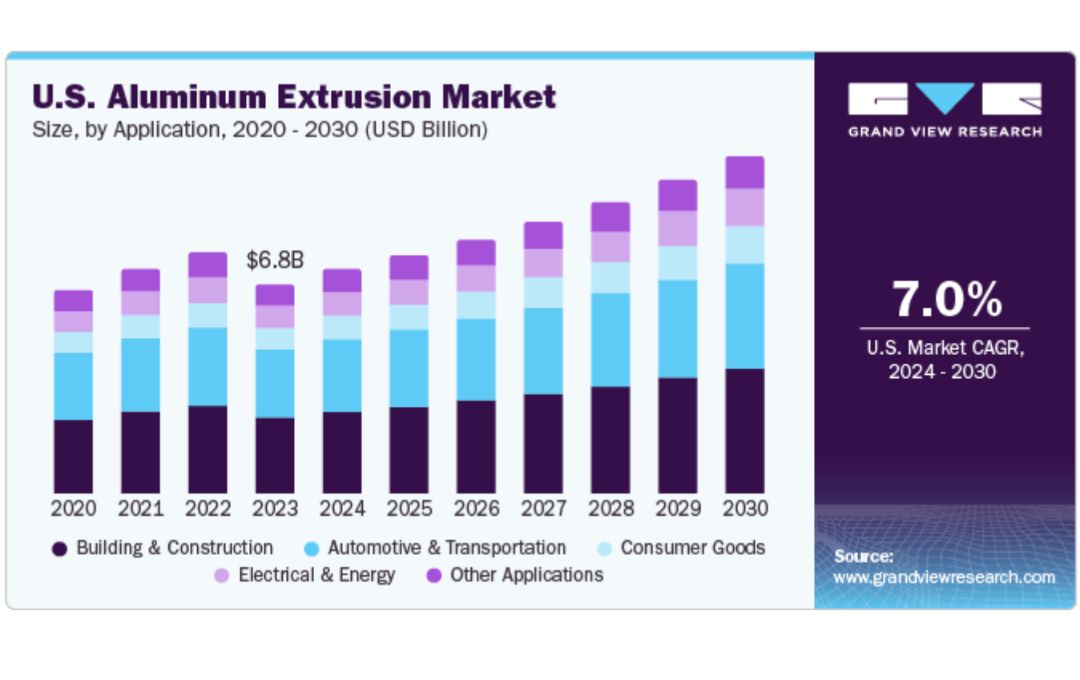
    The demand for industrial aluminum extrusions is being observed to rise steadily. The U.S. market alone was valued at $6.78 billion in 2023, with growth expected to continue at a 7% CAGR through 2030 (Grand View Research). At the same time, domestic supply is placed under pressure, as only six smelters remain active in the U.S., down from 33 in 1980.

    For procurement officers and engineers, two key considerations are highlighted:

    1. Capacity is critical. Projects that are larger or more complex can be accommodated by extruders equipped with advanced presses.
    2. Collaboration is essential. When specifications are unclear, partners with deep technical expertise can bridge the gap, ensuring industry standards are met while maintaining timelines.

    Why Taber Extrusions Fits the Bill

    After asking the tough questions, you need a partner who can deliver on both the technical and business fronts. Taber Extrusions offers.

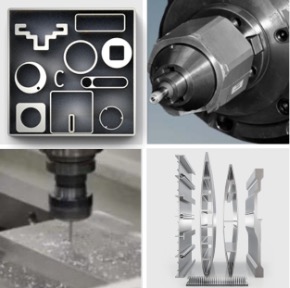
    This collage-style illustration showcases four advanced processes relevant to aluminum extrusion solutions: micro-extrusion, friction stir welding, aluminum fabrication, and a precision-engineered rectangular container. Each section highlights a distinct capability within high-tolerance metal manufacturing.
    • Broad alloy capabilities across 2XXX, 5XXX, 6XXX, and 7XXX series
    • Specialty processes, including friction stir welding and micro-extrusions
    • Integrated fabrication and precision machining services
    • A proven track record across aerospace, defense, transportation, and industrial markets.

    For engineers and procurement officers, this means fewer surprises and more reliable outcomes. Before committing to your next project, download Taber’s aluminum profiles resource, a starting point for understanding how different shapes and designs can support your goals.

    When specifications are incomplete or challenges are complex, Taber delivers custom aluminum extrusion solutions that balance technical precision with business realities. Contact Taber Extrusions today for a complimentary consultation or request a quote to get started.

    Request A Quote

      CONTACT INFORMATION

      YOUR PROJECT NEEDS

      Please specify extrusion alloy and length below

      If you have design files for extrusion or FSW please upload below

      Excepted file formats: jpg, pdf, png.

      Please specify FSW alloy class, welding type and panel dimensions below.

      Alloy*

      Welding Type*

      Select Billet Size *

      ANY CUI OR FCI DATA IS STRICTLY PROHIBITED FROM BEING UPLOADED DIRECTLY THROUGH THIS FORM. IF YOU NEED TO SHARE ANY SENSITIVE DATA PLEASE CONTACT A TABER SALES TEAM MEMBER AND THEY WILL PROVIDE A SECURE METHOD OF SHARING ANY SENSITIVE INFORMATION.

      Go to Top