19 08, 2026

Designing Large Aluminum Extrusions for Aerospace: From Concept to Flight-Ready Structures
2026-08-19T19:23:26+00:00August 19th, 2026|

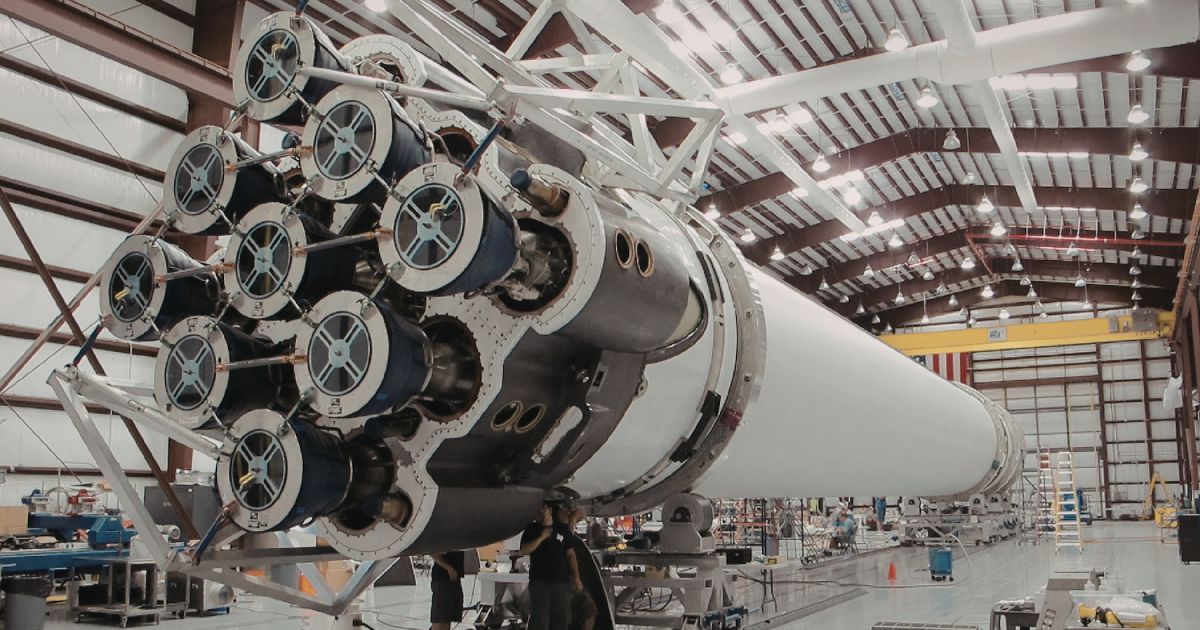
A large rocket structure in an assembly facility, showing one of the many the applications of aluminum extrusions in aerospace.

Key Takeaways:

  • Poor extrusion design increases cost, complexity, and failure risk. Many aerospace programs overcomplicate assemblies due to avoidable design inefficiencies at the extrusion stage.
  • Designing for larger extrusions reduces part count and improves structural integrity. Leveraging large-profile capabilities enables stronger, lighter structures with fewer joints and welds.
  • Early collaboration with extrusion experts accelerates time to production. Aligning design with manufacturing capabilities upfront minimizes redesigns and shortens program timelines.

Aerospace aluminum extrusion design directly impacts the strength, weight, manufacturability, and cost of aerospace structures. Yet many programs still rely on complex assemblies that require excessive fasteners, welds, and secondary operations, increasing both production costs and structural risk. By designing larger, more integrated aluminum extrusions from the start, engineers can reduce part counts, simplify assembly, and improve overall performance. Understanding the key design considerations early helps aerospace teams move from concept to production more efficiently while meeting demanding structural requirements.

Why Poor Extrusion Design Increases Cost and Risk

When extrusion design is treated as secondary, downstream challenges are often created. For example, complex geometries can increase part counts and assembly time. In addition, more fasteners and welds may be required, which raises both cost and risk. Structural inefficiencies can also be introduced, especially at stress concentration points.

According to the Federal Aviation Administration, simplified load paths and fewer discontinuities are preferred in aerospace structures. Therefore, extrusion design for reduced assembly should be prioritized early. When profiles are designed to carry more function, fewer downstream corrections are needed.

Designing Larger Extrusions to Reduce Assembly Complexity

Today, large aluminum extrusions for aerospace are being used more frequently to simplify structures. Engineers can design aerospace structural aluminum profiles that integrate more functionality.

As a result, several benefits can be realized:

  • Part counts are reduced
  • Mechanical fastening is minimized
  • Load distribution is improved
  • Structural integrity is strengthened

This approach has been supported by research from NASA, where integrated structures are often emphasized for lightweight performance. Additionally, access to large aluminum extrusion capabilities allows more ambitious designs to be produced at scale.

Designing for Fewer Joints with Friction Stir Welding

Material selection is a key factor in aerospace aluminum extrusion design. High-strength alloys, especially in the 2xxx and 7xxx series, are widely used for demanding applications. However, hard alloy extrusion design considerations must be carefully evaluated.

For instance, these materials can be more difficult to extrude due to their strength. Tight process control is required, and geometry must be optimized. Wall thickness variation should also be minimized to ensure consistency.
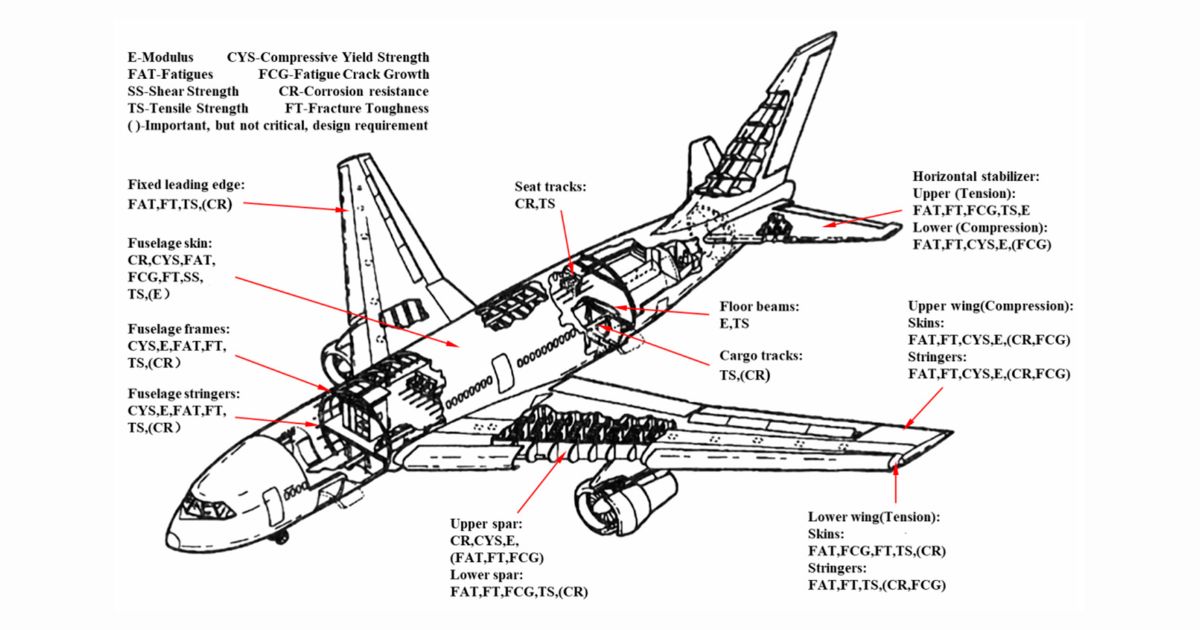
The Aluminum Association provides guidance on alloy performance and selection. Learn more about how these materials can be applied effectively when design and process are aligned.

Designing for Fewer Joints with Friction Stir Welding

Even with larger extrusions, some joining will still be required. In these cases, friction stir welding aerospace aluminum applications offer a strong solution. This process produces high-quality joints with low distortion.

As a result, several advantages are gained:

  • Stronger, more consistent welds
  • Improved fatigue performance
  • Reduced need for mechanical fastening
  • Greater flexibility in large structures

By incorporating friction stir welding for aerospace structures early in the design phase, engineers can simplify assemblies and achieve better performance outcomes.

Aluminum Extrusion Tolerances for Aerospace Applications

Aluminum extrusion tolerances aerospace requirements become more complex as profiles increase in size. Therefore, extrusion design guidelines must account for this early in development.

Designers should consider:

  • Dimensional variation across large profiles
  • Thermal effects during processing
  • Straightness and twist limitations

Access to large press capacity for aerospace applications helps improve consistency and control. Then, better alignment with aerospace manufacturing standards can be achieved.

Early Collaboration Improves Speed and Outcomes

Early collaboration is one of the most effective ways to improve results. When extrusion experts are involved early, risks can be reduced and timelines can be shortened.

For example, teams can:

  • Optimize aerospace structural aluminum profiles for manufacturability
  • Identify potential issues before production begins
  • Reduce redesign cycles
  • Improve scalability for long-term programs

Guidance from both NASA and the Federal Aviation Administration has shown that early engineering alignment leads to better outcomes. Through decades of successful missions and certified flight programs, both organizations have consistently demonstrated that collaboration is most effective when it begins at the earliest stages of design.

Designing the Future of Aerospace Structures

As aerospace demands evolve, structures must be lighter, stronger, and faster to produce. Aerospace aluminum extrusion design makes that possible when it is aligned with the right manufacturing partner.
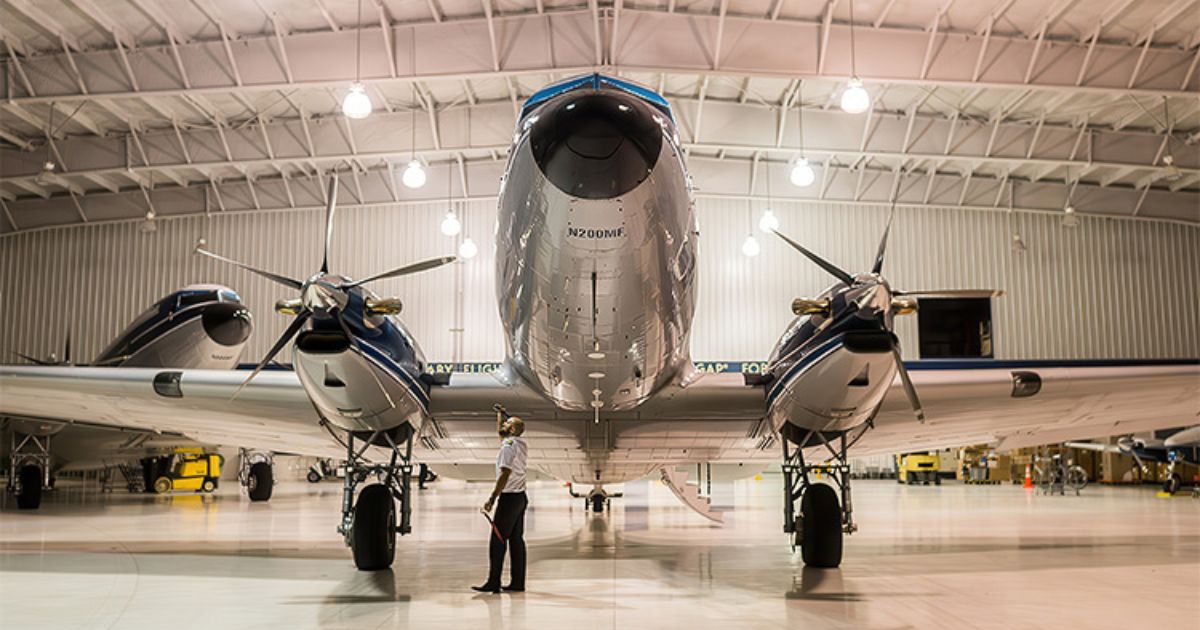
Producing large aerospace structural aluminum extrusions requires far more than press capacity alone. Success depends on a combination of advanced manufacturing capabilities, engineering expertise, and integrated production processes that ensure dimensional accuracy, material consistency, and reliable performance. When extrusion, billet casting, machining, and joining technologies are coordinated under one operation, manufacturers can better control quality, reduce production variability, and streamline the path from design to finished component.

Vertically integrated aluminum extrusion facilities with high-tonnage press capacity can produce large, complex aerospace structural profiles that consolidate functionality and reduce assembly complexity. Combined with in-house billet casting, machining, and friction stir welding, these capabilities help maintain consistency, achieve tight aerospace tolerances, and deliver the strength required for demanding applications.

Early collaboration between design teams and extrusion specialists further improves outcomes. By addressing hard alloy extrusion design considerations early, engineers can reduce redesigns, improve manufacturability, and accelerate production schedules. This approach supports lighter, stronger, and more efficient aerospace structures while minimizing overall program risk.

Located in Russellville, Arkansas, these capabilities support aerospace programs throughout North America.

FAQ: Aerospace Aluminum Extrusion Design

How do large aluminum extrusions reduce part count in aerospace assemblies?2026-08-19T19:21:58+00:00

Larger, more integrated profiles allow engineers to consolidate functions that would otherwise require multiple parts, fasteners, and welds. By designing aerospace structural aluminum profiles that carry more load across fewer pieces, programs can reduce mechanical fastening, improve load distribution, and lower both assembly time and structural risk. The key is access to high-tonnage press capacity that can produce complex cross-sections in a single extrusion.

What tolerances are achievable with large aerospace aluminum extrusions?2026-08-19T19:19:59+00:00

Aerospace aluminum extrusion tolerances become more challenging as profile size increases due to dimensional variation, thermal effects during processing, and straightness and twist limitations. Working with an extrusion manufacturer that has large press capacity and tight process controls allows programs to meet demanding aerospace dimensional standards. Early design collaboration helps engineers build tolerance requirements into the profile geometry before production begins, avoiding costly redesigns.

What aluminum alloys are most used for aerospace extrusions?2026-08-19T19:19:01+00:00

High strength 2xxx and 7xxx series alloys are the most widely used for aerospace structural applications. These alloys offer the strength-to-weight ratio required for demanding load cases but require careful process control and geometry optimization during extrusion. Wall thickness variation should be minimized, and designs should account for the specific hard alloy extrusion design considerations that affect formability and consistency at scale.

Request an Aerospace Extrusion Design Consultation. Work directly with Taber’s engineering team to optimize your next aerospace extrusion for performance, manufacturability, and scale. Start designing smarter before production begins.
Request A Quote

    CONTACT INFORMATION

    YOUR PROJECT NEEDS

    Please specify extrusion alloy and length below

    If you have design files for extrusion or FSW please upload below

    Excepted file formats: jpg, pdf, png.

    Please specify FSW alloy class, welding type and panel dimensions below.

    Alloy*

    Welding Type*

    Select Billet Size *

    ANY CUI OR FCI DATA IS STRICTLY PROHIBITED FROM BEING UPLOADED DIRECTLY THROUGH THIS FORM. IF YOU NEED TO SHARE ANY SENSITIVE DATA PLEASE CONTACT A TABER SALES TEAM MEMBER AND THEY WILL PROVIDE A SECURE METHOD OF SHARING ANY SENSITIVE INFORMATION.

    18 06, 2026

    How the Largest Aluminum Extrusion Press in North America is Transforming Industries

    2026-07-06T21:34:04+00:00June 18th, 2026|

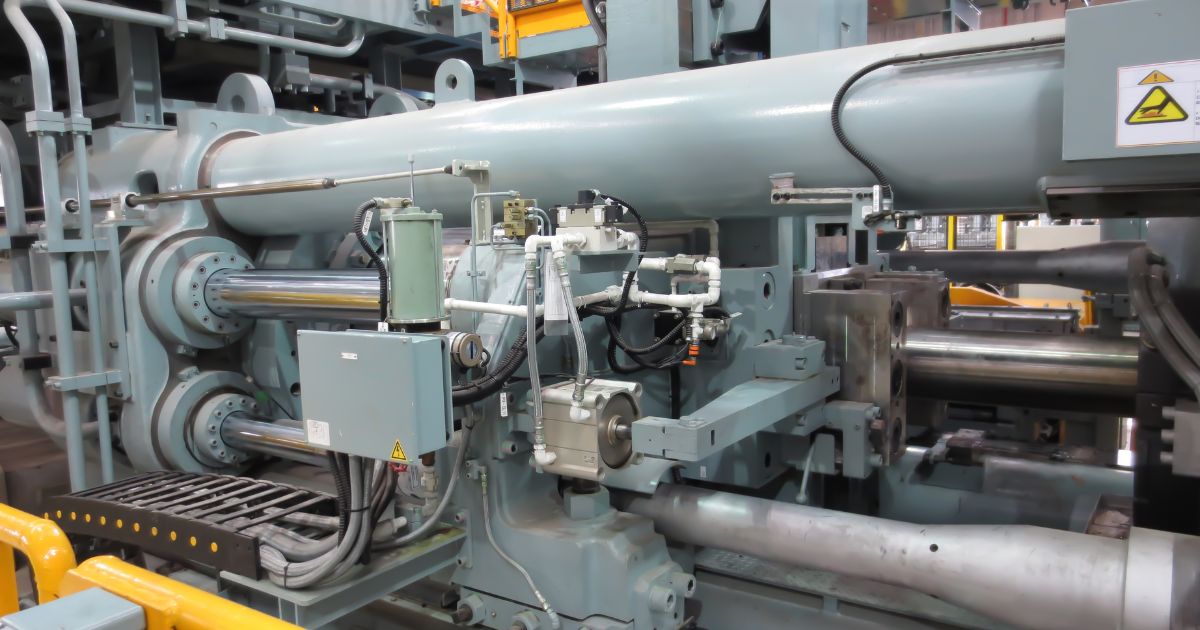
    Massive 10,000-ton aluminum extrusion press demonstrating large-scale manufacturing capabilities for aerospace and defense applications.

    Key Takeaways:

    • Manufacturers are often forced into multi-part assemblies for wide profiles, which can compromise structural integrity, increase production complexity, and extend overall lead times.

    • Expanding U.S. aluminum extrusion manufacturing strengthens supply chains by reducing lead times, improving quality control, and enabling end-to-end production with integrated machining services.
    • Advanced 10,000-ton press technology supports both hard- and soft-alloy extrusions, giving engineers greater design flexibility across aerospace, defense, and industrial applications.

    The largest aluminum extrusion press in North America is reshaping how aerospace and defense components are sourced and produced, addressing long-standing tradeoffs between weight reduction, structural integrity, and supply chain efficiency. Engineers and purchasing agents have often faced bottlenecks when large, complex profiles must be sourced domestically. However, with expanded capabilities, wide aluminum profiles and structural shapes can now be produced in a single run, reducing reliance on multi-part assemblies and minimizing potential weak points. As a result, it streamlines production and improves performance. Hard- and soft-alloy extrusions offer military and defense engineers distinct technical advantages. Moreover, sourcing domestically strengthens supply chains and drives operational efficiency. Because when the largest aluminum extrusion press in North America is in your corner, the bottlenecks stop here.

    The Engineering Feat of a 10,000-Ton Aluminum Extrusion Press

    Producing massive, single-piece aluminum components is no small task. Traditional manufacturing often forces engineers to piece together multiple smaller extrusions. This means adding welds, bolts, and rivets. Every joint introduces a potential point of failure and adds labor, inspection time, and assembly costs. Advanced large-scale presses change that equation.

    A press of this extreme magnitude, operating at 10,000 tons with a 16-inch container, can handle profiles up to 600 millimeters in width. It does the heavy lifting, so assembly lines do not have to. When the need for multi-part builds is eliminated, the structural integrity of the final product skyrockets. This is a critical factor for aerospace aluminum extrusions, where a fraction of an ounce or a single weak joint can compromise a mission.

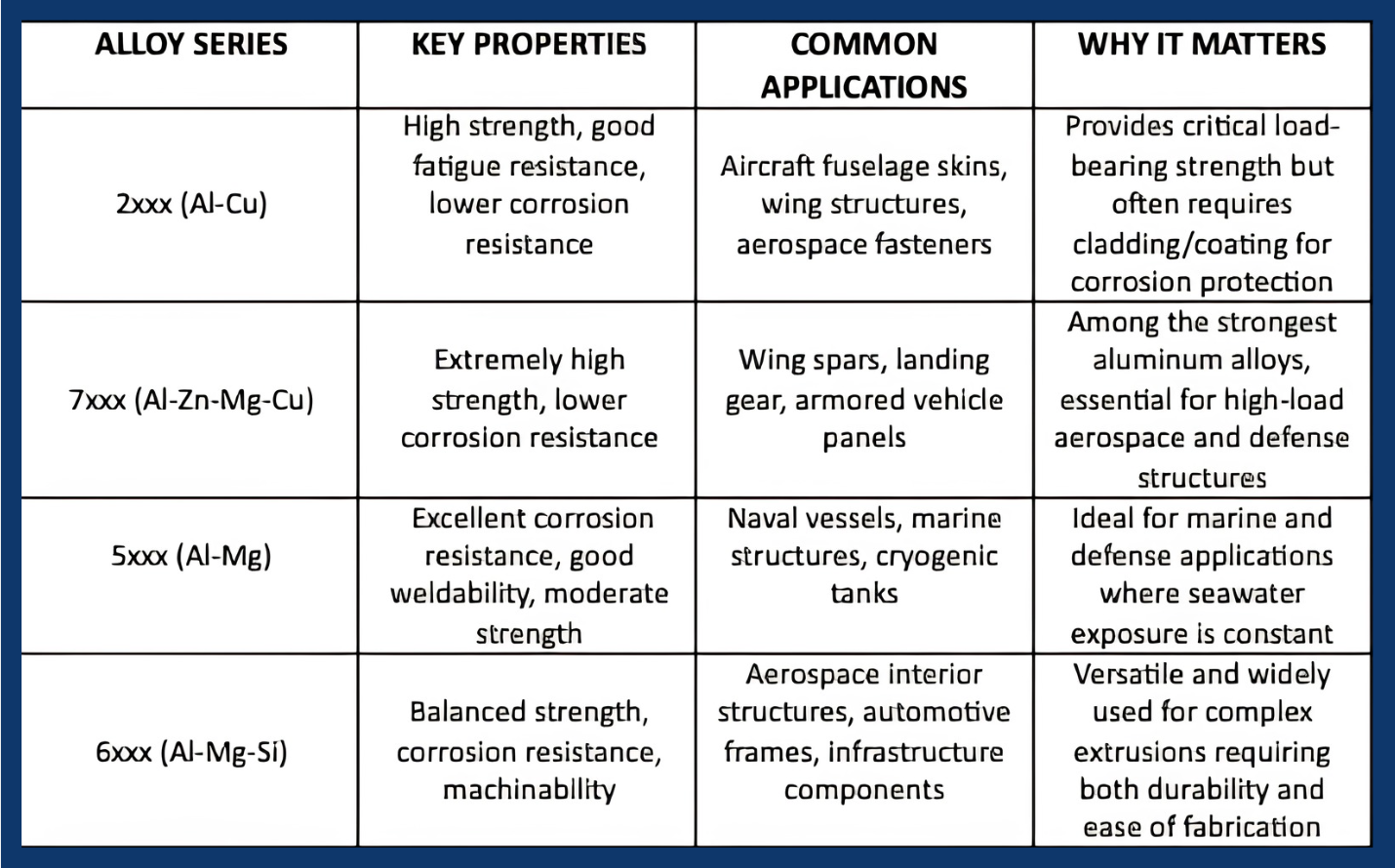
    Another major hurdle in industrial aluminum extrusions is material versatility. Many presses can only handle specific materials efficiently. However, state-of-the-art 10,000-ton presses are built to process both hard and soft alloys. Hard alloys, such as the 2xxx and 7xxx series, offer the extreme strength needed for military vehicles and aerospace structures. Soft alloys, such as the 5xxx and 6xxx series, offer the corrosion resistance and weldability required for marine and infrastructure projects. Being able to extrude these materials into complex, wide shapes provides time and freedom for designers to innovate.

    A table comparing the properties and applications of the different aluminum alloy series.

    Furthermore, these large-scale operations integrate advanced heating and cooling technologies. Features like induction heaters for billet taper and multi-spray zone profile quenching ensure the metal cools at the exact rate needed to maintain its metallurgical properties. This level of control allows suppliers to meet strict aerospace material specifications. In other words, combining massive pressing power with precision thermal management, this results in a superior product that holds tight tolerances across long, wide spans.

    Strengthening the U.S. Supply Chain for Mission-Critical Sectors

    Global supply chain disruptions have taught the manufacturing sector a hard lesson: relying on overseas suppliers for mission-critical components is a risky bet. Lead times can stretch into months, shipping costs fluctuate, and quality control is often left uncertain. As a result, bringing production back home is no longer just a trend; it is a necessity, and one that is actively driving the expansion of the North American aluminum extrusion market.  U.S. aluminum extrusion manufacturing, in turn, provides the stability and reliability OEMs demand.

    When large aluminum extrusions are sourced domestically, supply lines are shortened and risk is reduced. This is especially critical in the defense sector, where strict material traceability and compliance are required. Working with an AS9100 aluminum extrusion supplier helps ensure that every step meets rigorous aviation, space, and defense standards. For more information on these quality management systems, visit SAE International’s website.

    That said, raw extrusion is only part of the equation. After the metal leaves the press, secondary operations are often required, and sending parts between facilities can add both time and cost. In contrast, facilities that combine massive extrusion capabilities with in-house aluminum extrusion machining services offer a clear advantage. By keeping everything under one roof, facilities move products from raw billets to finished components for a seamless workflow. Ultimately, shorter transit times and tighter in-house oversight ensure the final product meets exact engineering specifications.

    The Aluminum Association notes that modernizing infrastructure and expanding domestic capabilities are vital to the industry’s future, as outlined in its PowerUp initiative. The addition of massive press lines in the United States directly supports this goal by strengthening a more resilient industrial base, one that can respond quickly to both national security needs and shifts in the commercial market. Whether it is a satellite housing or a heavy-duty industrial rail, having the capacity to produce and machine it domestically keeps assembly lines moving and projects on schedule.

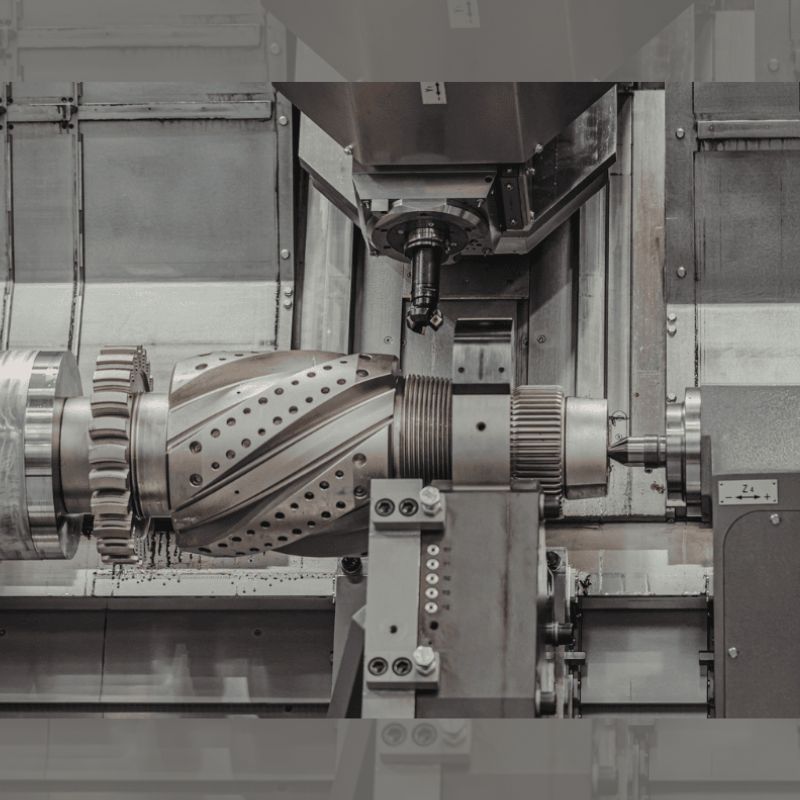
    A large intricate metal part being precisely machined on an industrial lathe, demonstrating in-house aluminum extrusion machining services.

    The Taber Extrusions Advantage

    Taber Extrusions understands the pressure OEMs face when sourcing large, complex parts. To meet this growing demand, Taber Extrusions is expanding its Russellville, Arkansas facility. In fact, the company is installing a state-of-the-art 10,000-ton press, slated to go live in June 2026. This new equipment will be one of the largest direct presses in North America.

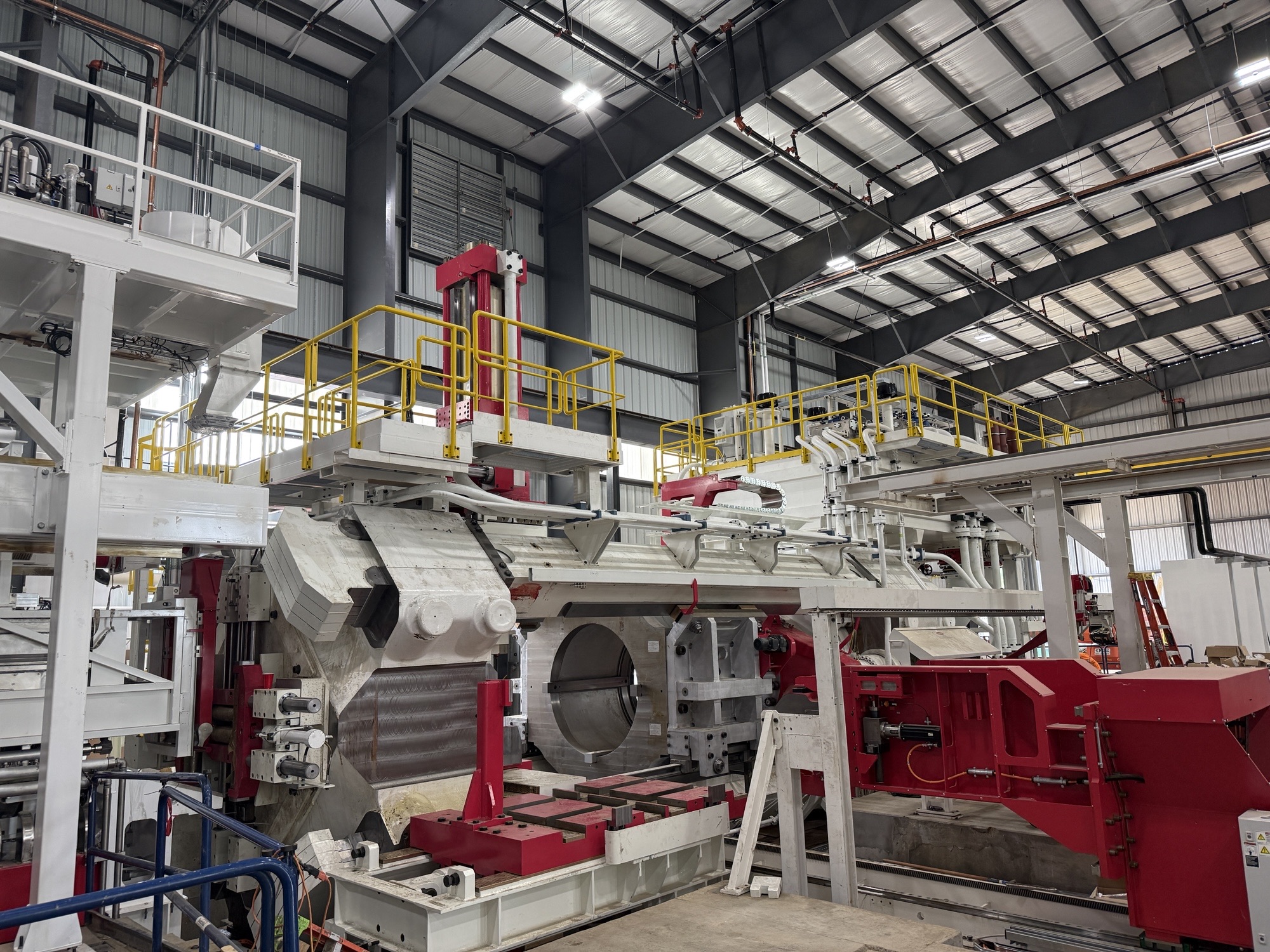
    A photo of Taber's newest and largest aluminum direct press installed at their Russellville facility.

    Taber Extrusions has built a reputation on taking on challenges other manufacturers turn down. They offer a comprehensive suite of services, including advanced extrusion capabilities, friction stir welding, and precision CNC machining. By keeping these processes in-house, Taber provides the strict quality control and supply chain stability that defense and aerospace contractors require. Their commitment to continuous improvement means engineers can design with confidence, knowing the manufacturing capabilities exist to bring their ideas to life.

    Common Questions About Taber’s 10,000-Ton Extrusion Press

    What certifications and quality standards support aerospace and defense extrusion programs?2026-07-15T00:05:26+00:00

    Taber Extrusions holds AS9100C and ISO 9001 certifications and has received Boeing Gold Supplier status and BAE Systems’ Gold Medallion — recognizing its compliance with the quality, traceability, and repeatability standards required for mission-critical aerospace and defense programs. Large-scale aluminum extrusion programs for these sectors typically require AS9100, customer-specific qualification requirements, and full material traceability.

    How does large-profile extrusion improve part consolidation in manufacturing?2026-07-15T00:08:22+00:00

    Large-profile extrusion, such as the profiles produced on Taber Extrusions’ 10,000-ton press, allows multiple components to be redesigned into a single extruded part. This reduces welding, fastening, and secondary machining operations, lowering assembly complexity, reducing failure points, and improving structural performance across defense, aerospace, and transportation programs.

    What size and complexity of aluminum extrusions can the 10,000-ton press produce?2026-07-06T21:05:40+00:00

    Taber Extrusions’ 10,000-ton press with a 16-inch rectangular container enables production of significantly larger and more complex aluminum profiles than conventional extrusion systems, including wider cross-sections, multi-void geometries, and long continuous shapes at tight tolerances. This capability is especially valuable for replacing fabricated or multi-part assemblies with a single extruded component, reducing weight and assembly complexity in aerospace and defense applications.

    Need large, complex, or aerospace-grade aluminum extrusions? Contact Taber Extrusions by filling out the form below to discuss your project requirements and engineering specifications.

    Request A Quote

      CONTACT INFORMATION

      YOUR PROJECT NEEDS

      Please specify extrusion alloy and length below

      If you have design files for extrusion or FSW please upload below

      Excepted file formats: jpg, pdf, png.

      Please specify FSW alloy class, welding type and panel dimensions below.

      Alloy*

      Welding Type*

      Select Billet Size *

      ANY CUI OR FCI DATA IS STRICTLY PROHIBITED FROM BEING UPLOADED DIRECTLY THROUGH THIS FORM. IF YOU NEED TO SHARE ANY SENSITIVE DATA PLEASE CONTACT A TABER SALES TEAM MEMBER AND THEY WILL PROVIDE A SECURE METHOD OF SHARING ANY SENSITIVE INFORMATION.

      25 02, 2026

      Taber Extrusions Media Coverage: Featured by the Chamber of Commerce

      2026-02-25T17:31:14+00:00February 25th, 2026|

      Taber Extrusions is proud to be recognized for its contributions to the industry and community. President Chuck Stout was recently featured by the Russellville Area Chamber of Commerce, highlighting our commitment to quality, innovation, and local business leadership. Below is the Chamber’s feature post highlighting this coverage.

      Taber Extrusions featured by Russellville Chamber of Commerce Facebook post

      Featured by the Russellville Area Chamber of Commerce

      Taber Extrusions is proud to share a recent interview featuring our President, Chuck Stout, conducted by the Russellville Area Chamber of Commerce. In this conversation, Chuck discusses Taber’s continued investment in Russellville, Arkansas. In addition, he mentions the company’s focus on large aluminum extrusions, and the strategic decision to expand operations with the addition of a 10,000-ton, 16-inch extrusion press.

      During the interview, Chuck highlights how Taber identified a growing demand for large, complex profiles and recognized an opportunity to strengthen domestic supply. After evaluating multiple locations for expansion, the company ultimately chose to remain in Russellville due to its pro-business environment. Furthermore, Russellville also has strong community support, and access to a reliable and upskill-ready workforce.

      He also emphasizes the collaborative support Taber has received from local and state leadership, educational institutions, and community partners. From workforce development to infrastructure coordination, the Russellville community has consistently demonstrated a shared commitment to industrial growth and high-quality job creation.

      Beyond business considerations, Chuck reflects on the personal impact of living and working in Russellville. Having lived in many places throughout his military and professional career, he notes that the community’s welcoming culture, especially its acceptance and support for families, including those with special needs, has made a lasting impression.

      As Taber Extrusions continues to expand its capabilities and serve industries requiring large-scale, high-performance aluminum extrusions, Russellville remains a critical part of that growth story.

      Taber follow us icon

      Follow Us On Social Media!

      Go to Top