15 01, 2020

Joining Aluminum Extrusions Through Friction Stir Welding

2020-01-15T19:32:51+00:00January 15th, 2020|

Dramatic in-flight photo of two F-22 Raptor military aircraft speed through the sky on a clear day.

What is Friction Stir Welding?


Friction stir welding is the method of joining two pieces of metal with no extra filler or material by subjecting the components to heavy plastic deformation, at elevated temperatures, that are still lower than the melting point. A rotating tool is thrusted between the components and, as friction heat is generated, the tool produces a severe plastic deformation under high pressure, at which time the weld interfaces are stirred together, and a homogenous structure is formed, creating a defect-free bond.

Why Friction Stir Welding?

FSW is a method of welding that is being used as an alternative method to fusion welding and other types of arc welding.

FSW vs. Fusion Welding  –  FSW offers three key benefits over fusion welding: metallurgical, environmental, and energy. The metallurgical benefits include: low distortion of workpiece (fine      microstructure, absence of cracking), good dimensional stability, and no loss of alloying elements. The environmental benefits include: no shielding gas required, no surface cleaning required, elimination of solvents required for degreasing, and consumable materials savings.  The energy benefits include: improved material use (joining different thickness), only 2.5% of energy needed for a laser weld, and decreased fuel consumption in light     weight, automotive, and ship applications. FSW is then, specifically because of its environmental and energy benefits, a more cost-effective method of welding. It is also a more economical choice due to low set up and training costs.

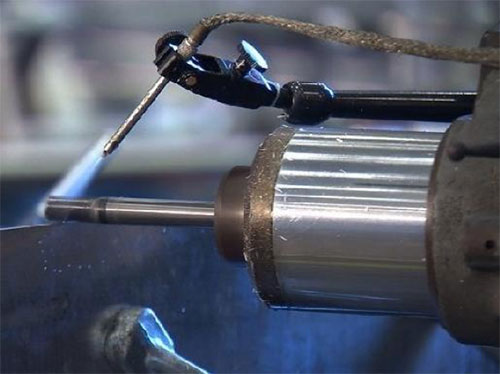
Close angle of a shiny drill-like instrument, also known as a friction stir welder cone.

FSW vs. Other Types of Arc Welding  –  The joining of aluminum extrusions in friction stir welding is a process that can be easily automated, making it an ideal solution for industrial use in manufacturing services such as the marine, aerospace, automotive, transportation, and rail industries. FSW welds have effectively been used in the marine industries in the fish freezer panels of ships, on the deck panels of helicopter landing platforms on ships, and it has been used in various amphibious assault ships. In aerospace, FSW has been used for structures such as the fuselage, fins, and wings that require high-strength aluminum alloys. In the automotive industries, FSW is used for aluminum engine cradles and suspension struts, as well as rear seats and exhaust gas recirculation coolers. The railway industry has utilized FSW to make roof and floor panels, as well as heat sinks for cooling the high-power electronics of locomotives.

An aerial view of an amphibious assault ship with a landing and launchpad for fighter jets on the ocean.

In military and defense, aluminum alloys are used as armor due to the combination of high ballistic performance and static strength that traditionally use MIG, gas metal arc, and tungsten arc welding. The reasons for the transition to FSW over the aforementioned arc welds are many — MIG welds cause stress corrosion at the weld toe, exfoliation occurring in the solution treatment, low ductility in butt welds, and liquidation due to the formation of low-melting point grain boundary. FSW welds are also more likely to pass the ballistic shock test.

Why FSW at Taber? New Aluminum Joining Techniques at Taber


In April of 2019, Taber Extrusions of Russellville, AR and Gulfport, MS announced the addition of Friction Stir Welding, “FSW,” capabilities to our existing portfolio which currently includes aluminum extrusions, fabrication, billet casting, and micro-extrusions. With the addition of in-house FSW capabilities, Taber is now a vertically integrated supplier of FSW panels and assemblies.

Taber’s engineering and manufacturing teams collaborated with Bond Technologies to create a custom Linear Seam machine. Taber’s new FSW machine is capable of welding large, double-sided thick profiles with minimal cycles of the machine; less cycles means greater efficiency and more precise results.


Taber offers quality custom extrusion design and advanced microextrusion capabilities and we are committed to providing our clients durable products that are both ecologically sound and cost effective. We chose FSW as a high-tech, alternative method to ensure a fast turn-around time, thereby reducing time to market.

About Taber:

Founded in 1973, Taber Extrusions originally pioneered a process for extruding rectangular billet which enables the company to extrude solid profiles up to 31 inches wide or hollows up to 29 inches. Taber expanded with the purchase of an extrusion facility in Gulfport, MS., in 1995 which houses a cast house and two additional presses, and multiple expansions of value added fabrication services.

Taber continues to extrude billet in a wide range of alloys and sizes, including 7″billet molds, and has diversified its markets beyond military since its inception to include aerospace, automotive, marine, infrastructure, and sporting goods, among many others. For these markets, the company supplies extruded products in a variety of soft and hard alloys. In 2018, Taber added ultra-precision extrusions to their capabilities allowing them to further serve customers in electronics, computer, and medical industries. Today Taber is proud to announce yet another exciting launch into Friction Stir Welding.

4 01, 2020

The Benefits of Friction-Stir Welding in The Marine Industry

2020-01-15T19:31:37+00:00January 4th, 2020|

The communications relay of a submarine sticking out of the water, while the rest of the vessel remains submerged.

Over the last two decades, friction stir-welding has emerged and been established as an extremely effective alternative to traditional MIG welding for use in marine applications, particularly as the industry moves towards increased use of aluminum. The powerful combination of reduced weight from aluminum and increased strength of FSW welds can yield spectacular benefits for marine designs.

Aluminum can help you obtain weight and production savings and improve the quality and efficiency of your vessels and structures. Aluminum reduces weight without sacrificing structural strength. The unique qualities of extruded aluminum component design provides you with exceptionally high torsion strength resistance.

If you’re looking to cut costs of construction for your cruise ships, mega-yachts, defense vessels, passenger ferries, leisure craft, as well as offshore platforms and rigs, read on!

FSW is Well Suited For Marine Applications Because of The Nature of The Welds

The friction stir welding process is best utilized on long straight welds, as this allows for a more cost-effective and efficient process. Unsurprisingly, this happens to cover a significant portion of the flat structures that are used in the marine industry, such as floors, decks, bulkheads, and more parts that don’t require complex curves. Many of the structures that are welded in this process are alloyed aluminum extrusions.

Friction-stir welding is a great compliment to alloyed aluminum as it can successfully weld any of the normal range of aluminum alloys – whether that be the plate, extruded sections, forging, or castings – including high strength alloys such as 7xxx and 2xxx series aluminum. The ability to weld dissimilar materials effectively (for example, steel to aluminum) is an additional benefit of FSW.

An image showing the different potential marine applications of FSW, such as military vessels, cruise ships, and civilian transports.

Benefits of FSW For Marine Vessels

For projects both large and small, the FSW process stands to speed up the construction process and save money. The cost savings comes from the elimination of the required man-hours of traditional MIG welding, and also provides a stronger, higher quality weld, which cuts down on secondary repair costs down the line. Also, using complete components such as Modular FSW panels reduces the time and labor costs of measurement and cutting on the construction site.

Additional Benefits

  • Minimal distortion on the weld, and better aesthetics
  • More environmentally friendly (no UV radiation or fumes) as well more user-friendly
  • Removes flaws that are inherent to conditional welding methods – no porosity, no hot cracking, stronger fusion of the constituent elements
  • FSW is becoming more widely adopted and is less susceptible to errors due to the automated process

Examples of Components That Are FSW Ready

Flooring, Deck, and Bridges

Flooring | Bulkheads | Decks | Walkways | Gangways

Structural Systems

Panels | Walls | Docks | Seawalls

Ready to get to work? Check out Taber’s FSW capabilities and let’s get started.

About Taber: 

Founded in 1973, Taber Extrusions originally pioneered a process for extruding rectangular billet which enables the company to extrude solid profiles up to 31 inches wide or hollows up to 29 inches. Taber expanded with the purchase of an extrusion facility in Gulfport, MS., in 1995 which houses a cast house and two additional presses, and multiple expansions of value added fabrication services. Taber continues to extrude billet in a wide range of alloys and sizes, including 7″billet molds, and has diversified its markets beyond military since its inception to include aerospace, automotive, marine, infrastructure, and sporting goods, among many others. For these markets, the company supplies extruded products in a variety of soft and hard alloys. In 2018, Taber added ultra-precision extrusions to their capabilities allowing them to further serve customers in electronics, computer, and medical industries. Today Taber is proud to announce yet another exciting launch into Friction Stir Welding.
1 10, 2019

Friction Stir Welding In The Shipbuilding Industry

2019-11-01T14:28:43+00:00October 1st, 2019|

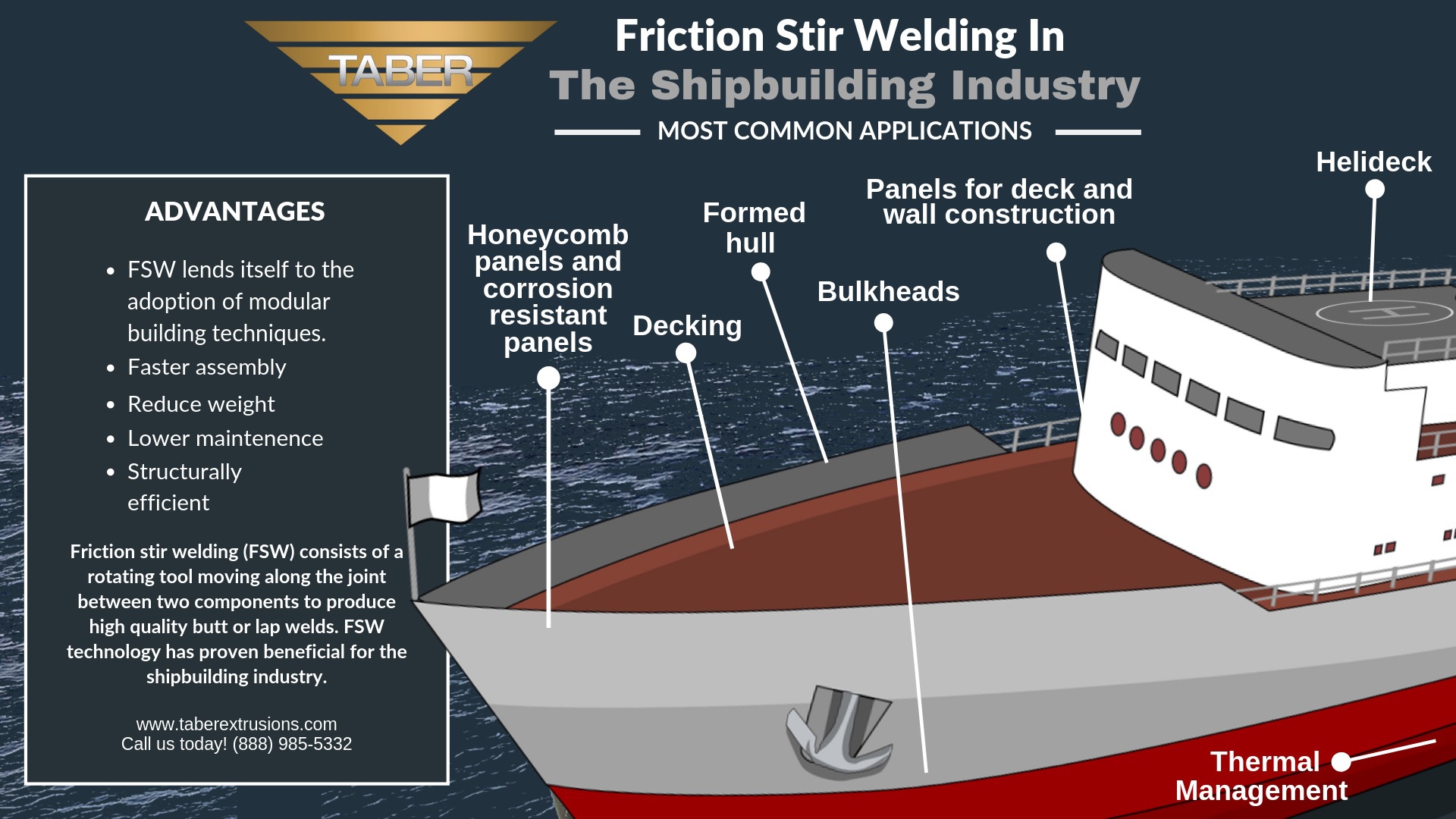
Friction Stir Welding In The Shipbuilding Industry Infographic containing most common applications of thermal management, helideck, wall panels, bulkheads, hull, decking, and honeycomb panels

Taber Extrusions wants to lead the way in FSW development and be a part of its growth in the future. Taber Friction Stir-Welding Capabilities are second to none. With profile widths up to 31 inches, lengths up to 65 feet,

and ability to weld up to ¾ of an inch in a single pass, Taber has an operational envelope that is unmatched within the industry. To learn more about how we can be of service visit: https://taberextrusions.com/

Follow Taber Extrusions LINKEDIN: https://www.linkedin.com/company/8843183/ FACEBOOK: https://www.facebook.com/taberextrusions/ TWITTER: https://twitter.com/taberextrusions

12 09, 2019

What is Friction Stir Welding?

2019-09-12T18:36:18+00:00September 12th, 2019|

This image depicts a friction stir-welding machine joining two large, cylindrical aerospace vehicle components.

What is friction stir welding?

As the name suggests, “friction stir welding” (FSW) is a metal joining technique that uses friction heat to unite metal structures. In traditional welding, high levels of heat are applied thereby melting two metal parts into one another. By contrast, FSW is a solid-state joining technique that takes advantage of metal atom’s cohesive forces that cause them to diffuse into each other. The friction generates temperatures below the melting point, but high enough where the plasticized material can move around.

How does friction stir welding work?

The key in FSW is the non-consumable rotating tool. The tool, that looks similar to a drill bit, is made up of two components: a probe, a small cylinder which will penetrate into the width of the metals at their joint; and a shoulder, a larger cylinder which will spin along the surface of the metal pieces. The rotating tool supplies both the heat and the pressure needed for the weld.

The metal pieces are clamped tightly in a butt or lap joint configuration, and the mechanical rotating tool is programmed to run along the joint. The spinning tool inserted between the tightly clamped metal creates enough friction heat for the atoms of the two metals to move around. The plasticized metal moves around the probe and then fills the cavity behind the tool before coalescing into a single piece of metal.

Close up image of the drill bit-like rotating tool on a friction-stir welding machine.

What are the advantages of friction stir welding’s solid state joining for aerospace, shipbuilding, rail, aerospace, automotive industries?

There are various advantages to using FSW for metal joining:

  1. Flexibility: FSW allows efficient welding for difficult projects. FSW can be used on high-strength aluminum that can be difficult to join using conventional welding. Companies such as Taber use FSW to create aluminum extrusions in a wide array of profiles and sizes ranging from micro extrusions to 65-foot long extrusions.
  2. High strength welds: Traditional welding can introduce corruption into metals during the welding process, as it can manifest solidification cracks and porosity problems. Solid-state joining creates joints that are as strong as the metal from which they are created and are a good choice for high-strength aluminum.
  3. High quality welds: Characteristics of FSW welded metal include low distortion, reduced weight (no filler material), and excellent bonding properties.
  4. Green welding: Traditional welding consumes electrodes, energy, shielding gas, and produces noxious fumes. FSW with its non-consumable rotation tool eliminates waste.

Limitations of friction stir welding for metal joining:

The FSW spin tool must resist heat and corrosion as it moves the metal around it. Therefore, FSW best works with malleable materials with low welding temperatures.

Four, large cross-sectional profiles of aluminum parts with different patterns, shapes, and widths, and underneath an aluminum tablet with micro-aluminum profiles.

Therefore, aluminum continues to be one of the most important metals used in FSW. Aerospace, shipbuilding, rail, aerospace, automotive industries all look to aluminum FSW for high-precision aluminum extrusions and aluminum welds of high strength and quality. Aluminum FSW is particularly important because high-strength aluminum can be difficult to join using traditional methods and FSW precision allows almost infinite variety in shape and size in aluminum extrusions.

More on Taber Extrusions 

Founded in 1973, Taber Extrusions originally pioneered a process for extruding rectangular billets which enables the company to extrude solid profiles up to 31 inches wide or hollows up to 29 inches. Taber expanded with the purchase of an extrusion facility in Gulfport, MS in 1995 which houses a cast house and two additional presses, with a fabrication area that has been expanded multiple times. Besides their recently expanded capabilities to include micro-extrusions and 7” billet molds, Taber Extrusions is proud to announce friction stir-welding technology. The addition of in-house FSW capabilities creates a vertically integrated supplier of FSW panels and assemblies never before seen in North America.

Connect: Call Us Today! (888) 984-5279

12 09, 2019

Are you as proficient with this crossword puzzle as Taber Extrusions is with their services?

2020-04-03T21:25:32+00:00September 12th, 2019|

Crossword puzzle about Taber Extrusions services

About Taber Extrusions

Taber is AS9100, NADCAP, and ABS certified. Founded in 1973, Taber Extrusions originally pioneered a process for extruding rectangular billet which enables the company to extrude solid profiles up to 31 inches wide or hollows up to 29 inches. Taber expanded with the purchase of an extrusion facility in Gulfport, MS, in 1995 which houses a cast house and two additional presses, and multiple expansions of value added fabrication services.

Taber continues to extrude billet in a wide range of alloys and sizes, including 7″ billet molds, and has diversified its markets beyond military since its inception to include aerospace, automotive, marine, infrastructure, and sporting goods, among many others. For these markets, the company supplies extruded products in a variety of soft and hard alloys. In 2018, Taber added ultra-precision extrusions to their capabilities allowing them to further serve customers in electronics, computer, and medical industries. Today, Taber is proud to announce yet another exciting launch into Friction Stir Welding.

10 09, 2019

Taber Presents Friction Stir Welding Capabilities at Aluminum USA 2019

2019-09-12T18:34:22+00:00September 10th, 2019|

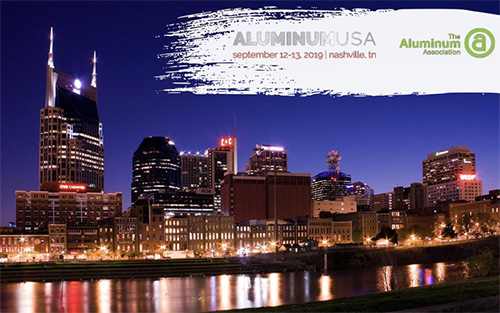
Stunning evening view of the Nashville city skyline along the water featuring a colorful reflection of the bright downtown lights reflecting off the water giving the entire scene a magical glow.

Aluminum industry professionals are gearing up for The Aluminum USA Tradeshow on September 12th-13th in Nashville, Tennessee, where Taber Extrusions will be showcasing their in-house friction stir welding capabilities creating a vertically integrated supplier of FSW panels and assemblies never before seen in North America.

Aluminum USA is hosted biannually as a “weeklong leading industry event covering the entire value chain from upstream (mining, smelting) via midstream (casting, rolling, extrusions) to downstream (finishing, fabrication). ALUMINUM USA is the ideal event for end-users from application industries such as automotive, aerospace, construction, packaging and electrical & electronics”. Special events surrounding the tradeshow kick off with Nissan tours on Wednesday, September 11th, and continue with an array of face-to-face opportunities including technology-based networking events and an industry meet & greet. This year’s tradeshow is bigger and better than ever, featuring an expanded show-floor.

Jason Weber who currently serves as Taber Extrusion’s VP of Marketing and Sales, will be hosting a presentation at EDU ’19, which is part of the broader Aluminum USA tradeshow on September 12th and 13th  that “gives a forum to leading suppliers and industry professionals to come together for face-to-face meetings, exhibition, cutting-edge conference, and educational programming.” Aluminum USA EDU ’19  features educational presentations covering aluminum extrusion design, applications, and technology. In addition to speaking at the EDU ’19 forum, guests are welcome to visit Jason Weber and other Taber Extrusions team members at Booth #546 during the tradeshow.

A headshot of an attractive smiling Caucasian man with slightly silvering hair, wearing an ocean blue polo shirt and a white, zip-up sweater.

Jason Weber’s presentation titled, “Joining Aluminum Extrusions through Friction Stir Welding” will present industry experts and end-users with information on Friction Stir Welding (FSW). The presentation will cover the “basics of what FSW is, current products that are Friction Stir Welded, general design practices for extrusions incorporating FSW features, and typical performance of FSW joints versus other joining technologies”.

Sometimes described as more of a forging process than actual welding – Friction Stir Welding is a solid- state joining technique used to join metals not easily fused with traditional welding. Ideal for metals such as aluminum, copper, and other metal alloys, FSW is commonly used in the aerospace, rail, automotive, shipbuilding, transportation, and marine industries. Friction Stir Welding makes possible very high-quality welds with minimal distortion. It is also a process that can be easily automated, making it an ideal solution for industrial use.

The EDU ’19 forum gives a chance for Weber to share inside knowledge of the process which the company now offers in its extensive menu of services. “As a leader in the Aluminum Industry, Taber works with clients in military, government, aircraft and aerospace, shipbuilding, infrastructure – and so much more. The aluminum extrusion shapes they are creating for these clients are absolutely ideal for Friction Stir Welding technology,” said Dave Hofferbert, President of Bond Technologies, Inc.

A close-up of a futuristic looking, metal spinning tool inserted between the metal ends of two large cylindrical spaceship parts.

Jason Weber, Vice President of Sales & Marketing for Taber Extrusions, has 20+ years of global manufacturing experience helping innovate product and service offerings. Jason is an active member of the Aluminum Extruders Council (AEC) and is the leader of the Council’s Marketing/Industry Promotion Team.

About Taber: 

Founded in 1973, Taber has become a leading supplier of high quality aluminum extrusions. By ensuring that every process and procedure, from billet procurement and final shipment, fulfills all ISO9001 and AS9100 standards, Taber maintains preferred supplier ratings. In 2018, Taber added ultra-precision extrusions to their capabilities allowing them to further serve customers in electronics, computer, and medical industries. In 2019, Taber announced their launch into Friction Stir Welding.

20 08, 2019

MEET JEFFREY BLADOW

2021-01-07T18:44:24+00:00August 20th, 2019|

Jeffrey Bladow picture

Jeffrey Bladow, Director of New Business Development, Taber Extrusions

Founded in 1973, Taber Extrusions has earned their reputation as leader in aluminum extrusions, fabrication, billet casting, and micro-extrusions. The addition of in-house Friction Stir Welding Capabilities creates a vertically integrated supplier of FSW panels and assemblies never before seen in North America. The companies’ rapid growth initiated the presence of Jeffrey Bladow, Taber’s recently appointed Director of New Business Development. Read on for an exclusive Q&A with Mr. Bladow!

Q: Job duties & responsibilities.

A: Help lead business growth, assist in building strategy and be a technical voice to the customer regarding Taber’s new processes and applications

Q: Where did you work prior to Taber; same industry or something totally different?

A: Over 25 years in Automotive Design and manufacturing. Extensive experience in structures design, high strength steel applications and the launch of large capital projects. …. the last 6 years concentrating on growing the knowledge base and real world applications for aluminum and aluminum extrusions. How to replace steel with aluminum…some say …..is my forte.

Q: What do you hope to bring to Taber in terms of leadership and company culture?

A: Taber is unique due to its ability to shape aluminum into various shapes and applications from very large to small.  Taber solves multi-faceted problems.  I knew this company would fit my management style because I encourage critical thinking, continuous improvement and a no fear approach to growing and entering new markets.  I enjoy working side by side with problem solvers and relish in the satisfaction in helping our customer’s develop the products of the future. Today’s market is demanding lighter weight, higher performing applications that Taber makes today. There is a growing market demand that Taber can supply.   I hope to further engage and create an exciting atmosphere for all of our team as we respond to the opportunity ahead of us.  I will encourage and lead a mindset of continuous improvement and a fun family atmosphere to work in.  Our society will continue to demand Taber’s unique products.  We will make the world a better and more efficient place.

Q: When you’re not at work, what would we find you doing?

A: I get a kick out of working on old cars, motorcycles, tractors and have enjoyed the private pilot hobby. Preserving the mechanical wonders that have shaped our world is interesting to me.  I enjoy teaching young people about industry and devices of our world. I enjoy nature and hiking and marveling at the natural wonders of this world. A simple walk in the woods is always good for me.

Q: What are you working on now?

A: My full focus is commercializing Taber’s friction stir welding equipment and micro-extrusions technology. For FSW, we’re selling to electric vehicle manufacturers, ship building, military, bridges & infrastructure, aerospace… a wide range of markets. For our micro-extrusion technology, we’re concentrating on electronics, military, medical, aerospace, industrial… again, a large scope of industries.

Q: Hometown?

A: Grew up in a family construction business and then the automotive industry in Chicago…moved to Detroit to work at Ford Motor Company and I now reside in the Detroit Metro area, a center of Best in class manufacturing and lightweight design.

Q: Cubs or Sox?

A: Cubs!

Q: Do you like Eminem? (lol) How does working in the South now compare?

A: He’s alright but I’m much more of a classic rock guy. As far as working in different regions, my work has always included a lot of travel, including Texas. I enjoy working with people from all over the country. Especially when I’m doing things that make a better life for others, things that improve society as a whole. I guess that’s me being an engineer at heart, always looking for “the better angle” – how I can help improve something. The people in the South are a bit warmer, more relaxed… the speed a little slower. It’s great. No matter where you go, the people have something of value to offer, you just need to pay attention.

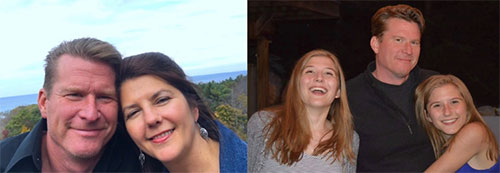
Jeffrey with his wife and daughters

Q: Family, children?

A: Wife: Jennifer working as a data analytics leader at General electric….Twin daughters, identical girls, 20 years old, both attend the highly ranked College for Creative Studies (CCS) in Detroit studying illustration, product and fashion design. They each have their unique style and approach. Some of their creative ability came from their Father of course. Lol.

Q: You were joking, but there actually, creative style does exist in the aluminum extrusion industry. What comes to mind when you think about creativity in your business?

A:  Yes, this is a creative field… all these products are designed. They have to be created. One must turn clay into reality. When I was working at Ford Motor Company, it was all about creating something feasible…. Finding creative solutions. It still is. We must create a solution that begins with design and carries through the entire product development cycle.

Jeffrey with his wife and daughters

Q: What’s it like being the father of identical twins?!

A: I’m an engineer. Twins are much more efficient! When I found out we were having twins, I had a conversation with our doctor, who was also the father of twins. He basically said the same thing; “You’ll be carrying one anyways, so you can carry another. You’ll be bottle feeding one anyways, so you can feed another, etc. You’re doubling up, and it’s very efficient!” In their early years, they would try and fool us with their identities. And for awhile, I think they thought they were the same person. Lol – it was fun, that was a very fun time in our lives. Today they have carved out their own identities and are doing great in life, finding their paths.

Q: Favorite part about working for Taber so far?

A: I like the people at Taber and I think we can accomplish anything and have fun doing it.

Q: What sets Taber apart from other companies that deliver the exact same things?

A: Taber delivers, successfully, many unique products, some large and very difficult parts to manufacture. This is a Taber competitive advantage. Taber is uniquely and well positioned to grow in these markets.

Q: Taber is growing rapidly. Any advice for those looking to join the Taber team?

A: Taber will continue to grow in this new economy of lightweight products. Not a large corporation but a family making our future brighter and more efficient. An environment that reaches across the country with many diverse customers, applications and processes. There is always something to be excited about.

Q: What do you think the future holds for Taber?

A: If Taber continues to invest wisely into its existing and new processes, continues to use a discipline of continuous improvement, expands its family of employees, leverages its unique processes of new economy light weight applications and is courageous and aggressive enough to grow. We will.

Link with Jeffrey Bladow: https://www.linkedin.com/in/jeffrey-bladow-3521861/

About Taber Extrusions

Taber is AS9100, NADCAP, and ABS certified. Founded in 1973, Taber Extrusions originally pioneered a process for extruding rectangular billet which enables the company to extrude solid profiles up to 31 inches wide or hollows up to 29 inches. Taber expanded with the purchase of an extrusion facility in Gulfport, MS., in 1995 which houses a cast house and two additional presses, and multiple expansions of value added fabrication services. Taber continues to extrude billet in a wide range of alloys and sizes, including 7”billet molds, and has diversified its markets beyond military since its inception to include aerospace, automotive, marine, infrastructure, and sporting goods, among many others. For these markets, the company supplies extruded products in a variety of soft and hard alloys. In 2018, Taber added ultra-precision extrusions to their capabilities allowing them to further serve customers in electronics, computer, and medical industries. Today Taber is proud to announce yet another exciting launch into Friction Stir Welding.
Thank you for your continued support of Taber Extrusions, LLC. If you have any questions please visit taberextrusions.com or contact jweber@taberextrusions.com.

Follow Taber Extrusions:
LINKEDIN: https://www.linkedin.com/company/taberextrusions/
FACEBOOK: https://www.facebook.com/taberextrusions/
TWITTER: https://twitter.com/taberextrusions

25 06, 2019

Taber Extrusions: Shaping Russellville, Arkansas Since 1973

2022-09-26T15:33:14+00:00June 25th, 2019|

Taber’s Russellville, Arkansas location marked on a map and the words “The Shape of Endless Possibilities

“We cannot live only for ourselves. A thousand fibers connect us with our fellow men.” – Herman Melville

Taber is known around the globe for our broad and unique range of capabilities. We have one of the largest aluminum extrusion presses in North America. Our upgraded cast house facility has enhanced our offerings. The acquisition of microextrusion capabilities expanded our product lines– and now, the addition of friction stir-welding, gives Taber an operational edge that is unmatched within the industry.

Humble beginnings

Taber Extrusions was founded in 1973, when the Taber family acquired an aluminum extrusion plant in Russellville, Arkansas from Dow Chemical (which had originally built the plant in 1970). National Material Company L.P. (NMLP) later purchased the company in 1976. The Arkansas facility was originally dedicated to the production of specific military- related, large, wide, and long extrusions for the U.S. Government.

The Russellville location serves as Taber’s corporate headquarters, and in 2014, fabrication capabilities were added to the Russellville facility.

Late night street corner in downtown Russellville, Arkansas after a fresh rainfall.

Helping shape our community

At Taber, we care about our employees. We care about the communities in which our employees live and work. Our goal is to provide our employees with a safe and secure workplace with an emphasis on personal and professional development, as well as cultivating an attitude focused on delivering genuine and reliable service. Excellent customer service will always stand out, and Taber enjoys the many long-term relationships we’ve developed over the years as a result of the personal accountability that our employees give to our customers.

Forming and shaping the identity of a community is one of the greatest things about Taber’s position. Not only are local businesses like Taber a crucial element in creating a culture for the community, but they also build connections and relationships with the people.

Congressman Steve Womack visit

At our ground-breaking ceremony, in Russellville, Arkansas that announced our friction stir-welding capabilities to the community, Congressman Steve Womack described how he sees Taber’s role from both a local and national perspective,

“The expansion of an existing company such as Taber Extrusions means a lot more than the location of a new company. It means that Taber is in the right place and has what it needs to succeed. Taber plays an important role in the defense of our nation with products that are an asset to our defense capabilities.” It is important to note that Taber historically provides for many industries, including aerospace, shipbuilding, infrastructure, automotive, as well as military and defense.

Arkansas Local and state leaders pose with groundbreaking shovels alongside Taber executives and employees at a sunny April 2019 afternoon ceremony.

Work at Taber Extrusions

Our people are the reason that Taber has been so successful for so many years. As an extruder with extremely broad and unique capabilities there is no question that our employees have been the foundation of our success. We have developed an atmosphere where our people are respected and appreciated. The Taber family plans to continue to foster careers that are right for our people, and right for our business. There is no question: our employees power our success.

Taber is growing fast and we are seeking talent in engineering, operations, sales, and more! You may be exactly what we’re looking for in our vision for future growth. Feel free to apply and place your resume in our database. We have an extensive community of career opportunities, and we are always on the hunt for great talent and professionals. You can also apply to an open position which will either match you to your next career move or place you in our network to receive job updates.

View our open career listings here!

More on Taber Extrusions:

Founded in 1973, Taber Extrusions originally pioneered a process for extruding rectangular billets which enables the company to extrude solid profiles up to 31 inches wide or hollows up to 29 inches. Taber expanded with the purchase of an extrusion facility in Gulfport, MS in 1995 which houses a casthouse and two additional presses, with a fabrication area that has been expanded multiple times. Besides their recently expanded capabilities to include microextrusions and 7” billet molds, Taber Extrusions is proud to announce friction stir-welding technology. The addition of in-house FSW capabilities creates a vertically integrated supplier of FSW panels and assemblies never before seen in North America.

20 05, 2019

The Many Advantages of Friction Stir Welding

2019-07-10T20:30:03+00:00May 20th, 2019|

The many advantages of friction stir welding infographic

About Taber: 

Founded in 1973, Taber Extrusions originally pioneered a process for extruding rectangular billets which enables the company to extrude solid profiles up to 31 inches wide or hollows up to 29 inches. Taber expanded with the purchase of an extrusion facility in Gulfport, MS in 1995 which houses a casthouse and two additional presses, with a fabrication area that has been expanded multiple times. Today, Taber Extrusions is proud to announce the launch of expanded capabilities to include microextrusions and 7” billet molds.

Follow Taber Extrusions:

LINKEDIN: https://www.linkedin.com/company/taberextrusions/

FACEBOOK: https://www.facebook.com/taberextrusions/

TWITTER: https://twitter.com/taberextrusions

Go to Top