18 05, 2026

Why Hard Alloy Aluminum Extrusions Are Critical for Large Aerospace Structures
2026-05-18T23:32:08+00:00May 18th, 2026|

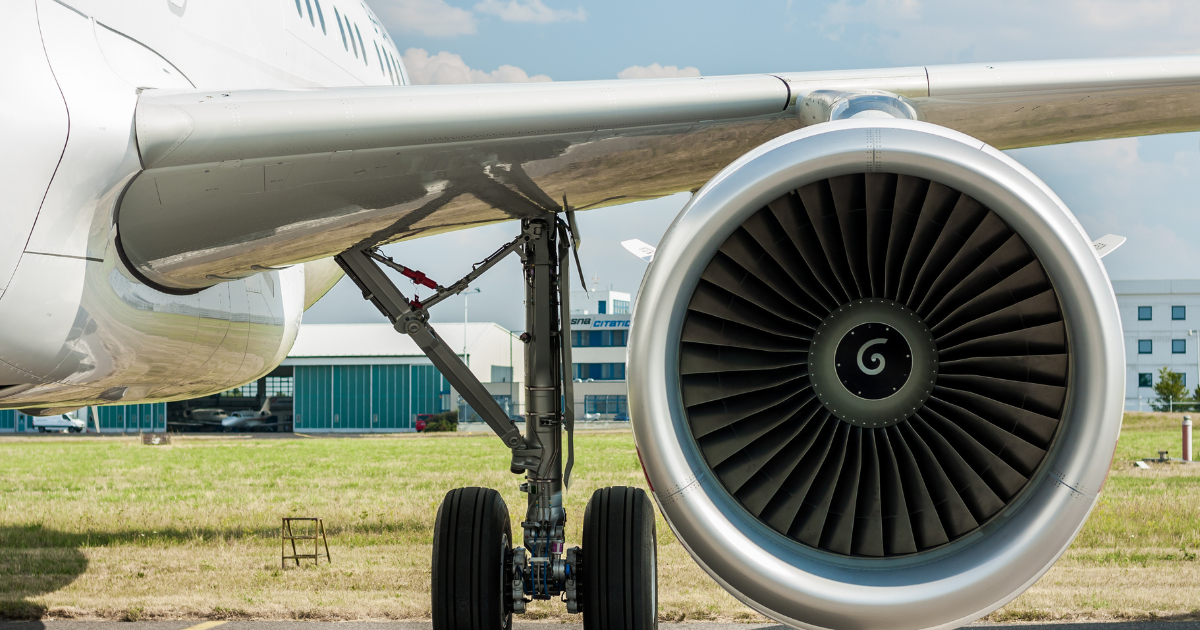
Detailed close-up of a jet engine turbine which highlights the complex engineering applications of hard alloy aluminum extrusions in aviation.

Key Takeaways:

  • Aircraft structures must withstand extreme stress, fatigue, and long service lifecycles while maintaining tight tolerances, making material selection a critical engineering challenge.
  • Large, monolithic extrusions reduce the need for fasteners, lowering weight and minimizing fatigue failure points in high-load aerospace applications.
  • Process control determines long-term reliability. Consistent billet quality, controlled extrusion parameters, and proper grain direction are essential to achieving predictable performance in flight-critical components.

Hard alloy aluminum extrusions play a critical role in modern aerospace engineering. As aircraft platforms scale up, weight must be reduced while structural integrity is maintained. Tolerances are required to remain tight across long spans and thick cross-sections. Moreover, every component must meet strict fatigue-life and certification standards. As a result, the industry has shifted from small, fastened assemblies to large, integrated aerospace profiles. These hard-alloy extrusions carry high loads and maintain stability under decades of cyclic stress, forming the structural backbone of next-generation aircraft.

The Metallurgical Necessity of Hard Alloys

Primary aerospace structures endure decades of vibration, cyclic loading, and temperature extremes. For this reason, aerospace-grade aluminum components are required to deliver high damage tolerance and predictable failure modes. Hard-alloy extrusions in the 2xxx and 7xxx series provide the tensile strength these applications demand. In contrast, softer 6xxx alloys used in architectural or automotive sectors are not engineered for sustained high stress. NASA research has shown that aluminum remains the preferred material for large structural members due to its balance of weight efficiency and fracture toughness.

In practice, 7075 and 7050 alloys are specified for their superior yield strength. Meanwhile, the 2xxx series is selected when fatigue resistance governs design. Thick-wall extrusions can be produced to withstand the bending loads seen in wing spars and fuselage frames. As such, material selection is driven by long-term structural performance, not convenience.

Precision at Scale: The Role of Large Press Capability

The shift to larger aircraft components creates manufacturing challenges. As profile cross-sections increase, uniform mechanical properties become harder to maintain. For this reason, large press capability is required in aerospace production.

Wide, complex profiles can be produced in a single piece using large-scale presses. Monolithic structures are formed instead of assemblies built from multiple riveted parts. This then reduces fatigue initiation points. Fewer joints create a lighter airframe and simplify OEM assembly.

In addition, hard-alloy aluminum extrusion manufacturing technology is used to control grain flow along specific load paths. Grain direction is managed during extrusion to improve resistance to stress corrosion cracking. Consequently, flight-critical components achieve greater long-term durability.

Design-Phase Considerations for Structural Aluminum

Material selection in the early design phase directly impacts long-term program performance. For example, technical teams searching “aerospace structural aluminum components” are evaluating how specific alloys perform over thousands of flight hours. Data-driven decisions at this stage reduce downstream risk.

Equally important is functional integration. High-load aluminum profiles can include built-in stiffeners or attachment points, which reduces secondary machining and heavy fasteners. Still, complex geometries demand precise control of metal flow during extrusion.

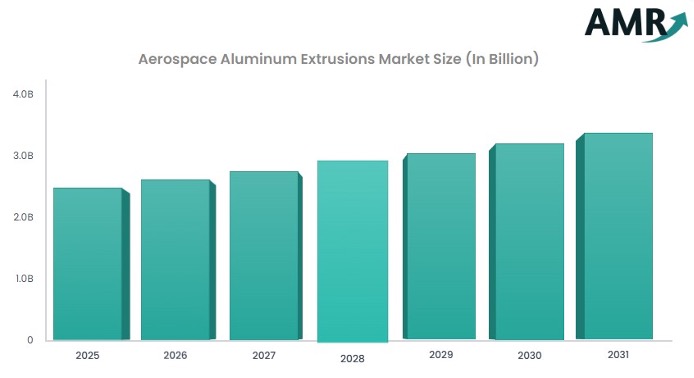
Meanwhile, market data from Archive Market Research projects continued growth in demand for specialized extrusions through 2030. This trend is driven by fuel-efficient airframe design and a strong robust Maintenance, Repair, and Overhaul (MRO) sector. Despite increased composite use, hard alloy extrusions remain critical to the high-load structural framework of modern aircraft.
Manufacturing Excellence and Process Control

The quality of the final product is as much a result of the process as it is the alloy choice. Precision aerospace extrusions require meticulous control over temperature, extrusion speed, and cooling rates. Variations in these factors can lead to internal stresses or inconsistent hardness, jeopardizing the safety of aluminum alloys for flight-critical structures.

The process begins with the aluminum billet. Controlling the chemistry and casting of the billet is the only way to ensure predictable results at the press. For hard alloys, which are less forgiving than standard aluminum, this level of metallurgical oversight is mandatory. Industry standards, such as those highlighted by the FAA and the Air Force Research Laboratory, emphasize that a component’s processing history is just as vital as its final dimensions.

Supporting the Next Generation of Flight

Modern aviation requires thick-wall profiles and high-load, large aluminum extrusions. As a result, a manufacturing partner with deep hard-alloy expertise is essential. Taber Extrusions delivers the large-press capacity and metallurgical control required to meet aerospace standards.

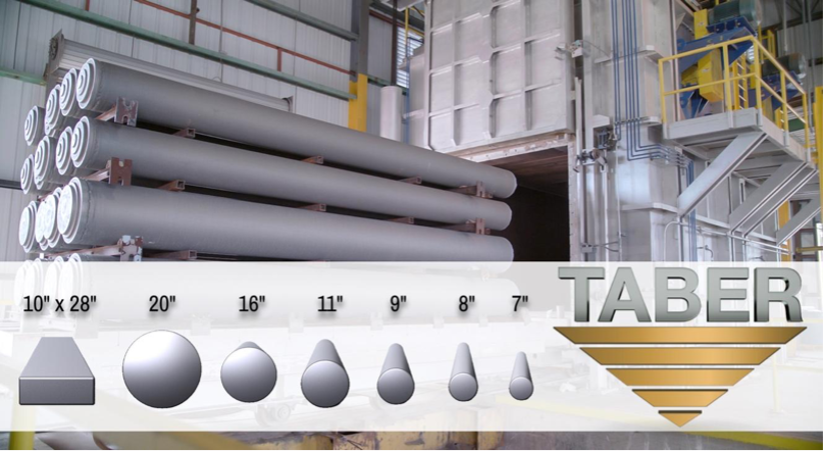
In addition, billet production is vertically integrated to ensure chemistry and consistency are controlled from the start. Wide, high-strength profiles can be produced by Taber that many standard extruders cannot support. From fuselage frames to internal load paths, components are manufactured to perform as specified in mission-critical environments.
For aerospace teams evaluating materials or validating partners for flight-critical structures, the expertise behind the extrusion process is the ultimate safeguard of quality and performance.

Looking for a partner capable of producing large, high-strength aluminum extrusions for aerospace applications? Fill out the form below to connect with an extrusion specialist experienced in hard alloys, tight tolerances, and mission-critical performance.

Request A Quote

    CONTACT INFORMATION

    YOUR PROJECT NEEDS

    Please specify extrusion alloy and length below

    If you have design files for extrusion or FSW please upload below

    Excepted file formats: jpg, pdf, png.

    Please specify FSW alloy class, welding type and panel dimensions below.

    Alloy*

    Welding Type*

    Select Billet Size *

    ANY CUI OR FCI DATA IS STRICTLY PROHIBITED FROM BEING UPLOADED DIRECTLY THROUGH THIS FORM. IF YOU NEED TO SHARE ANY SENSITIVE DATA PLEASE CONTACT A TABER SALES TEAM MEMBER AND THEY WILL PROVIDE A SECURE METHOD OF SHARING ANY SENSITIVE INFORMATION.

    3 01, 2022

    Taber Extrusions: The Shape of Endless Possibilities Since 1973

    2022-02-03T22:46:16+00:00January 3rd, 2022|

    A billboard-style, graphic presentation featuring various-sizes of rendered aluminum extrusions, with the words “Taber Extrusions, The Sky is The Limit” in large bold silver lettering and a caption that reads, “complex aluminum extrusions for virtually any application,” an inverted gold triangle logo next to the word “Sky” has a background of mountains behind it all.

    Taber Extrusions has extrusions in the name, but it’s really a full-service aluminum extrusion company. Taber controls it all, from the casting of the billet, the extrusion process, fabrication, and finally, the logistics.

    Taber possesses a commitment to meeting and exceeding customer expectations by providing both products and customer service levels that are of the highest quality. This commitment is at the core of their operating philosophy.

    Taber Extrusions History

    Taber Extrusions was founded in 1973, when the Taber family acquired an aluminum extrusion plant in Russellville, Arkansas from Dow Chemical (which had originally built the plant in 1970). National Material Company L.P. (NMLP) later purchased the company in 1976. The Arkansas facility was originally dedicated to the production of specific military-related, large, wide, and long extrusions for the U.S. government.

    A graphic showing an outline of the state of Arkansas, with a red map pin and Taber’s gold inverted triangle logo marking Russellville. The words “The Shape of Endless Possibilities” are to the right of the map.

    Taber’s Russellville facility houses the largest rectangular aluminum extrusion press in North America, which uniquely positions Taber to extrude super-wide shapes – much more comprehensively than is possible with traditional round containers. This rectangular container allows them to supply some of the industry’s widest, most complex, multi-void hollows.

    In 1995, the Gulfport, Mississippi facility was acquired in response to the growing need in the domestic market for aluminum billet products. Taber added 7″ billet molds to their existing extrusion billet casting profile.

    With the intention to expand even further, in 2015, Taber upgraded the Russellville fabrication facility even more. By 2017, Taber’s aluminum cast house expansion was completed and acquired 7″, 9″, 11″, 16″, 20″, and 10″ x 20″ rectangular billet molds.

    Taber completed the relocation and start-up of its micro-extrusion press lines in 2018. This greatly expanded their supply possibilities with extrusion solutions, programs, and services. Taber’s newest ultra-precision extrusion manufacturing lines have a product envelope with a circle size of 3 inches or less and a weight per foot of 1 lb. or less. The micro-extrusion presses differ from traditional extrusion presses in that they can produce extrusions with a wall thickness of 0.010 inches and tolerances of +/- 0.001 inches. Designers and engineers can use these micro-extrusion production centers to develop profiles that would otherwise be impossible to extrude using conventional presses.

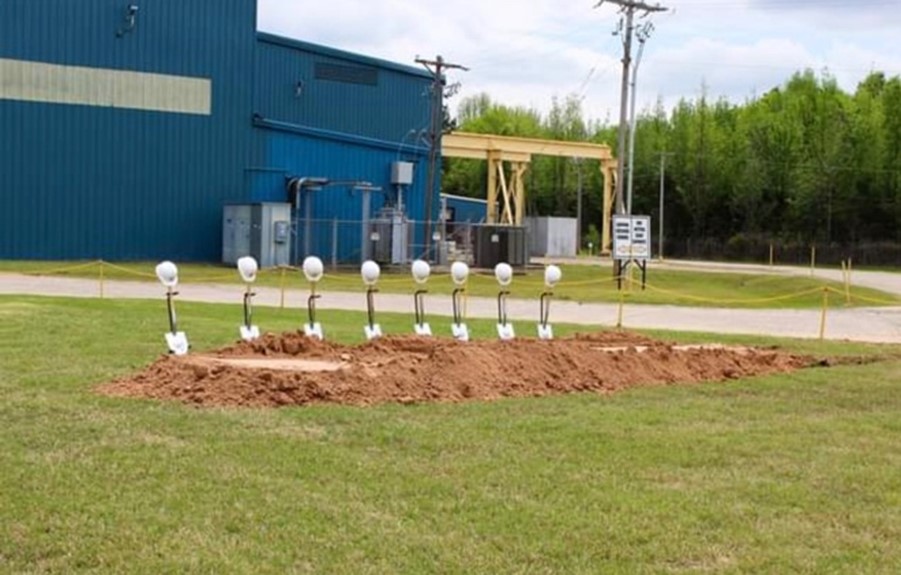
    Angle on 8 new shovels with white Taber Extrusions hard hats resting neatly on each shovel handle, resting on holders just beyond a mound of freshly turned dirt from a nicely manicured lawn area in front of Taber’s Russellville, Arkansas aluminum extrusion facility.

    In April 2019, Taber held a groundbreaking ceremony to announce its newest in-house FSW capability, making them a vertically integrated supplier of FSW panels and assemblies never before seen in North America.

    Congressman Steve Womack described how he sees Taber’s role from both a local and national perspective:

    “The expansion of an existing company such as Taber Extrusions means a lot more than the location of a new company. It means that Taber is in the right place and has what it needs to succeed. Taber plays an important role in the defense of our nation with products that are an asset to our defense capabilities.”

    “This was an obvious next-step for Taber,” said Jason Weber, V.P. of Sales and Marketing, in an article by Light Metal Age Magazine. “The company was founded in 1973, and never stopped diversifying, adding new capabilities, and technologies. We are known for aluminum extrusions, fabrication, billet casting, ultra-precision extrusions. Friction stir welding was going to happen eventually.”

    A slick-looking 3D-rendered graphic of Taber Extrusion’s Haas VF-12 CNC machine on the right side of Taber’s official gold inverted triangle logo, and the words, “Introducing out new Haas VF-12/40”

    As for the most recent addition to Taber’s extrusion capabilities, they announced the Haas VF-12 CNC. This one-of-a-kind machine allows Taber’s top engineers to design optimal extrusion shapes using specialized software to have them made within this “self-contained factory,” all in one precise and effective process.

    Weber had this to say about their 2021 machining center expansion

    We will continue to invest in technologies that provide the widest scope of services in the aluminum extrusion industry. The Haas VF-12 CNC machine is yet another example of our willingness to invest and deliver the widest scope of services across the aluminum extrusion continuum.”

    See our company timeline infographic here.

    Helping Shape Our Community

    A graphic featuring the Taber inverted gold triangle logo and the words “Powered by Ambition” atop a background of aluminum decking profiles with a dark blue hue for a wallpaper effect.

    Taber cares about the communities in which their employees live and work. Their goal is to provide their employees with a safe and secure workplace that has an emphasis on personal and professional development, as well as cultivating an attitude focused on delivering genuine and reliable service. Excellent customer service will always stand out, and Taber enjoys the many long-term relationships which have developed over the years because of the personal accountability that they give to their customers.

    Forming and shaping the identity of a community is one of the greatest things about Taber’s position. Not only are local businesses like Taber a crucial element in creating a culture for the community, but they also build connections and relationships with the people.

    Work at Taber Extrusions

    As an aluminum extruder with extremely broad and unique capabilities there is no question that Taber’s employees have been the foundation of their success. They have developed an atmosphere where people are respected and appreciated. The Taber family plans to continue to foster careers that are right for their people, and right for their business. There is no question: Taber’s employees power their success.

    A 2-panel graphic – right panel is a wide shot of an elegant rectangular black lacquer pedestal adorned with a silver cast hard hat with the NMLP inverted triangle logo with words inscribed. The left panel reads, “Taber Extrusions Russellville, AR. Awarded 2018 Safety Excellence Award.”

    Pictured above: Taber Extrusions took home National Material L.P.’s 2018 Safety Excellence Award for exceptional safety management at their Russellville, Arkansas facility.

    Taber is growing fast, and we are seeking talent in engineering, operations, sales, and more! You may be exactly what we’re looking for in our vision for future growth. Feel free to apply and place your resume in our database. We have an extensive community of career opportunities, and we are always on the hunt for great talent and professionals. You can also apply to an open position which will either match you to your next career move or place you in our network to receive job updates.

    View our open career listings here!

    Taber Extrusions: Summary

    Founded in 1973, Taber Extrusions originally pioneered a process for extruding rectangular billet which enables the company to extrude extra-large aluminum extrusion profiles up to 31 inches wide or hollows up to 29 inches. Taber expanded with the purchase of an extrusion facility in Gulfport, MS in 1995 which houses a state-of-the-art cast house and two additional presses, micro-extrusion capabilities, and the fabrication area has been expanded multiple times.

    Taber continues to extrude billet in a wide range of alloys and sizes and has diversified its markets beyond military since its inception to include aerospace, automotive, marine, infrastructure, and sporting goods, among many others. With in-house casting solutions, ultra-precision extrusion manufacturing, friction stir welding capacities, and a full range of hard and soft aluminum alloys, Taber continues to align itself as an industry leader in having the broadest available capabilities. 

    Today, Taber Extrusions is proud of its recently added VF-12 CNC machining line and a full offering of extruded aluminum components, value-added machining services, and raw material supply to the North American market. Adding these capabilities to a growing portfolio propels Taber into the future in a quest to continuously improve the quality and service we provide to our customers.

    Thank you for your continued support of Taber Extrusions, LLC. If you have any questions, please visit taberextrusions.com or contact one of Taber’s regional sales managers.

    22 11, 2021

    From Friction Stir Welding to Micro Extrusions: Leading Aluminum Extruder Taber is Vertically Integrated

    2021-11-22T21:52:41+00:00November 22nd, 2021|

    A graphic presented in various shades of blue, with a faint image of a bridge that resembles the Golden Gate, and an American flag flowing in the wind with the official Taber logo, the words “The Shape of Endless Possibilities,” and certification seals for ISO 9001, MBE, Made in the USA, NADCAP, and ABS Group.

    Taber Extrusions, located in Russellville, AR and Gulfport, MS, is a highly regarded provider of aluminum extrusions to a wide variety of industries including aerospace, infrastructure, transportation, defense, and thermal management. A minority-owned business enterprise which is ISO 9001, AS 9100, NADCAP, and ABS certified, Taber’s present and future customers can expect to see increased supply opportunities with the expanded set of extrusion solutions, programs, and services.

    Founded in 1973, Taber Extrusions originally pioneered a process for extruding rectangular billet which enables the company to extrude solid profiles up to 31 inches wide or hollows up to 29 inches. Taber expanded with the purchase of an extrusion facility in Gulfport, MS which houses a new state-of-the-art cast house and two additional presses, micro-extrusion capabilities, and the fabrication area has since been expanded multiple times. Taber continues to extrude billet in a wide range of alloys and sizes and has diversified its markets beyond military since its inception and supplies cast and extruded aluminum products in a variety of soft and hard alloys.

    Today, Taber Extrusions is proud of its added friction stir welding capabilities, full offering of extruded aluminum components, value-added machining services and raw material supply to the North American market. The addition of in-house FSW capabilities makes Taber Extrusions a vertically integrated supplier of FSW panels and assemblies never seen before in North America.

    ALUMINUM EXTRUSIONS

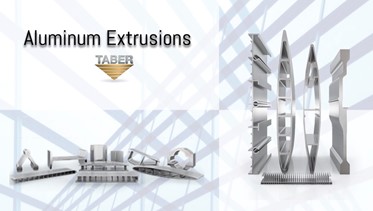
    A graphic with four square sections placed on top of a gradient steel beam background in varying shades of greyish blue hues. There are two collections of aluminum extrusion shape renderings; and the upper left reads “Aluminum Extrusions” with the official Taber logo prominently situated below.

    Known as a leading aluminum extruder, Taber offers a full range of aluminum alloys including hard, soft, marine, and armor grade. Choose from 2000, 5000, 6000, and 7000 grades with custom chemistries available for specific metal fabrication needs. Taber’s aluminum extrusions range spans from less than 1 lb./ft. to over 140 lbs./ft., making Taber the broadest extruders of aluminum profiles in the industry. Their multi-void hollow capability is up to 29” wide, and they can produce solid extrusions up to 31” wide. As part of Taber’s value-added approach, they offer design assistance for custom and specialty aluminum profiles.

    Taber also offers the only 28” x 10” rectangular container size in North America.

    In a rectangular container, uniform metal flow in width and thickness of wider bars and profiles, the following is achieved in contrast to round container of similar geometry:

    • The flatness can be controlled to within 75% of AA specification on wide panel, multivoid hollow profiles of up to 29” width.
    • Contour on most profiles can be controlled as per the spec without secondary operations.
    • Superior dimension control and consistency throughout the length of the extruded profile.

    FABRICATION CAPABILITIES

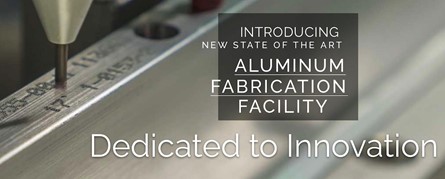
    An extreme close-up photo of a CNC machine spindle with the words, “Introducing new state of the art aluminum fabrication facility – dedicated to innovation” in print on the right side.

    Taber’s aluminum fabrication capabilities include precision sawing, horizontal machining and manufacturing, extra-large CNC machining, 5-axis CNC machining, multi-axis machining, and a vertical machining center. Taber’s cut tolerances cover length and squareness of cut (up to +/- .050″) across a maximum 36″ width (minimum cut length of .75″). These precision saw-cutting capabilities for rod & bar/standard extruded shapes and customized aluminum extrusion profiles saw cut with greater accuracy, providing their customers with a product precise enough to be loaded directly into their machining centers. The precision cut blanks save customers time and money compared to having to cut mill lengths in-house.

    Machinery — Aluminum CNC machining services:

    • Haas VF-12… COMING SOON!! (Link to latest blog on this topic)
    • Haas VF-7
    • EMMEGI Satellite XT
    • OKK Horizontal Machining Center
    • Zeiss CMM

    Machinery – Aluminum precision cutting & sawing services:

    • BO Saws B-800
    • Marvel Band Saw

    Visit Taber Extrusions’ Fabrication web page for videos and details!

    ALUMINUM CAST HOUSE

    Taber Extrusion’s brightly lit, modernized Gulfport, Mississippi cast house, focus is on 16 large, stacked aluminum billets.

    With the completion of a 2017 cast house modernization, Taber has increased its billet capacity by over 30%, expanded its range of high quality aluminum alloys (hard, soft, marine, aerospace, and defense), and enabled the use of more diverse scrap material in its process, allowing for the production of billet with high recycled content. “We have evolved into a fully integrated supplier with control over our raw materials by casting the alloys and diameters necessary to feed our extrusion presses,” says Eric Angermeier, President of Taber Extrusions.

    Eric Angermeier, President of Taber Extrusions, seated at his desk with a welcoming smile.

    “Our recent cast house modernization has significantly increased the billet quality that will flow through all aspects of our business. Our capabilities to serve diverse markets are greatly enhanced and we now have capacity for third party sales of extrusion billet and large forging stock,” Angermeier adds. (Read full article in Light Metal Age magazine here.)

    Taber launched their “Billets Straight to You” (aluminum billets for immediate sale) campaign in 2020, which includes aluminum alloys 6061 and 6063, with 6005, 6005A, 6082 available upon request.

    Taber Extrusion’s magazine ad showing a photo of billets being dipped for cooling by a Taber-branded billet lift, and the “Aluminum Alloys Straight to You” information, which is the same content provided in this article.

    MICRO-EXTRUSIONS

    A measuring ruler showing 6.5 inches with a series of micro extrusion shape renderings encapsulated in a 1” square box alongside 5 bullets of text explaining "Greater design flexibility, high-quality precision aluminum extrusions at machined tolerances, reduced costs, thin wall capability, and excellent surface finish."

    Taber’s micro-extrusion manufacturing lines have a production envelope with a circle size of 3 inches or less and a weight per foot of 1 lb. or less. For comparison, the 8,600 ton press in Taber’s Russellville facility produces profiles with a minimum weight of 4 lbs. per foot.

    Unlike traditional extrusion presses, these micro-extrusion presses are built to allow for the production of extrusions with wall thicknesses of 0.010 inches and tolerance capabilities of +/- 0.001 inches. These miniature extrusion production centers allow designers and engineers the freedom to create profiles that are un-extrudable through conventional presses.

    Jason Weber, V.P. of Sales and Marketing at Taber Extrusions, wearing a light blue oxford and a white Polo zip-up sweater, smiling for the camera.

    “As computers get smaller and smaller, the heat sinks used in those computers need to likewise get smaller… they can also be used in industrial applications, with housings for sensors, and in military applications, as components for drones. So, there’s a lot of market potential for micro-extrusions,” explains Jason Weber, Taber V.P. of Sales and Marketing, in Light Metal Age Magazine, 2018.

    FRICTION STIR WELDING

    Wide angle of Taber Extrusion’s friction stir welding machine with the headline in bold black capital letters, “FRICTION STIR WELDING: WE’RE READY FOR BUSINESS” with Taber’s official logo underneath.

    Taber’s FSW capabilities include simultaneous two-side welding, double wall hollow extrusions up to 6.25 inches tall, 32 inches wide, and accepts lengths up to 65 feet long. Taber’s friction stir welding production cell is capable of creating panel assemblies 200 inches wide by 65 feet long, with integrated pre-joining profile trimming. With profile widths up to 31 inches, lengths up to 65 feet, and ability to weld up to 3/4 of an inch in a single pass, Taber has an operational envelope that is unmatched within the industry.

    Friction stir welding is commonly used in the rail, automotive, marine & shipbuilding industries, military & defense, commercial & industrial construction, infrastructure, and in aviation & aerospace.

    The addition of in-house FSW capabilities makes Taber Extrusions a vertically integrated supplier of FSW panels and assemblies never seen before in North America.

    “This was an obvious next-step for Taber,” said Jason Weber, V.P. of Sales and Marketing, in a 2019 article by Light Metal Age Magazine, “the company was founded in 1973, and never stopped diversifying, adding new capabilities, and technologies. We are known for aluminum extrusions, fabrication, billet casting, ultra-precision extrusions. Friction stir welding was going to happen eventually.”


    LEADING ALUMINUM EXTRUDER TABER

    INDUSTRIES SERVED:

    • Government/military
    • Aircraft/aerospace
    • Marine/shipbuilding
    • Infrastructure
    • Electronics
    • Medical
    • Transportation
    • Rail car
    • Mining
    • Industrial
    • Agricultural
    • Sporting goods
    • Custom shapes for most any application

    Taber Extrusions is a full-service partner with an unwavering commitment to consistently meeting and exceeding customer expectations by providing both products and service of the highest quality. This commitment is at the core of everything they do… making certain that whatever you can dream, they can give it shape.

    Thank you for your continued support of Taber Extrusions. If you have any questions please visit taberextrusions.com or contact one of our Regional Sales Representatives.

    Follow Taber Extrusions:

    LINKEDIN: https://www.linkedin.com/company/taberextrusions/
    FACEBOOK: https://www.facebook.com/taberextrusions/
    TWITTER: https://twitter.com/taberextrusions

    3 11, 2021

    The Evolution of The Aluminum Alloy

    2022-02-03T22:03:03+00:00November 3rd, 2021|

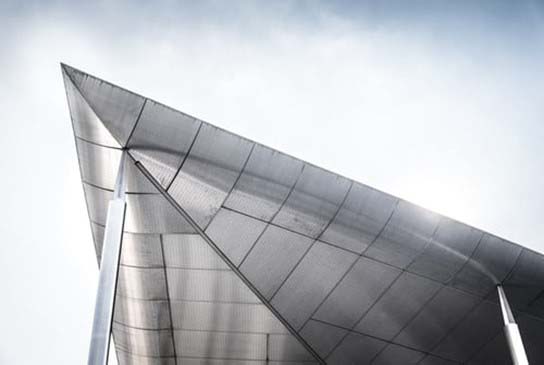
    A large, futuristic, triangular aluminum roof supported by three tall pillars cuts into a cloudy sky, while the light of a bright sun peeks out from one of the edges.

    The story of human dominance over nature really begins at metalworking with bronze. Bronze represents humanity’s first steps in substantively transforming the essence of the object around them, rather than just manipulating the physical shape of naturally occurring materials.

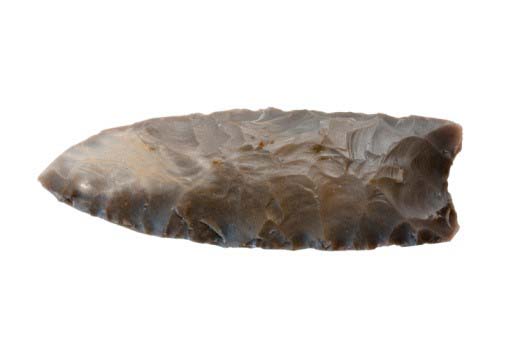
    The sharp head of a stone spear made sometime in the Stone Age.

    Since the introduction of bronze more than 10,000 years ago, metallurgy has continued to evolve. Most of the “giant leaps” in metalworking occurred thousands of years ago, but the technological age has brought about unprecedented advances of its own. Many of the advances piggybacked on the slow progression of past eras, as is the case with steel. However, aluminum stands out for its rise as a brand new, never seen before metal that arrived to chart the course for a new era of human progress.

    This “metal, that looked like silver, but was too light to be silver” appears in the Roman history books of Pliny the Elder. He tells of how the Roman emperor saw the beauty and versatility of the metal, and, afraid of what its discovery could do to the price of silver, ordered the beheading of the only chemist capable of producing aluminum. The chemist, who claimed only he and the gods knew the secret of making aluminum, took the secret to his grave. From then, the gods were slow in trusting the secret to humans again. In fact, it wasn’t until 1825 that chemist Hans-Christian Orsted produced the first pure aluminum. This Danish scientist got to keep his head and the honor of introducing the world to a game-changing element.

    In a period picture depicting the Middle Ages, a metal goblet is passed between two people, only their arms and part of one of their torsos can be seen.

    With aluminum in hand, a whole new world opened to engineers and manufacturers. A lightweight, durable, corrosive-resistant, conductive, tasteless, and versatile metal immediately transformed the possibilities for industries, from aerospace and transportation to food and beverage. Soon aluminum, which at first was considered a royal, luxury metal, would find its way into everyone’s home through consumer products such as cars and appliances.

    A photograph of the top of a cluster of red, aluminum canned drinks, with condensation droplets forming all over the cans.

    Fueled by these past successes, aluminum continues to be a forward-looking material. Innovation characterizes this industry, focused on pushing the boundaries of the youngest member of the great metal family. Today’s research and development in the aluminum industry focuses on testing and understanding aluminum alloys.

    To make these alloys, aluminum is melted and then mixed with other elements such as zinc, magnesium, and copper, among many others. Each alloy has a different set of characteristics, and consequently a different set of uses. In order to streamline the transition of these elements from research to application, aluminum alloys are assigned a four-digit number, where the first number indicates the main element that is alloyed with the aluminum. Some alloys, such as the ones found in the 3xxx series (Manganese), are great as cooking utensils, while other alloys, such as the 7xxx (Zinc) series, are perfect for aircraft. This classification of aluminum alloys gives end-users a guide by which they can pinpoint the aluminum alloy to fit their needs.

    A photograph of the underbelly of a large commercial airplane where the engines, wings, and fuselage are visible and far above, another plane flies high in the air, leaving behind white contrails.

    Specialized aluminum alloys can be found in our power lines, skyscrapers, appliances, automobiles, aircraft, and consumer products, from soda cans to refrigerators. Perhaps the only thing greater than aluminum’s achievements are the promises for tomorrow. From increased electrical conduction, to stronger, more lightweight aluminum, many of the world’s industries count on aluminum alloys to make their own progress possible. In this way, aluminum alloys are a keystone for the world’s continued technological progression.

    At Taber Extrusions, our job is to keep up with every twist and turn in the exciting world of aluminum, so that we can deliver the perfect aluminum alloy for the job. Our intricate, precision extrusions  embody our attention to detail and understanding of the nuanced world of aluminum. Taber uses a wide scope of aluminum alloys to deliver quality aluminum extrusions according to customer specifications. That means, every product is tailor made, in substance and in shape.

    Many ages have gone by since the first humans began shaping the natural world to their liking. Many, too, have gone by since we began using the power of chemistry to create the perfect materials. At Taber, we take our place within these traditions of progress and innovation, and are proud to work with aluminum, the metal of the future. Come take advantage of our aluminum extrusion expertise and best practices in the sector to meet your needs today!

    ABOUT TABER EXTRUSIONS

    Founded in 1973, Taber Extrusions originally pioneered a process for extruding rectangular billet which enables the company to extrude solid profiles up to 31 inches wide or hollows up to 29 inches. Taber expanded with the purchase of an extrusion facility in Gulfport, MS in 1995 which houses a new state-of-the-art cast house and two additional presses, micro-extrusion capabilities, and the fabrication area has been expanded multiple times.

    Taber continues to extrude billet in a wide range of alloys and sizes and has diversified its markets beyond military since its inception to include aerospace, automotive, marine, infrastructure, and sporting goods, among many others. For these markets, the company supplies cast and extruded products in a variety of soft and hard alloys.

    Today, Taber Extrusions is a vertically-integrated supplier of friction stir welding panels and assemblies in North America not previously seen – offering extruded aluminum components, value-added machining services, and raw materials.

    Follow Taber Extrusions 

    LINKEDIN: https://www.linkedin.com/company/8843183/

    FACEBOOK: https://www.facebook.com/taberextrusions/

    TWITTER: https://twitter.com/taberextrusions

    Are you interested in joining the Taber Team? Send your resume to: careers@taberextrusions.com

    Become a customer today! Visit us or request a quote: https://taberextrusions.com/contact-us/ or call us at (888) 985-5319.

    Go to Top