23 12, 2015

Commercialized Christmas, Charlie Brown, and the Aluminum Tree

2017-01-26T23:37:28+00:00December 23rd, 2015|

aluminum extrusion christmas

A Charlie Brown Christmas debuted 50 years ago this year.

It seems like just yesterday Charlie Brown and his warm-hearted motley crew melted our hearts for the first time with the 1965 premiere of A Charlie Brown Christmas. The classic holiday special turned 50 this year, but the lessons it taught us are as fresh in our minds each year as the first time we saw them. Never, perhaps, has a holiday special illustrated so poignantly “what Christmas is all about.”

Commercial aluminum trees were all the rage in the sixties.

Commercial aluminum trees were all the rage in the sixties.

The most evident antagonist to the true spirit of Christmas in the episode, among others such as an awry Christmas production and an empty mailbox, is the presence of the aluminum Christmas tree – a popular staple in American homes during the time. The immense fabrication of the aluminum tree was a symbol of the over-commercialization of the Christmas season; a motif as hollow as the sound it produced whence knocked upon by Charlie Brown. By opting for a sparse little sapling over a “big, shiny aluminum tree” Charlie Brown reminds us that yuletide cheer is not found in the sparkle of commercialism, but the humble authenticity found in the love between friends and family, symbolized by the small but mighty sapling.

While aluminum extrusion, aluminum alloys, and aluminum as a whole is our business, we must admit that we’re happy to see the scratchy, shiny, fabricated fad of the aluminum tree phased out of the holiday season.

From our family here at Taber Extrusions to yours, we wish you warmth and joy this holiday season, and we encourage you to embrace the true spirit of Christmas this year by enjoying it with the best gift of all – your loved ones. Happy holidays!

8 12, 2015

Know Your Aluminum Alloy: Fast Facts Infographic

2017-01-26T23:37:28+00:00December 8th, 2015|


aluminum alloy infographic

What are the different types of aluminum alloys? How are they different? Which aluminum alloy is strongest? Least corrosive? What are aluminum alloys used in, and why? Which alloys are the most popular?

What’s the difference between aluminum and an aluminum alloy?

Not to fear, Taber Extrusions is here with all the fast facts you need to know about aluminum alloys! Why? Because choosing the right aluminum alloy is the first step to delivering the best aluminum extrusion for any application. At Taber, we offer the full range of aluminum alloys to meet your extrusion needs, including the 1000 series, 2000 series, 5000 series, 6000 series, and 7000 series. We also offer custom aluminum alloy chemistries for unique project needs.

Taber has extensive experience working with different aluminum alloys to ensure quality and performance. Ongoing research and development keep Taber on the cutting edge of innovation – from aluminum marine applications to new alloy combinations and chemistries. Taber also continues to broaden their aluminum services with increased focus on aluminum machining. New machines and renovations are launching Taber’s aluminum fabrication sector forward in 2016. That means even more unique aluminum shapes and an overall increase in extrusion possibilities.

So whether you’re engineering a commercial aircraft, researching for your science fair project, or impressing your pals at your next dinner party, refer to our Know Your Alloy Infographic whenever you need to brush up on your aluminum alloy facts.

11 11, 2015

Ant Hill Art: Aluminum Casting Goes Viral

2017-01-26T23:37:28+00:00November 11th, 2015|

front_img_1456_bt

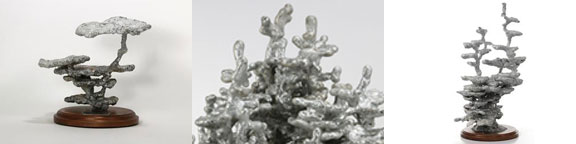
Ant hill art – aluminum sculpture of an underground ant colony.

Strong. Intricate. Durable. Sound familiar? No, we’re not talking about Taber Extrusions’ aluminum shapes. We’re talking about ant hills.

The creator of anthillart.com and his website gallery became extremely popular when a video of the artist casting an ant hill sculpture out of a molten aluminum alloys went viral in 2014. And we must admit, from one aluminum casting manufacturer to another, these arthropod aluminum extrusions are pretty impressive.

In the video, the artist pours molten aluminum alloy into the fire ant colony, where the aluminum casts within every nook and cranny of the complex underground colony, creating a perfect aluminum replica of the infamous insect’s habitat. After the aluminum cools, the artist digs up the aluminum anthill, hoses it off, and voila! A biological, aluminum extrusion, scientific work of art.

Photos courtesy of anthillart.com

Photos courtesy of anthillart.com

The aluminum sculptures became an overnight hit, and the internet is now buzzing not only with EBay listings of the famous aluminum shapes and countless photos, but a surprising amount of how-to articles and Do-It-Yourself video tutorials.

Left: Heavily protected workers pour molten aluminum alloys at the Taber Gulfport aluminum cast house facility.
Right: A “Bitty-Q” miniature grill made out of an aluminum can. Perfect for hot dogs and DIY Saturdays.

As an extrusion company that spends a good deal of time around aluminum alloys, pouring pounds of fiery aluminum lava on the front lawn seems a little too intense for our next weekend craft project, not to mention dangerous. (You could light your lawn on fire like this guy did.) We love a good aluminum casting project, but a DIY molten aluminum ant hill casting seems to be a little more extensive than, say, a DIY aluminum can miniature hot dog grill.

But hey, if you readily have access to a heavy-duty furnace burning at 1,220 degrees, 15 pounds of aluminum alloy scrap, and a portable crucible with fireproof tongs – knock yourself out. (And those pesky fire ants, too.)

27 10, 2015

Customer Spotlight – TEMISKO

2017-01-26T23:37:28+00:00October 27th, 2015|

Russellville, October 27, 2015 – Glass. Timber. Windmills. You name it and, chances are, Temisko has carried it. Located in Quebec, Canada and specializing in custom semi-trailers, Temisko has been leading the industry in creating customized applications for their clients’ unique cross-road carrying needs.

Photo courtesy of Temisko.

Photo courtesy of Temisko.

With their commitment to quality service, technological advancement, and breadth of applications it’s no wonder that Temisko chooses Taber as their premier provider of aluminum extrusions, despite the many miles between them. At times 1,559 miles, to be exact.

Since their initial partnership in 2013, Taber has shipped hundreds of thousands of pounds of aluminum shapes to Temisko, but their relationship doesn’t stop there. This past summer, Taber proudly sponsored Temisko in a promotional cross country truck rodeo show in Notre-Dame-Du-Nord, Quebec.

This road trip included an exhibition of three Temisko trailers that journeyed across Ontario and Quebec, spreading brand awareness and generating buzz about Taber’s unique extrusion and aluminum fabrication qualifications. If you happened to catch one of the Temisko trailers riding by from Mid-May to July, you probably saw Taber’s logo displayed on one trailer, promoting El Rodeo.

From extrusions to excursions, Taber is proud to partner with Temisko to achieve a common goal: supplying the highest quality aluminum extrusion products and service to their customers in the U.S., Canada, and beyond.

19 10, 2015

Senator Boozman Visits Taber Extrusions

2017-01-26T23:37:28+00:00October 19th, 2015|

Senator Boozman visited the Taber Russellville plant in early October to learn about their broad scope of capabilities.

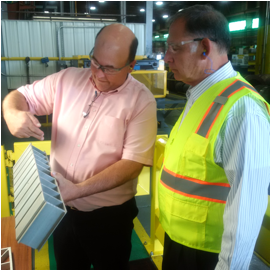
Mike McDonald, Inside Sales Manager at Taber Extrusions explains pieces manufactured by Taber to Senator John Boozman.

Mike McDonald, Inside Sales Manager at Taber Extrusions explains pieces manufactured by Taber to Senator John Boozman.

WASHINGTON— U.S. Senator John Boozman visited Taber Extrusions headquarters in Russellville Thursday to learn from company executives about the manufacturer’s wide range of products they serve including recent innovations in the military, aerospace and automotive industries.

Taber Russellville specializes in complex and ultra-wide and heavy extrusions, manufacturing aluminum parts which competitors consider difficult or even impossible to do.

“As an industry-leader, Taber Extrusions sets a high standard of quality for its products. The company’s commitment to innovation and excellence is unmatched in the industry. I appreciate the opportunity to see the high-tech work performed at the Russellville facility and I’ll continue to promote pro-growth policies that help businesses in Arkansas compete in the global economy,” Boozman said.

Taber is a full-servicer of aluminum extrusions, offering service such as custom aluminum alloy casting, aluminum machining and testing. These value added services further Taber’s ability to manufacture extrusions with custom alloy chemistries and properties that meet stringent specifications, such as those found in aluminum aircraft and aluminum marine applications. Taber is leading the way with exceptional quality products and the broadest capabilities in the aluminum extrusion industry.

“Taber is very proud to be able to provide American manufacturing jobs in Russellville, Arkansas since 1976, and Gulfport, Mississippi since 1995. We are pleased to be able to show some of our unique capabilities to Senator Boozman and appreciate his enthusiasm and support,” Allan Bennett, Taber’s Vice President of Sales and Marketing, said.

Read original article here.

29 06, 2015

Aluminum-Based Prints Offer New Form Of Wall Decor

2017-01-26T23:37:28+00:00June 29th, 2015|

Aluminum is used for many things: manufacturing, packaging, even preserving foods in the form of aluminum foil. And while it’s been used as an art medium in a number of ways — including 3D printing — printing images on aluminum is a relatively recent development. A company called Aluminyze has sought to make this more commercially accessible, and the results are impressive. From GeekDad:

When Aluminyze offered to send some samples of their aluminum prints, I was a bit skeptical. Too many times, print samples are too small to get a feel for the quality, and only use heavy HDR or over-contrast to blast the senses and cover up any deficiencies in the process or materials. It was refreshing, then, when they told me to pick two sample photos myself and they’d send me both large and small prints of them.

For both prints, hanging was a breeze with the attached float mount that brings the print away from the wall. Aluminyze infuses the photo into the aluminum and then applies a UV resistant coating, providing a waterproof, fade and scratch resistant piece of art that, unlike paper that can get damp, wrinkle, tear, and fade, can be cleaned with regular glass cleaner and safely hung in direct sunlight. At $35 for an 8″x10″, on up to over $600 for a gigantic 40″x60″, aluminum prints are comparable to both framed prints and gallery wrap canvas, yet last longer. Aluminyze also offers a variety of sizes, shapes, and mounts for your photos on their website.

Click on through to see detailed reviews of Aluminyze’s qualities. But the short answer is that the company is delivering high-quality prints on a unique surface that’s protected from the usual wear and tear you’ll see with paper.

31 03, 2015

The Next Best Thing To Aluminum 3D Printing

2015-06-18T15:33:03+00:00March 31st, 2015|

We recently showed you how aluminum-based 3D printing is bringing customized objects to space. For those of us that can’t afford a 3D printer but enjoy a bit of DIY craftsmanship, here’s the next best thing. The self-proclaimed King Of Random recently put together a how-to video offering a technique that involves styrofoam, aluminum cans, and sand. The result is something pretty close to a 3D printed object, though the process is a little more dangerous than uploading to a 3D printer. From Gizmodo:

If you’re looking for a fun, high-risk weekend project, look no further: Grant Thompson, the self-styled “King of Random”, has decided to shared his method for transforming styrofoam into metal. (Spoiler: don’t try this one around your kids.)

To start, you’ll need to cut a model of your soon-t0-be metal creation out of foam. Thompson suggests using foam board from the dollar store, but foam housing insulation or craft blocks will work just as well. Once assembled, attach a thick foam riser to the top of your model, and bury it in a 5-gallon bucket filled with sand.

Next you’ll have to fire up your homemade metal foundry (if you’ve never made one before, Thompson’s got you covered). Now melt down some aluminum cans and pour the molten metal over your buried foam cast, taking care not to splash anything on yourself. The foam, Thompson explains, will vaporize instantly as liquid aluminum rushes in to take its place. Within a few minutes, your sculpture should be cool enough to remove. Do so carefully, using pliers. You can then polish up your new creation and place it prominently on display.

Click here to go to the full article, including a complete video demonstration by the King of Random. Just remember to use gloves and pliers when you try this yourself.

24 03, 2015

Aluminum F-150 Maintains Insurance Rates From Previous Year

2017-01-26T23:37:28+00:00March 24th, 2015|

With any major change in a car’s design, one often overlooked aspect is the vehicle’s insurance costs. Design changes come with inherent risks simply because they’re new and have limited real world feedback, so it’s not unusual for new-model cars with significant hardware changes to have higher insurance costs.

However, data has shown that insurance rates for the aluminum-based Ford F-150 have NOT increased compared to the previous year. From Automotive News:

For now, motorists’ yearly insurance premiums for the 2015 aluminum-bodied F-150 are about the same as for the 2014 steel model — good news for Ford.

But premiums could change once insurance companies study accident repair data for the redesigned pickup.

To set rates for 2015 models, insurance companies use the latest data they have — from 2014 model claims. It could take about a year or more to get repair and other data useful to set rates for the 2015 model, insurers say.

“The cost to insure the F-150 may go up, or it may go down,” said Progressive Corp. spokesman Jeff Sibel. “We won’t have

[enough] data until we have claims experiences.”

Insurance premiums won’t make or break sales of Ford’s highly profitable full-size pickup. They are about 10 percent of an owner’s operating costs in the first five years of ownership, Consumer Reports says. Ford is confident that insurance premiums for the new pickup will be similar to those for the steel model, even though some parts costs are higher, aluminum repair techs require special training and special repair equipment is needed.

This is all subject to change over time as repair data comes in. However, it’s always better to have a good start, and it’s a testament to the integrity of the F-150’s design and manufacturing teams that the insurance companies haven’t raised rates yet.

22 03, 2015

3D Printed Aluminum Makes It Into Space

2015-06-18T15:33:03+00:00March 22nd, 2015|

3D printing is one of the most exciting advances in technology over the past few years. For life in space, 3D printers simply receive designs and print out necessary tools to help astronauts perform quick fixes. Until now, 3D printing in space has always used composite material. However, a UK company has announced the first space-qualified 3D printing material using aluminum. From 3DPrint.com:

Now Airbus Defence and Space in the UK says they’re producing their first space-qualified 3D printed components from aluminum. The parts are the result of a two-year-long research and development program undertaken by the UK National Space Technology Programme via Innovate UK and the UK Space Agency.

The UK team say these new 3D printed components cannot be manufactured using conventional manufacturing methods, and they include a structural bracket built using aerospace-grade aluminum alloy. The Airbus Group has started using ALM (additive layering manufacturing) for tooling and prototyping parts for test flights and for parts that will fly on commercial aircraft. The company says components produced with ALM are beginning to appear on the A350 XWB the jetliners in the A300 and A310 line.

Eurostar E3000 Copyright Airbus Defence and Space Ltd 2015 renderingThe first flight-qualified ALM part — a titanium alloy bracket from Airbus Defence and Space — is already flying aboard the Atlantic Bird 7 telecom satellite, and the Unmanned Aerial Vehicle “Atlante” features a 3D printed air intake.

The space-qualified part in question, made as a single piece via laser melting, weighs 35% less than the previous bracket. The part it replaces was made up of four separate pieces and included 44 rivets. In comparison, the additively-manufactured piece which replaces it is now 40% stiffer and no waste results from the process as would be were it created by conventional machining.

3D printing with aluminum opens the door to many manufacturing possibilities, from aerospace and beyond. 3D printing can also go to DIY makers too, and aluminum also creates many opportunities for start-ups, garage engineers, and artists for structurally sound items. If it works in space, it can certainly work on the ground!

12 03, 2015

Secrets Of Designing Aluminum Cans

2017-01-26T23:37:28+00:00March 12th, 2015|

The aluminum can — it’s a ubiquitous part of our everyday lives. It holds everything from beer to soda to energy drinks. It’s sold in vending machines, at grocery stores, at food trucks, and even your local big box store. For many people, collecting them is a nice piece of extra change by turning them in at recycling centers.

And yet, how many of us actually stop to think about the engineering and manufacturing of such a vital cog in today’s society? Probably not much. However, writer Jonathan Waldman decided to take a closer look at the life of an aluminum can — and the results may surprise you. From his book Rusted: The Longest War via Wired.com:

When was the last time you paused between sips of your favorite soda and wondered about that can in your hand? If you’re like most people, the answer is likely never. But that seemingly unremarkable object is actually a marvel of modern manufacturing. It is, in fact, a glorious thing.

A few years ago, I finagled my way into Can School, a small industry-only event hosted annually by the Ball Corporation, the world’s largest canmaker. There, in a conference room just north of Denver, engineers chatted about “improved pour rates” and “recloseability” and the “opening performance” of cans. One guy handed me a business card that said “Can Whisperer.” Another wore a shirt that said “Can Solo.” It was a scene of intense devotion, and as such, it was only fitting that the first thing I learned there was that manufacturing aluminum cans is so challenging, and requires such a vast amount of study, design, and precise machining, that many consider cans the most engineered products in the world.

If you drink beer, or soda, or juice, or sports drinks, or if you have ever preserved fruits or vegetables in glass jars, the name Ball probably sounds familiar. The people of the world go through 180 billion aluminum beverage cans a year; enough to build dozens of towers to the moon. Ball makes about a quarter of them. Yet even with that much practice, making perfect 12-ounce cans remains a battle. Throughout the process, the aluminum behaves begrudgingly. It tries to jam the machines. Once filled, it wants to interact with the product inside and change its taste. But mostly, cans yearn to corrode (thereby leaking onto other cans, and causing more corrosion). Rust, it turns out, is a can’s number one enemy—and a can’s only defense is an invisible epoxy shield, just microns thick. (Without that shield, a can of Coke would corrode in three days.) At Can School, I got a hint of what goes into that coating.

Click on through to Wired to learn more about aluminum cans. And if you want to learn even more, Rust: The Longest War by Jonathan Waldman was just released on March 10.


Go to Top