
8 12, 2018

How Metal Technology Drives the Shipbuilding Industry
2018-12-30T22:34:24+00:00December 8th, 2018|

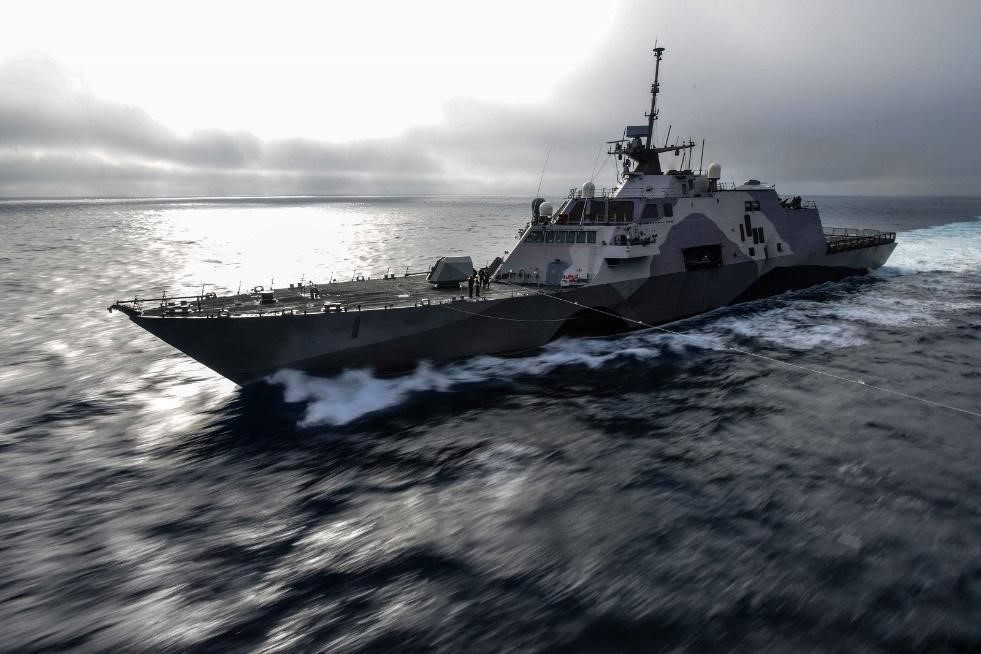
USS Freedom, a littoral combat ship which utilizes aluminum construction of the deck and superstructure. One of the competing designs for the FFG(X) program.

The shipbuilding industry has always been relevant, evolving from days of wooden vessels to the metal age, including the use of aluminum alloys. Vessels used both above and below the water’s surface have been vital for construction, trade, exploration, and military endeavors since humanity first grasped the concept of buoyancy.

Despite the long history of naval development, the biggest strides in naval technology have taken place within the last 200 years. Specifically, naval technology as we know it, took a huge leap in 1862 when two ironclad warships traded blows for the first time during the American Civil War. The outcome of the battle may have been ambiguous (neither vessel was sunk, yet both sides claimed victory), but the effect on naval technology was crystal clear.

Several Union wood-hulled vessels had been sunk by the Confederate ironclad CSS Virginia, which escaped the battle in pristine condition. It was not until the intervention of the Union ironclad USS Monitor that the attack on the Union fleet was stopped. Ironclad warships had increased survivability compared to their wooden hulled predecessors, and so the war on the seas would, from then on, be governed by whoever had the best materials and the construction techniques to properly apply them.

This trend continued with increasingly strong steel alloys being used to create armor of incredible durability. This brings us to the modern day, where the battlefield is evolving quicker than ever. There will always be a place in the Navy for destroyers and cruisers, but the need has arisen for a new breed of warship with increased speed, agility, and stealth. Fortunately, there is a material to match this need.

Just as the development of iron and steel allowed vessels to be made tougher than before, now aluminum alloys and fabrication processes will allow the development of the new class of vessels centered around evading the enemy’s strikes before retaliating.

At one-third the density of steel, aluminum allows vessels to be made lighter and therefore faster. The corrosion resistance and strength of new alloys, specifically the 5xxx series of aluminum alloys, make it an ideal choice for the construction of sea-going vessels. In addition, the development of new metal forming processes such as CNC machining, extrusion, and new welding processes (friction stir welding chief among them) have made aluminum one of the most versatile materials, able to be formed to shapes impossible for other materials. Already in use with the littoral combat ships, aluminum construction of the decks, superstructure, and even hull sections are key to making the vessels lighter, faster, and more maneuverable. In fact, these vessels are capable of speeds of more than 45 knots (51 mph), an impressive speed for vessels which weigh 3500 tons.

Now, the Navy is considering designs for the FFG(X) program, developing a new fast warship to complement their current fleet. The vessel must be able to support carrier groups at speeds in excess of 30 knots (34 mph), hunt submarines, add an additional layer of security to carrier groups and convoys through networked sensors, engage enemy surface ships at both long ranges and short ranges, and operate with the fleet or independently depending on the situation. Speed and flexibility will be necessary to accomplish this mixture of hunter and guardian in a single vessel. No matter what design is selected, it will rely on aluminum construction and fabrication techniques to obtain the performance necessary to neutralize whatever situation it faces.

Military-influenced design backdrop with navy and gold accents with the words “from sea to space” in the forefront, along with the Taber Extrusions company gold triangle logo on top.

MORE ON TABER EXTRUSIONS – FROM SEA TO SPACE

Taber Extrusions LLC, a pioneering manufacturer of complex aluminum extrusions, has earned the distinction as the only U.S. domestic aluminum extruder using a rectangular container and billet configuration to produce wide aluminum extrusions with superior tolerances for military and marine applications.

This distinction has garnered Taber Extrusions the position as the preferred supplier for custom defense-related applications using ultra-wide multi-void hollow extrusions in thicknesses from .75 up to 3.4 inches and widths up to 29 inches. Our customers include the U.S. military as well as various government prime defense contractors.

Our ultra-wide aluminum extrusions typically result in a considerable reduction in fabrication cost of the end product, plus we process materials domestically to ensure adherence to the “Buy American” requirements for U.S. military applications. In many cases, multiple-part assemblies can be replaced by a one-piece extrusion that is mechanically superior. Wide multi-void extrusions are ideal for platforms and structure constructions that need to be lightweight yet strong.

Taber is the largest supplier of 5xxx series extrusions in the USA. Our extrusions can be used in a wide variety of applications from armor-grade paneling to oil rig crew boats and equipment. Taber’s 5xxx high corrosion resistant and weldable extrusions can also be found on US Naval vessels in flight decking, superstructure supports and hull stiffeners.

Visit Taber Extrusions at https://taberextrusions.com or call us at 888-984-3217.

16 11, 2018

Billets! Billets! Billets! – Taber’s In-House Aluminum Casting Solutions

2019-01-10T19:28:58+00:00November 16th, 2018|

Taber’s casthouse in Gulfport, Mississippi, with an overlay image of different sized aluminum billets

Billets, billets, billets!

In response to the growing need in the domestic market for aluminum billet products, Taber Extrusions, LLC is announcing the planned addition of 7” billet molds to our existing extrusion billet casting facility in Gulfport, MS.

Our recently upgraded, state-of-the-art billet casting facility, unveiled late last year (as announced in our article with Light Metal Age), allows Taber to manufacture aluminum billets for defense, marine and other specialized industries. By combining our advanced, specialized systems with experienced metallurgists and engineers, Taber is proud of our ability to produce an aluminum billet of superior quality.

The new addition of the 7” billet molds to our collection complements the existing 8”, 9”, 11”, 16”, and 20” diameter molds. Aluminum billets will be available in 6063 and 6061 alloy chemistries as well as specialized chemistries upon request.

“Taber is excited to now offer 7” extrusion logs to our fellow extruders, in addition to our previous offerings,” says Jason Weber – VP Sales and Marketing at Taber.

Our casthouse is uniquely situated in Gulfport, MS with port access as well as easy access to industrial scrap. These input factors coupled with the recently refurbished casting equipment with the LARS® in-line degassing and purification system supplies billet chemistries and consistencies which rival those of larger billet producers.

ABOUT TABER

Since 1973, Taber Extrusions LLC has pioneered the extrusion of large, heavy, and wide complex shapes to differentiate itself in the aluminum extrusion industry. Since its inception, the brand name Taber Extrusions has been synonymous with innovation, service, and quality—all of which serve to make Taber Extrusions the premiere aluminum extrusion company. All of our extrusions have been, and will continue to be engineered, manufactured, and tested in the United States. Taber Extrusions maintains its headquarters at the Russellville, Arkansas facility, with a regional sales office at its Gulfport, Mississippi facility.

After all this time, why do our customers continue to return to Taber? It’s because we’re dedicated to innovation. We’re dedicated to finding intricate solutions for even the most complex extrusion request. While other aluminum extrusion companies continue to focus on standard products and techniques, Taber’s work ethic and attention to the needs of the market allow Taber to create customized, versatile, high quality, and market-oriented products that can satisfy a wide range of applications.

Follow Taber on social media and never miss an update:

LINKEDIN: https://www.linkedin.com/company/8843183/

FACEBOOK: https://www.facebook.com/taberextrusions/

TWITTER: https://twitter.com/taberextrusions

Interested in becoming a part of the Taber Team?  Submit your resume to careers@taberextrusions.com.

8 11, 2018

A Brief History of Aluminum Extrusions and How They Will Shape the Future

2018-11-08T21:23:09+00:00November 8th, 2018|

Just look around you,aluminum extrusions are used in almost every facet of your daily life. From cars to office building structures, to the rail of a staircase, extruded aluminum is all around us. But what is the history of aluminum extrusions? How did this extrusion process start? How has it changed over time and how will it shape the future? Read on to find out.

Origins of extrusion process

Joseph Bramah, the father of aluminum extrusions. Image source

In 1797, Joseph Bramah patented the extrusion process which was first created for manufacturing lead pipes. His process involved preheating metal and manually forcing it through a die with a hand-driven plunger. This manually-powered process, known as ‘squirting’ at the time, was the standard until the invention of the first hydraulic press by Thomas Burr. By the late 19th century, the extrusion process was also used with brass and copper alloys; aluminum would come into the picture in the 20th century.

Aluminum and the extrusion process

First found in 1807, aluminum was not refined successfully until 1825. In the beginning, it was considered a precious metal and even more valuable than gold. At the end of the 19th century, the smelting process was invented by Charles Martin Hall and Paul Héroult which allowed for commercial production to develop.

Not until 1894 would aluminum be used for extrusion when Alexander Dick developed the hot extrusion process. The process allowed non-ferrous alloys to be extruded and the first aluminum extrusion press was in production by 1904. Immediately, the applications for aluminum in automotive and construction arose. Especially during the two world wars, the demand for extruded aluminum was high. After World War II, the process expanded into the growing residential housing market.

Since then, extruded aluminum has continued to grow in applications and is a part of almost every aspect of life. From subway cars to our own personal cars, construction to medical devices, the material has revolutionized the way we live.

How will aluminum shape the future?

Aluminum extrusion has continued to break new ground. The extrusion process has seen improvements in materials, and through the use of modern testing, expanding and implementing means they can shape the future. With the introduction of the computer, aluminum extrusions can be more precise and accurate, making safer and longer lasting products.

The U.S. aluminum industry is the largest in the world, producing 22 billion pounds of metal annually. Aluminum is resistant to corrosion, strong, lightweight, and recyclable which means it is ideal as the planet moves towards a ‘greener’ future. In order to compete with a globally competitive aluminum market, U.S. producers are seeking ways to reduce waste, lower costs, and enhance overall products.

Taber Extrusions wants to lead the way in extrusion development and be a part of its growth in the future. Taber offers a large variety of products and processes and does everything in its power to stay ahead of the curve, using the latest technology to create the best possible products. ‘Good products at low costs’ is what Taber tries to provide to its customers and they work hard every day to supply this with the best possible service.

To learn more about how we can be of service visit: https://taberextrusions.com/

For inquiries or quotes visit: https://taberextrusions.com/contact-us/

Follow Taber Extrusions

LINKEDIN: https://www.linkedin.com/company/8843183/

FACEBOOK: https://www.facebook.com/taberextrusions/

TWITTER: https://twitter.com/taberextrusions

Interested in becoming a part of the Taber Team?  Submit your resume to careers@taberextrusions.com.

30 10, 2018

Taber Extrusions Announces New Extrusion Billet Casting Capacity

2020-08-31T20:35:03+00:00October 30th, 2018|

Leading aluminum extruder Taber Extrusions announces the planned addition of 7”billet molds to their extrusion billet casting facility in Gulfport, MS. Taber’s addition of the 7” molds further enhances Taber’s existing offering of extruded aluminum billet products to Taber’s newly refurbished Gulfport Casthouse.

Taber Extrusions, LLC is announcing the planned addition of 7”billet molds to Taber’s existing extrusion billet casting facility in Gulfport, MS. Taber’s addition of the 7” molds further enhances Taber’s existing offering of extruded aluminum billet products to Taber’s newly refurbished Gulfport Casthouse. 7” extrusion log will be available for delivery beginning in January 2019.

The addition of the 7” molds complements the existing 8”, 9”, 11”, 16”, and 20” diameter molds. The various diameters of extrusion billet will be available in 6063 and 6061 alloy chemistries as well as specialized chemistries upon request. “Taber is excited to offer extrusion logs to our fellow extruders.” says Jason Weber – VP Sales and Marketing at Taber. The Gulfport Casthouse is uniquely situated with port access as well as easy access to industrial scrap. These input factors coupled with the recently refurbished casting equipment with the LARS® in-line degassing and purification system supplies billet chemistries and consistencies which rival those of larger billet producers.

A recent article by Light Metal Age Magazine explains how the completion of Taber’s casthouse modernization increased its billet capacity by over 30%, expanded its range of high quality aluminum alloys (hard, soft, marine, aerospace, and defense) and enabled the use of more diverse scrap material in its process, allowing for the production of billet with high recycled content.

About Taber:

Founded in 1973, Taber Extrusions originally pioneered a process for extruding rectangular billet which enables the company to extrude solid profiles up to 31 inches wide or hollows up to 29 inches. Taber expanded with the purchase of an extrusion facility in Gulfport, MS., in 1995 which houses a cast house and two additional presses, and the fabrication area has been expanded multiple times. Today, Taber Extrusions is proud to announce the launch of expanded capabilities to include micro-extrusions and 7” billet molds.

Thank you for your continued support of Taber Extrusions, LLC. If you have any questions please visit taberextrusions.com or contact one of Taber’s Regional Sales Managers.

Follow Taber Extrusions
LINKEDIN: https://www.linkedin.com/company/taberextrusions/
FACEBOOK: https://www.facebook.com/taberextrusions/
TWITTER: https://twitter.com/taberextrusions

26 10, 2018

Taber Extrusions Micro-Extrusion Capabilities Further Serving Medical, Defense, and Electronics Sectors

2020-08-31T20:36:08+00:00October 26th, 2018|

Full-service provider of aluminum extrusions, Taber Extrusions, has completed the relocation and start-up of recently acquired micro-extrusion press lines. Taber’s present and future customers can expect to see increased supply opportunities with the expanded set of extrusion solutions, programs and services.

Taber Extrusions, located in Russellville, Arkansas is a highly regarded full-service provider of aluminum extrusions to a wide variety of industries including aerospace, transportation, defense, and thermal management. Taber has completed the relocation and start-up of the recently acquired micro-extrusion press lines. ISO 9001 and AS 9100 certified, Taber’s present and future customers can expect to see increased supply opportunities with the expanded set of extrusion solutions, programs and services.

“It’s about having all the different to meet the extrusion end users growing needs,” states Jason Weber, Taber Extrusions Vice President of Sales and Marketing, in a recent article by Light Metal Age Magazine. “One of the taglines we use is ‘Shaping Endless Possibilities.’ With the extensive variety of extruded shapes Taber produces—from micro-extrusions to wide profiles and everything in between—Taber embodies that message.”

The ultra-precision extrusion® manufacturing lines have a production envelope with a circle size of 3 inches or less and a weight per foot of 1 lbs. or less. For comparison, the 8,600 ton press in Russellville produces profiles with a minimum weight of 4 lbs. per foot. Unlike traditional extrusion presses, these micro-extrusion presses are built in such a way to allow for the production of extrusions with wall thicknesses of 0.010 inches and tolerance capabilities of +/- 0.001 inches. These micro-extrusion production centers allow designers and engineers the freedom to engineer profiles that would otherwise be unextrudable through conventional presses. (– Light Metal Age Magazine, 2018)

Founded in 1973, Taber Extrusions originally pioneered a process for extruding rectangular billet which enables the company to extrude solid profiles up to 31 inches wide or hollows up to 29 inches. Taber expanded with the purchase of an extrusion facility in Gulfport, MS., in 1995 which houses a new state of the art cast house and two additional presses, and the fabrication area has been expanded multiple times. Taber continues to extrude billet in a wide range of alloys and sizes, and has diversified its markets beyond military since its inception to include aerospace, automotive, marine, infrastructure, and sporting goods, among many others. For these markets, the company supplies cast and extruded products in a variety of soft and hard alloys. Today, Taber Extrusions is proud of its aluminum micro-extrusion capabilities, and full offering of extruded aluminum components, value-added machining services and raw material supply to the North American market.

Thank you for your continued support of Taber Extrusions, LLC. If you have any questions please visit taberextrusions.com or contact one of our Regional Sales Representatives.

Follow Taber Extrusions
LINKEDIN: https://www.linkedin.com/company/taberextrusions/
FACEBOOK: https://www.facebook.com/taberextrusions/
TWITTER: https://twitter.com/taberextrusions

17 10, 2018

Aluminum Extrusions Provide Healthcare Solutions

2018-10-17T18:35:39+00:00October 17th, 2018|

Aluminum extrusions have countless benefits, almost all of which can benefit the medical and healthcare industry. Aluminum extrusions for the healthcare industry allow for flexible designs that can help meet very specific needs.

All patients are unique, so the machines, devices, and tools needed for the healthcare industry also vary dramatically. Aluminum extrusions make highly specialized parts that are designed to fit these very specific needs. From oversized aluminum extrusions to micro extrusions, we will review why aluminum is an ideal choice for medical products.

Why choose aluminum extrusions for the healthcare industry?

In 2016, health spending per person in the U.S. was $10,348 and made up 18% of the GDP. By lowering the cost of healthcare equipment and devices,  creating savings for both providers and patients. Some benefits of using aluminum extrusions are as follows:

  • Aluminum is non-magnetic, non-sparking and inert
  • Durable – Post extrusion processes help make medical devices resistant to the environment, chemicals, and abrasiveness, allowing for products that have long-lasting strength and reliability.
  • Flexible design – With modern technology, medical devices are often electronic and computer- This means that these machines need very specialized, small parts. Aluminum extrusions allow for highly specific designs to meet these needs.
  • Lower costs – As mentioned before, aluminum extrusions can achieve desired performance at a fraction of the cost because of lower material costs. As technology improves and becomes more affordable, so do the devices that are used in tandem with them (i.e. fibre optic cables, sensors, stints, etc.)
  • Alumimum extrusions are key components in patient handling systems as well as patient care systems example https://www.hill-rom.com/usa/Products/Category/Patient-Handling/ these systems create a safer, better patient experience while decreasing the load requirements on the caregiver.

Case Example:

Leading Company’s Modern IGRT/IRMT Solution

Modern IGRT/IRMT MRI Machine

Previously, 64 mechanical ‘leaves’ in the machine were coupled with pneumatic actuators, opening and closing to deliver a prescribed radiation dosage. Occasionally, these couplings would break and cause the machine to shut down. The objective was to redesign these couplings to improve the system’s up-time while reducing part costs and manufacturing complexity. This is where aluminum extrusions came in.

Rather than using EDM steel coupling, they were replaced with aluminum extrusions (6063 alloys that were hard coat anodized). They tweaked the parts’ design for improved strength and durability and, as a result, there were no failures throughout a 10 million cycle test regimen. Overall, this ‘snap fit’ assembly cut labor by 30 to 60 minutes per assembly and cut component manufacturing costs by nearly 90%.

How Taber can provide you healthcare solutions?

Taber Extrusions wants to lead the way in supporting medical component manufacturers with their aluminum extrusion needs. Taber offers a

Take our work in microextrusions for medical devices for example. We have helped companies that create life-saving devices and want to continue to expand our collaborations in this industry. ‘Good products at low costs’ is what Taber tries to provide to its customers and the healthcare industry is the perfect place to do that.

About Taber Extrusions

Founded in 1973, Taber Extrusions originally pioneered a process for extruding rectangular billet which enables the company to extrude solid profiles up to 31 inches wide or hollows up to 29 inches. Taber expanded with the purchase of an extrusion facility in Gulfport, MS in 1995 which houses a new state of the art cast house, two additional presses, and a fabrication area that has been expanded multiple times. Taber continues to extrude billet in a wide range of alloys. and sizes.

Taber Extrusions recently expand their capabilities to include ultra-precision aluminum extrusions®. To learn more about how we can be of service visit: https://taberextrusions.com/   For inquiries or quotes visit: https://taberextrusions.com/contact-us/

Follow Taber Extrusions

LINKEDIN: https://www.linkedin.com/company/8843183/

FACEBOOK: https://www.facebook.com/taberextrusions/

TWITTER: https://twitter.com/taberextrusions

Interested in becoming a part of the Taber Team?  Submit your resume to careers@taberextrusions.com.

3 10, 2018

Achieving a Shiny Finish: How Aluminum Accepts a Variety of Finishes

2018-10-03T16:19:48+00:00October 3rd, 2018|

The applications for aluminum alloys are varied, but for many projects, such as with infrastructure or medical products, the appearance of the final product counts. This means that having a variety of aluminum surface finishes creates more possibilities for what an aluminum extrusion can do. We will review what surface treatments provide and the different types of finishes available in the industry.

What advantages do aluminum surface treatments provide?  

Often just seen as a means of corrosion protection, these treatments can drastically impact a variety of conditions and properties. Such changes include:

  • Altering surface hardness and abrasion resistance
  • Appearance
  • Coating adhesion like paints, varnish, and bonding adhesives
  • Providing protection from corrosion and durability

What types of aluminum surface finishes are there?

No matter the application, aluminum and its alloys provide the advantage of having a naturally hard and inert surface oxide layer. This layer is formed in aerated water and air and then re-forms when the metal is cut. Subsequently, the oxide film allows aluminum and its alloys to have minimal corrosion.

The surface finishes for aluminum fall into three main groups: anodizing, powder paint and liquid paint. Though not as common, there are other surface finishes which include mechanical finishes, pretreatment, and sublimation.

The Big Three: Anodizing, powder coating, and wet coating

  • Anodizing – Adding further protection beyond the natural oxide film, this electrochemical process provides durability to the aluminum. Anodized aluminum can accept vibrant colors and any aluminum alloy can be anodized. 
  • Powder Paint– This process leaves behind a film that meets intense performance criteria. For example, there are many environmental regulations that prevent the use of VOCs which powder coating does not contain. It is applied as a solid, and when going through and over, the solid particles fuse to form the film.

Liquid Paint – Varying in color, this film provides uniform thickness. Unlike powder coating, they do contain VOCs but they are driven off during the baking process. When these VOCs are removed, the volume solids form a film on the extrusion.

aluminum tree with wood on one side of the background and rows of steel on the other side

Other aluminum surface finishes:

  • Mechanical finishes – Aluminum and aluminum alloys can be buffed, polished, blasted, sanded, or grinded. This is typically done in order to improve the surface quality of the extrusion in order to prepare it for further cosmetic finishes.
  • Pretreatment – This surface finish is done by either etching or cleaning the profile with alkaline or acidic materials. Following the cleaning, a pretreatment coating is applied which enhances paint or powder adhesion, thus providing stronger resistance against corrosion.
  • Sublimation – This technique is rarely implemented but is becoming more common over time. Sublimation makes an aluminum alloy look like wood of all things! First, a base coat of powder is applied and then the extrusions go through sublimation. Then technicians place a thin film with a pattern on it around the profile. With the sublimation process, the wood pattern is directly transferred onto the extrusion.

Taber Extrusions knows what it takes to produce the top-quality extrusions with the best possible finishes. We offer a variety of surface finishes and work closely with our customers to achieve products that are not only reliable and functional but good looking.

To learn more about how we can be of service visit: https://taberextrusions.com/

For inquiries or quotes visit: https://taberextrusions.com/contact-us/

Follow Taber Extrusions

LINKEDIN: https://www.linkedin.com/company/8843183/

FACEBOOK: https://www.facebook.com/taberextrusions/

TWITTER: https://twitter.com/taberextrusions

Interested in becoming a part of the Taber Team?

Submit your resume to careers@taberextrusions.com.

28 08, 2018

Microextrusions for Consumer Electronics

2018-08-28T19:36:35+00:00August 28th, 2018|

Are you familiar with Moore’s Law?

It’s an observation made by Gordon Moore, cofounder of Intel. It posits that the number of transistors in a dense integrated circuit doubles every two years. Put simply, this means that computer hardware, as it becomes more complex, also becomes smaller.

You’ve seen it firsthand. Compare the bulky first smartphone you purchased back in 2007 to the shiny new smartphone you have in your pocket right now. It’s thinner, bigger, and packs WAY more energy-per-gram than it did a decade ago.

As tech companies are in a constant race to make things micro-sized, industrial OEMS must seek out new technologies to keep up.

Enter microextrusions – a recent process that delivers features, tolerances, and surface finishes previously believed to be impossible. Advancement in microextrusion allows design engineers the freedom to utilize component designs in microextrusion which enhance functionality and performance beyond normal extruded parts.

Below, we outline some different aspects of consumer electronics that rely on precision aluminum extrusions in their designs.

CPU HEAT SINKS

The CPU (central processing unit) is akin to the brain of the computer – it performs the arithmetic, logic, and I/O operations based on the instructions from other computer components. This heavy workload leaves CPUs prone to overheating, and as such, require a heat sink to disperse heat and keep the component cool.

Advancements in microextrusion technology allow for heat sink designs to disperse heat even more effectively. Keeping your CPU at a good operating temperature is essential for long-term performance!

MOTHERBOARDS

Microextrusions are used in motherboards to create housing for ethernet and USB ports, as well as housing for DVI, HDMI, and sound input and output ports.

Microextrusions are also used for the crucial CPU socket, which often uses a latch to securely house the CPU and attach it to the motherboard.

GRAPHICS PROCESSING UNITS

Graphics cards, such as NVIDIA’s recent Titan V, are often housed in an aluminum shell to keep the internals of the GPU safe and secure (and it looks absolutely stunning to boot!).

HARD DRIVE BAYS

Most modern hard drives come with mounting brackets, and are housed in a computer case by sliding them through an extruded aluminum hard drive bay. This keeps them secure during operation – hard drives are very susceptible to damage from physical shock, so keeping them secure is important!

LED PROFILE BAYS

LED lights are often housed in microextruded profile bays – the extremely fine materials and plastics used to create it allow the LED lights to shine through while also keeping them protected from the environments.

EXTRUDED ENCLOSURES

Since consumer electronics often make use of sensitive magnets, aluminum is perfectly suited to house those components. This is because aluminum does not spark, melt, or rust, and can be customized to fit the need of any product.

About Taber Extrusions

Founded in 1973, Taber Extrusions originally pioneered a process for extruding rectangular billet which enables the company to extrude solid profiles up to 31 inches wide or hollows up to 29 inches. Taber expanded with the purchase of an extrusion facility in Gulfport, MS in 1995 which houses a new state of the art cast house, two additional presses, and a fabrication area that has been expanded multiple times. Taber continues to extrude billet in a wide range of alloys. and sizes.

Taber Extrusions has recently enhanced its portfolio of services with the addition of ultra-precision aluminum extrusions®. Today, Taber Extrusions is proud of its full line up offering of extruded aluminum components, value-added machining services and raw material supply to the North American market.

Follow Taber Extrusions

LINKEDIN: https://www.linkedin.com/company/8843183/

FACEBOOK: https://www.facebook.com/taberextrusions/

TWITTER: https://twitter.com/taberextrusions

Interested in becoming a part of the Taber Team?  Submit your resume to careers@taberextrusions.com.

16 08, 2018

How Aluminum Extrusions Make Public Transport More Efficient

2018-08-16T16:46:15+00:00August 16th, 2018|

People today are becoming increasingly conscious of the energy they use and look for ways to be more conservative. For many, this draws them to use public transportation for its notable efficiency. But how can the public transportation itself become more efficient? The answer is aluminum. The use of aluminum extrusions in constructing public transport provides a number of benefits to a wide variety of vehicle types.

How do aluminum extrusions make public transport more efficient?

Aluminum is durable, light, and strong, making it the preferred material for public transportation. Some of the ways it increases efficiency are:

  • High strength-to-weight ratio: The efficiency of railways and subways depends greatly on trying to decrease weight in order to reduce friction. Aluminum extrusions are very lightweight yet still strong compared to other metals. This reduced weight also leads to…
  • Reduced fuel consumption: The lighter the vehicle, the less energy that is required to power it. Additionally, with a lighter vehicle structure, the vehicles can handle increased passenger and cargo weight. This significantly reduces the amount of fuel used per person (especially when compared with motor vehicles).
  • Long operating life and recyclable: Aluminum has the ability to withstand corrosion much better than many other metals. This reduces risk of rust or wear and tear on the public transport vehicles which means they can be in operation for longer periods of time. Also, because aluminum is malleable, any excess material from construction is fully recyclable.

Does it vary by type of transportation?  

The previously described efficiencies are applicable to almost any public transport operation but there can be individual advantages depending on the vehicle type:

  • Trains and subway vehicles: Aluminum extrusions are used in the construction of both freight and passenger trains. For passenger trains, they are frequently made from a single aluminum extrusion that are the entire length of the car (75+ feet long). Individual parts are welded together with horizontal members around the doors and windows reinforcing the vehicle. With minimized parts and a simple assembly, the manufacturing becomes more efficient with a lighter and more aerodynamic final product.
  • Buses: Buses built from aluminum bodies are several hundred kilograms lighter than traditional construction. This increases the number of people transported per given maximum permitted weight, reducing costs for operating the bus. Because some buses travel great distance and often make frequent stops and starts, efficiency is extremely important.

Which alloys are used for public transportation?

The characteristics that make aluminum alloys ideal for public transport projects are that they are lightweight, strong, weldable, corrosion resistant, and easy to fabricate. The 5xxx and 6xxx aluminum series most closely fit this bill. Sheet metals commonly used are the 5052, 5083, 5086, 5454, and 6061. For extrusions, the 5083, 6061, and 7005 are commonly used. Because of the diversity of alloys in these series, there are extrusions available for almost any public transport project’s need.

Taber Extrusions knows what it takes to produce the top-quality extrusions required for public transportation projects. Our capability of producing very large aluminum shapes in our Russellville, AR facility with our rectangular and large round containers allows us to supply our customers with some of the heaviest solid profiles, and widest, most complex multi-void hollow profiles in the industry. Taber’s vertically integrated billet casting operations allows Taber to extrude a wide variety of alloys and profiles for the transport industry.

To learn more about how we can be of service visit: https://taberextrusions.com/

For inquiries or quotes visit: https://taberextrusions.com/contact-us/

Follow Taber Extrusions

LINKEDIN: https://www.linkedin.com/company/8843183/

FACEBOOK: https://www.facebook.com/taberextrusions/

TWITTER: https://twitter.com/taberextrusions

Interested in becoming a part of the Taber Team?  Submit your resume to careers@taberextrusions.com.

1 08, 2018

Aluminum Extrusions for the Space Industry

2018-08-01T17:11:04+00:00August 1st, 2018|

Aluminum Extrusions for the Space Industry

Followers of our blog, no doubt, know that aluminum alloys are a critically important material for the aerospace industry. The same is true for the ever-developing world of spacecraft manufacturing. They require materials that can withstand intense vibrations and the unique hazards of space. To this end, aluminum provides the perfect answer.

Since Sputnik was launched more than half a century ago, aluminum has been the go-to material for space vehicles and structures. It’s remarkable light weight, high-strength, mechanical stability and dampening properties exceed other materials and make it the first choice for spacecraft – from the International Space Station and the Mars Curiosity Rover, to the spacecraft of the future like NASA’s Orion project. All modern spacecraft are made from anywhere between 50-to-90% aluminum alloy.

Hazards of Space

The extreme environment of space presents unparalleled challenges to engineers, as they must build structures in space that can operate within its harsh conditions. This is what is called a material’s environment stability – this means that the material can remain stable while being subjected to radiation and the vacuum of space.

Some of the hazards that must be accounted for include:

Radiation/cosmic rays

Aluminum is often used as a shielding material that absorbs radiation from stars. Space radiation can cause direct damage to an astronaut’s DNA and cells. Aluminum can absorb up to half of the radiation being emitted, bringing it down to non-threatening levels for the space crew.

Wild fluctuations between heat (250°F) and cold (-200°F)

The temperature of space is varying constantly, depending on where you are within it. This constant flux in temperature causes materials used in spacecraft to consistently expand and contract. Aluminum’s dimensional stability allows it to maintain its shape and size despite the changing temperature. 

Space debris

Spacecraft are constantly peppered with objects that are floating through space, including micro-asteroids, meteorites, and comets. Aluminum’s strength and rigidity allow it to maintain it’s structural integrity to these types of hazards.

Launch and re-entry

During the launch and re-entry sequence of space travel, the materials that comprise the spacecraft will be put under stresses that exceed three times the force of gravity – effectively making it weigh three times as much as it would in Earth’s gravity. As such, the material must be able to maintain its structural integrity and resist bending or breaking, lest it fall apart on the launchpad. 

How is aluminum used in modern spacecraft?

Below, we review some of the major modern spacecraft, and how each utilizes aluminum alloys. Beyond being made of mostly space-grade aluminum, these craft use aluminum in some ingenious and unorthodox ways.

INTERNATIONAL SPACE STATION

The exposed exterior metal of the station is anodized, or otherwise coated for thermal efficiency and to prevent atomic oxygen reactions that occur in the vacuum of space. Also found on the exterior are aluminum whipped shields that absorb the impacts of space debris. In addition, each of the Node modules later added to the craft were made from single blocks of aluminum. In the interior of the station, most objects are made from aluminum for similar weight-saving purposes.

 MARS CURIOSITY ROVER

Several components of the Mars Curiosity Rover’s launch vessel were made from aluminum. The launch vessel’s core was made from an aluminum structure that was sandwiched between graphite-epoxy face sheets. The parachute deployment mechanism, which slowed the Rover’s descent onto the Martian surface, was hand forged from an aluminum billet. The frame and wheels of the nine-foot-long, 1,875 lb. Curiosity Rover itself are made of aluminum, as well. “NASA could not have made it to the surface of Mars without aluminum.” Dr. John Grotzinger Chief Scientist and Head of Strategic Planning for the 2012 Mars Rover mission.

SPACE X’S FALCON 9

The fuel tanks of the Falcon 9 are made from an aluminum-lithium alloy, which is an aluminum that has been infused with lithium. The Falcon 9 is a two-stage spacecraft. Inside both stages are aluminum-dome-tipped tanks, which store the fuel used to launch.  The first stage engines are gradually throttled near the end of first-stage flight to limit launch vehicle acceleration as the rocket’s mass decreases with the burning of fuel. The second stage delivers Falcon 9’s payload to the desired orbit. Like the first stage, the second stage is made from a high-strength aluminum-lithium alloy.

VOYAGER 2

Quite famously, common household aluminum foil was used to save the Voyager 2 mission very late in the development process. The probe was going to pass Jupiter in 1979, a year and a half into it’s mission. The probe was going to slingshot using Jupiter’s gravitational pull and propel itself towards Saturn. There was a slight problem, though – Jupiter’s magnetic field and emitted radiation were very likely to fry most of the internal systems of the Voyager 2 probe, rendering the entire mission useless. The cables onboard the craft needed to be shielded to avoid damage from radiation. Due to the unique planetary arrangement at the time, which only happens once every 175 years, the Voyager team could not delay the mission. Doing so would lose them both their opportunity and billions of dollars. Without the time to do proper due diligence, they instead sent one of their technicians to a local supermarket to by all the kitchen-grade aluminum that they had available. They wiped down the foil with alcohol and exposed it to every exposed cable on the craft. This last-minute addition to the craft ensured the success of the mission!

ORION

NASA’s Orion MPCV (Multi-Purpose Crew Vehicle) will serve as the next-generation space exploration vehicle. The primary structures of the Orion spacecraft are made from an aluminum-lithium alloy and will be covered by an advanced version of the thermal protection tiles used on the space shuttle.

About Taber Extrusions

Founded in 1973, Taber Extrusions originally pioneered a process for extruding rectangular billet which enables the company to extrude solid profiles up to 31 inches wide or hollows up to 29 inches. Taber expanded with the purchase of an extrusion facility in Gulfport, MS in 1995 which houses a new state of the art cast house, two additional presses, and a fabrication area that has been expanded multiple times. Taber continues to extrude billet in a wide range of alloys and sizes.

Your full service partner from start to finish, Taber is proud to announce expanded capabilities to include ultra-precision aluminum extrusions®. Delivering a wide array of features and surface finishes, Taber’s microextrusions provide an additional design alternative at machined tolerances.

Follow Taber Extrusions

LINKEDIN: https://www.linkedin.com/company/8843183/

FACEBOOK: https://www.facebook.com/taberextrusions/

TWITTER: https://twitter.com/taberextrusions

Interested in becoming a part of the Taber Team?  Submit your resume to careers@taberextrusions.com.

Go to Top