19 11, 2026

7000-Series Aluminum Alloys for Aerospace & Defense: The Engineer’s Complete Guide
2026-11-19T20:31:17+00:00November 19th, 2026|

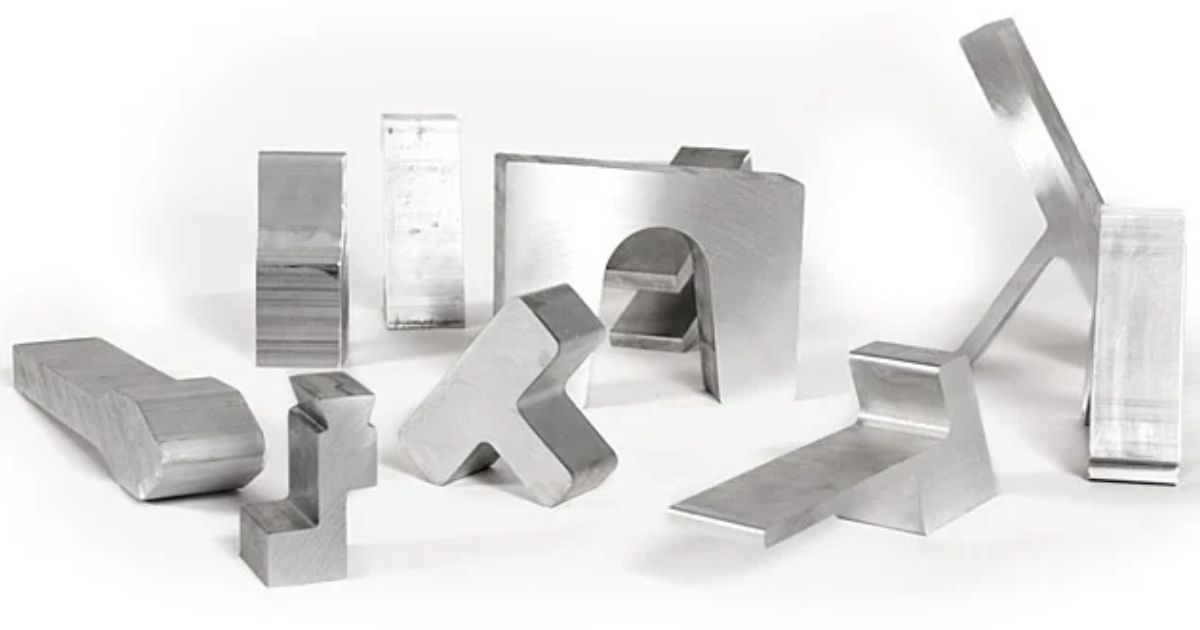
Taber Extrusions aircraft and aerospace aluminum extrusions, nonstandard shapes.

Key Takeaways:

  • Choose the alloy based on the application, not just strength. 7075 and 7050 each offer different advantages depending on fatigue performance, corrosion resistance, fracture toughness, and mechanical requirements.
  • Temper selection is just as important as alloy selection. Choosing between conditions like 7075-T6 and 7075-T73 can significantly affect long-term structural performance and durability.
  • Manufacturing capability determines whether design intent becomes production reality. Producing hard alloy aluminum extrusions consistently requires specialized presses, process control, and extensive metallurgical expertise.

Choosing among 7000-series aluminum alloys for aerospace and defense programs comes down to a trade-off that data sheet strength numbers do not show. 7075 in the T6 temper delivers peak strength but is more prone to stress corrosion cracking. 7050 holds its properties through thicker sections. Specify the wrong alloy or temper and you inherit a cracking risk, a shorter fatigue life, or a supplier who cannot hold the profile. This guide compares 7075 and 7050 alloys, explains how temper changes the result, and gives you the supplier questions to settle before the drawing is released.

Why 7000-Series Alloys Dominate Aerospace and Defense

7000-series aluminum alloys carry primary structural loads in aircraft, launch systems, and defense vehicles because they offer among the highest strength-to-weight ratios available in aluminum. Zinc is the main alloying element, with magnesium and, in grades such as 7075 and 7050, copper. Aging precipitates fine strengthening phases that give 7075-T6 a specific strength (strength per unit of density) that rivals much heavier structural steels. The trade-off is lower corrosion resistance and a harder extrusion process than 6000-series alloys.

Today, they are widely specified for:

  • Aircraft structural members
  • Wing spars
  • Fuselage components
  • Landing gear support structures
  • Missile systems
  • Space launch hardware
  • Defense vehicle structures
  • Naval aviation structures
  • High-performance transportation equipment

Where a 6061-T6 extrusion yields at 35 ksi, a 7075-T6 extrusion yields at 70 ksi or more (ASTM B221). That gap is why hard alloy aluminum extrusion takes over where weight and structural margin both matter.

According to the Aluminum Association’s aluminum alloy reference, 7000-series alloys represent the highest-strength family of commercially available wrought aluminum alloys while offering an excellent strength-to-weight ratio.

The Aluminum Association’s alloy guide describes the 7xxx series as zinc-based, heat-treatable alloys with extremely high strength that are used throughout the aircraft industry.

7075 vs 7050 Aluminum: Comparing the Leading 7000-Series Aerospace Alloys

Mechanical properties vary considerably across the family. This table compares 7075 and 7050 on the criteria that drive most specifications.

Property 7075 7050
Strength High in T6; lower in T73 High; holds up in thick sections
Stress corrosion resistance Lowest in T6; much better in T73 Strong in T73 and T76 type tempers
Fracture toughness Moderate Higher than 7075
Thick sections Properties fall as section grows Better hardenability, more uniform properties
Extrusion difficulty Moderate Moderate to high
Typical use Frames, bulkheads, tooling, precision structure Thick bulkheads, frames, stringers

7075 Aluminum Extrusion

7075 combines high tensile strength with good machinability, which is why it has remained an aerospace standard for decades.

Typical applications include:

  • Aircraft frames
  • Bulkheads
  • Wing components
  • Defense structures
  • Tooling
  • Precision structural members

7075 delivers exceptional tensile strength and machinability. As a result, it has remained an aerospace standard for decades.

However, 7075 in the T6 temper is more susceptible to stress corrosion cracking, especially in the short transverse direction of thick sections. Many aerospace programs therefore specify 7075-T73 extrusion, supplied as T73511 after stretch stress relief. It gives up roughly 10 to 15 percent of yield strength in exchange for much better stress corrosion and exfoliation resistance. For components with long service lives or harsh environments, that trade is usually worth making.

7050 Aluminum Aerospace Applications

While 7075 receives the most attention, 7050 aluminum aerospace applications have grown substantially over the past several decades.

Compared to 7075, 7050 generally provides:

  • Better fracture toughness
  • Improved resistance to stress corrosion cracking
  • Better exfoliation corrosion resistance in over-aged tempers such as T74 and T76
  • Lower quench sensitivity, so properties stay more uniform in thick sections

These characteristics make 7050 especially attractive for:

  • Wing stringers and spar caps
  • Bulkheads
  • Fuselage frames and longerons
  • Thick aerospace components
  • Thick-section structural extrusions

For extrusions, 7050 is commonly supplied in tempers such as T73511 and T76511.

Engineers working with heavily loaded aircraft structures frequently evaluate 7075 vs 7050 aluminum because each alloy excels under different loading conditions.

Although 7075 often provides higher ultimate strength, 7050 may offer superior long-term durability in demanding service environments.

Aluminum Extrusion Alloy Selection Guide: Which Properties Drive the Choice

Strength alone rarely determines the best alloy. Instead, aerospace engineers typically evaluate multiple performance criteria simultaneously.

Some of the most important criteria in an aerospace aluminum alloy properties comparison fall into two groups.

  • Mechanical:
    • yield strength
    • ultimate tensile strength
    • fatigue resistance
    • fracture toughness
    • stress corrosion resistance
  • Manufacturing:
    • Machinability
    • heat treatment response
    • dimensional stability
    • availability in the required profile sizes

Selecting an aluminum alloy for defense applications often involves balancing these characteristics against manufacturing constraints, certification requirements, lifecycle expectations, and procurement timelines.

Use the comparison table above as the starting point for your own aluminum extrusion alloy selection guide, then confirm each property against data for your specific temper and section thickness.

The Importance of Temper Selection

Alloy selection represents only half of the engineering decision. Temper selection can dramatically influence mechanical performance.
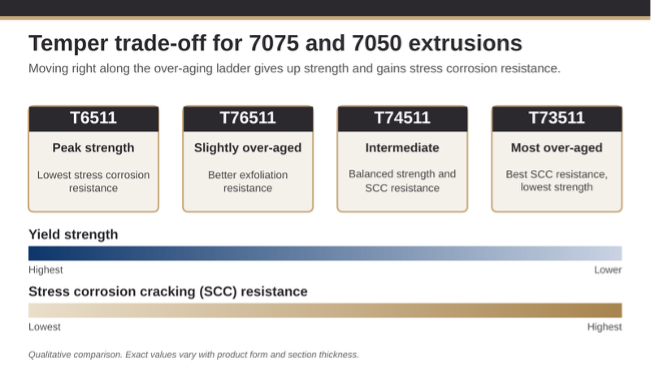
For 7075 and 7050 extrusions, the common tempers sit on a strength versus corrosion trade-off:

  • T6511: peak strength, lowest stress corrosion resistance
  • T76511: slightly over-aged, better exfoliation resistance, small strength loss
  • T74511: intermediate balance of strength and stress corrosion resistance
  • T73511: most over-aged, best stress corrosion resistance, lowest strength of the group

The “511” suffix means stress relieved by stretching, which reduces residual stress and later machining distortion.

A 7075-T73 extrusion remains one of the most common aerospace specifications because it balances high strength with improved environmental durability.

Heat treatment must also follow recognized standards to deliver repeatable properties. SAE AMS 2770 governs heat treatment of wrought aluminum alloy parts, and SAE AMS 2772 covers aluminum alloy raw materials such as extruded stock. Confirm which applies to your supply chain and ask whether the supplier’s heat treat process holds NADCAP accreditation.

Designing for Extrusion Manufacturability

Even the best alloy selection cannot compensate for poor extrusion design.

Wall thickness variation, corner radii, profile symmetry, tongue ratios, and bearing design all influence extrusion quality and dimensional consistency. Early collaboration between design engineers and extrusion specialists can reduce redesigns while improving manufacturability.

Many complex aerospace profiles also benefit from integrating multiple features into a single extrusion rather than assembling several machined components later. This approach can reduce weight, decrease machining requirements, improve structural efficiency, and simplify assembly.

Manufacturing Hard Alloy Aluminum Extrusions Is a Specialized Process

Not every extrusion supplier is equipped to produce high-strength 7000-series alloys consistently. Compared to softer aluminum grades, these materials require significantly higher extrusion forces, tighter temperature control, and carefully managed heat treatment throughout production.

Billet chemistry and homogenization are set before the billet reaches the press. Die design, press capacity, and quench then determine the final mechanical properties and dimensional accuracy. Small process variations can change grain structure, surface quality, and overall performance.

For aerospace and defense programs, consistency matters just as much as strength. A supplier’s ability to repeat results across production runs is often evaluated alongside mechanical properties and certifications.

Press Capacity Expands Design Possibilities

As aerospace structures become larger and more complex, extrusion size has become another important consideration.

Press tonnage and container size together set the largest profile you can extrude in a hard alloy. Because 7000-series flow stress is higher than 6000-series, a profile that is routine in 6063 can exceed the limits of a smaller press when extruded in 7075 or 7050. Larger presses let engineers specify bigger, more integrated profiles that replace several fabricated or welded parts, which reduces assembly time and removes potential failure points.

When a design calls for oversized hard alloy profiles, confirm the supplier’s press tonnage, container size, and maximum profile envelope in your alloy before you commit to the layout. Only a limited number of North American presses can extrude large 7000-series profiles, so check large aluminum extrusion press capacity early.
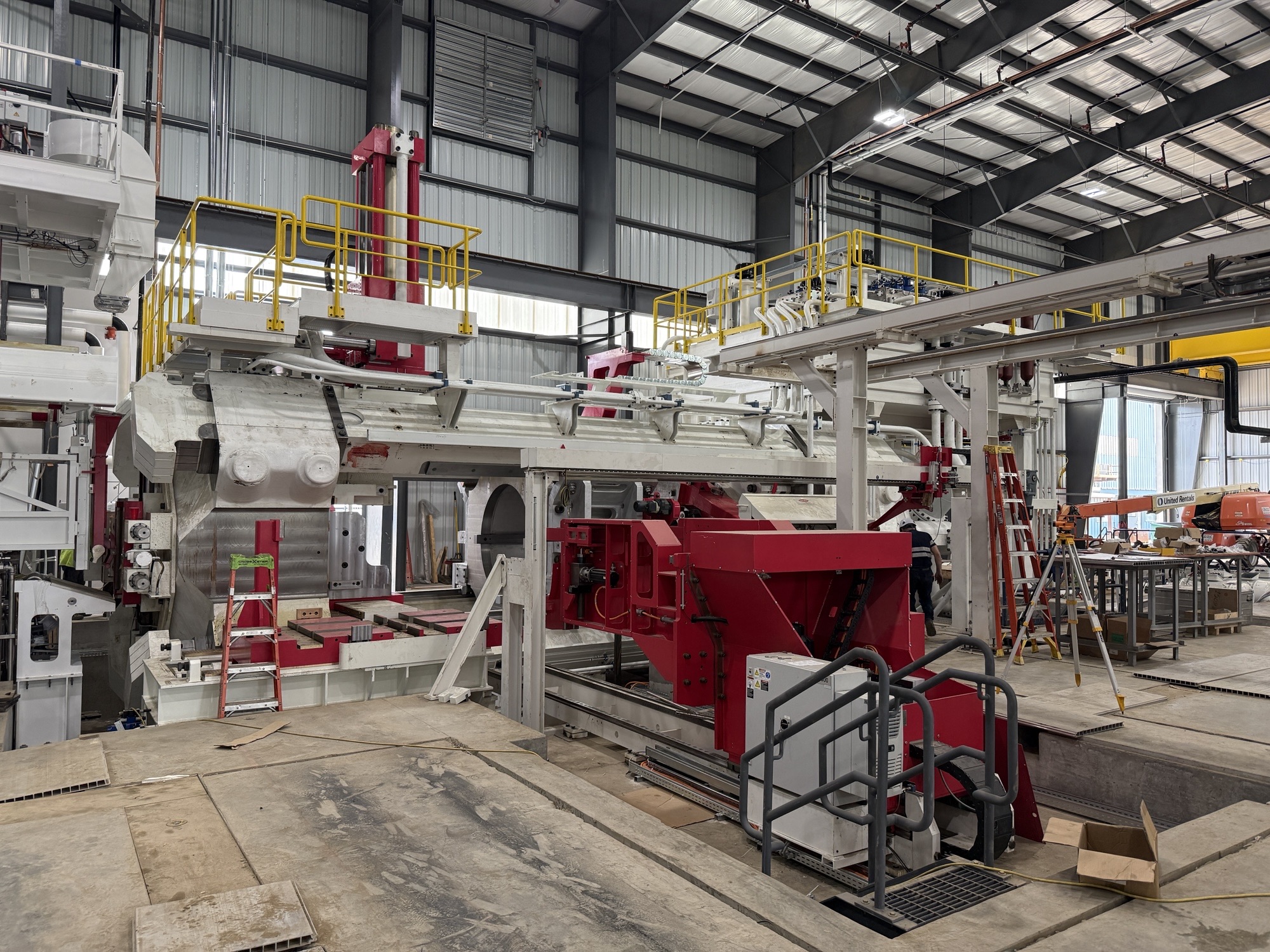
A photo of Taber's newest and largest aluminum direct press installed at their Russellville facility.

How to Evaluate a 7000-Series Aluminum Extrusion Supplier

Selecting the right alloy is only part of a successful program. The supplier’s technical capabilities often determine whether that alloy performs as intended throughout production.

When evaluating an extrusion partner for high-strength aerospace applications, engineers should consider questions such as:

  • Does the supplier regularly produce hard alloy aluminum extrusions?
  • Can they manufacture large, complex profiles in-house?
  • What heat treatment and quenching capabilities are available?
  • How is dimensional consistency maintained across production runs?
  • Are machining, finishing, and fabrication performed internally?
  • Can engineering teams collaborate during profile development?
  • Does the supplier have experience supporting aerospace and defense qualification programs?
  • Which quality certifications does the supplier hold (for example AS9100D), and does the heat treat scope carry NADCAP accreditation?
  • Does every shipment include a certified mill test report with heat number, alloy, temper, and mechanical test results?
  • Where is the billet cast, and can the supplier document origin back to the melt?

The answers often reveal more about long-term program success than a data sheet does. Suppliers with vertically integrated operations (billet casting, extrusion, machining, friction stir welding, and finishing) give you fewer handoffs and a single quality record. For the full checklist, see the supplier qualification guide.

Check Defense Sourcing Requirements Before You Specify

Aluminum is not a specialty metal under DFARS 252.225-7009, which covers certain steel, nickel, cobalt, titanium, and zirconium alloys. That does not remove sourcing questions from a 7000-series program. Primes flow down domestic content, country of origin, and traceability requirements to every tier, and Executive Order 14415 directs new supply chain mapping rules that reach raw material origin. Ask early where your billet is cast.

Understanding these requirements early in design can help avoid procurement delays and qualification issues later. For more on how current rules apply to aluminum, see NDAA Section 836 and aluminum extrusion sourcing and the EO 14415 defense supply chain aluminum sourcing explainer.

Additional information regarding specialty metals requirements is available through the DFARS 252.225-7009.

Choosing 7000-Series Aluminum Alloys for Aerospace and Defense: The Bottom Line

Choosing among 7000-series aluminum alloys for aerospace and defense programs takes more than comparing tensile strength. Alloy chemistry, temper, extrusion process control, sourcing documentation, and supplier capability all shape how the finished part performs. Evaluate them together, and start the supplier conversation during design, not after the drawing is released. You will cut revision cycles and qualification surprises.

FAQ – 7000-Series Aluminum Alloys

What information should engineers provide when requesting a 7000-series extrusion quote?2026-11-19T20:29:29+00:00

Providing the profile drawing, alloy and temper requirements, dimensional tolerances, expected production volumes, machining needs, certification requirements, and end-use application helps manufacturers evaluate feasibility and provide more accurate recommendations early in the design process.

Can 7075 and 7050 be welded?2026-11-19T20:28:49+00:00

Conventional fusion welding is generally avoided on these alloys because of hot cracking and strength loss in the heat-affected zone. Friction stir welding, a solid-state process that does not melt the metal, is often evaluated instead, as are mechanical fasteners. Joint strength and post-weld heat treatment must be qualified for the temper in use.

Is 7000-series aluminum difficult to machine after extrusion?2026-11-19T20:28:05+00:00

Not usually. 7075 and 7050 machine well, with good chip control and finish. They do wear tools faster than 6061, and residual stress can distort thin-walled parts after heavy material removal. Specifying a stress-relieved temper such as T73511 (stretched, then aged) reduces that distortion.

What is the difference between 7075 and 7050 aluminum?2026-11-19T20:27:26+00:00

Both are high-strength aluminum-zinc alloys, but 7050 was developed to address 7075’s stress corrosion cracking sensitivity in thick sections. 7050 has better hardenability, so properties stay more uniform through the cross-section. 7075 remains widely used for thinner sections where SCC risk is lower.

Which 7000-series aluminum alloys are most common for aerospace extrusions?2026-11-19T20:24:51+00:00

7075 and 7050 are the most widely specified. 7075 is the general purpose choice for frames, bulkheads, and precision structure. 7050 is preferred for thick sections where uniform properties and stress corrosion resistance matter most.

Specify the right alloy with confidence. Taber Extrusions produces hard alloy aluminum extrusions at its Russellville, Arkansas facility, in profiles from 4.5 to 50 pounds per foot. Our 10,000 ton press is the only one in North America, and our 20-inch and rectangular containers produce the larger profiles in that range. If your program needs 7075 or 7050 in large or complex cross sections, request a quote or talk with our engineering team about alloy, temper, and profile before the drawing is released. Explore hard alloy aluminum extrusions for aerospace.
Request A Quote

    CONTACT INFORMATION

    YOUR PROJECT NEEDS

    Please specify extrusion alloy and length below

    If you have design files for extrusion or FSW please upload below

    Excepted file formats: jpg, pdf, png.

    Please specify FSW alloy class, welding type and panel dimensions below.

    Alloy*

    Welding Type*

    Select Billet Size *

    ANY CUI OR FCI DATA IS STRICTLY PROHIBITED FROM BEING UPLOADED DIRECTLY THROUGH THIS FORM. IF YOU NEED TO SHARE ANY SENSITIVE DATA PLEASE CONTACT A TABER SALES TEAM MEMBER AND THEY WILL PROVIDE A SECURE METHOD OF SHARING ANY SENSITIVE INFORMATION.

    3 04, 2022

    Our Top Aluminum Microextrusion Blogs of All Time

    2022-07-08T17:14:48+00:00April 3rd, 2022|

    Blue shaded gradient over a photograph of a bridge tower and its suspension cables on the left and the U.S. flag on the right. Taber’s logo is at the very top and beneath it are the words, “The Shape of Endless Possibilities.” The logos designating minority-owned business enterprise (ISO 9001, AS 9100, NADCAP, and ABS-certified) are across the bottom in white print.

    A lot has been said about the future of nano and microtechnology. This area of aluminum extrusion, which focuses on creating ever smaller products, promises solutions to age-old problems. On the silver screen, sci-fi productions have shown nano bots crawling into humans as a futuristic form of medicine. The Terminator film franchise explored the military potential of nano technology in a self-healing liquid metal of robots. Yet, examples like these are not actually all that farfetched. From self-healing metal to invasive medicine, a whole new realm of possibilities has been opened by tiny manufacturing.

    At Taber, we are part of this revolution with our microextrusions. Like conventional aluminum extrusions, microextrusions are pushed through a die. Unlike conventional extrusions, the entire extrusion process is performed at a submillimeter level. In other words, the resulting product’s cross section can fit through a 1-millimeter square. Our microextrusions have found application in a wide range of industries, which we have previously explored in a series of articles on these miniscule creations.

    1) Taber: Microextrusions for Defense and Aerospace

    6 military jets flying across a blue sky above two military vehicles (tank and a ship) facing away from each other. The words “Taber: Microextrusions for Defense and Aerospace” are in black above the ship.

    Taber Extrusions has experienced many evolutions since its founding in the early 1970s. Taber pioneered a process for extruding rectangular billet of solid profiles up to 31 inches wide or hollows up to 29 inches. Since then, it increased Taber’s billet capacity, alloy range, and ability to reuse materials. Within the last decade, fabrication capabilities were upgraded, friction stir welding was added, and of course, microextrusions became an offering. Lightweight, strong, and widely functional, microextrusions are perfect for military and aerospace components. Interior aircraft systems, AC condensers, communication systems, and firearm components all use microextrusions. Read more about it here.

    2) Process, Benefits, and Examples of Medical Microextrusions

    A darkened photograph of a medical room with a bunch of white medical appliances. The words, “Process, Benefits, and Examples of Medical Microextrusions” are positioned on top of the photo in white.

    You don’t have to go in for a colonoscopy to understand the benefit of smaller medical tools. The microextrusions used in medicine include components that overwhelmingly support cardio- and neurovascular procedures, drug delivery, IV procedures, and other procedures that require work on a micro level. An added challenge for medical manufacturing is that conventional extrusion machinery is not quite precise enough, so it calls for special machinery. Medical microextrusions are created at a very slow rate to maintain the physical properties of the delicate material and create ultra-precise extrusions.

    3) Microextrusions in the Consumer Electronics Sector

    A lengthwise photograph of an open computer motherboard with all the different ports and circuits exposed, many of which are made of aluminum microextrusions. In the center of the photo are the words, “Microextrusions in the Consumer Electronics Sector” in white text.

    The most widespread and easy-to-spot place where miniature extrusions are making a difference in consumer products is in electronic products. Portable, durable, and complex, computational devises like laptops and smartphones have increasingly smaller parts. From enclosures to motherboards and LED profile bays, microextrusions have become a fundamental part of electronic devices. This article outlines more aspects of consumer electronics that use precision aluminum extrusions in their design.

    Often used in medical and surgical procedures, microtubing is a highly-valued type of microextrusion. Aluminum can provide three times as much volume per pound as other metal products – so when too much weight is detrimental, aluminum is an obvious choice. Aluminum is also anti-corrosive, making it an ideal material for many types of environments.

    A metal ruler lying flat on the surface of a table showing a length of 8 inches, while several aluminum microtubes are suspended above the ruler and the words “Aluminum Microtubing Rapidly Developing in Sync: Microextrusions” are in black above the ruler and on top of the tubes.
    Blue shaded gradient over a photograph of a bridge tower and its suspension cables on the left and the U.S. flag on the right. Taber’s logo is at the very top and beneath it are the words, “The Shape of Endless Possibilities.” The logos designating minority-owned business enterprise (ISO 9001, AS 9100, NADCAP, and ABS-certified) are across the bottom in white print.

    This last blog outlines Taber’s capabilities, ranging from friction stir welding to microextrusions. Through Taber’s unwavering commitment, present and future customers can expect expanded extrusion solutions, programs, and services in the coming years… and find endless possibilities. Read more about it here.

    Despite its broad application in today’s products, the potential of microextrusions is still just being explored. As miniature aluminum extrusions become smaller and more precise, industries will continue to find new ways to create futuristic solutions to modern problems. Taber offers the highest levels of quality and the broadest range of capabilities in the industry, designed to be ready for whatever design tomorrow brings.


    Taber Extrusions: Summary

    Founded in 1973, Taber Extrusions originally pioneered a process for extruding rectangular billet, enabling the company to extrude extra-large aluminum extrusion profiles up to 31 inches wide or hollows up to 29 inches. Taber expanded with the purchase of an extrusion facility in Gulfport, MS, in 1995, which houses a state-of-the-art cast house and two additional presses, micro-extrusion capabilities, and the fabrication area has been expanded multiple times.

    Taber continues to extrude billet in a wide range of alloys and sizes and has diversified its markets beyond the military since its inception to include aerospace, automotive, marine, infrastructure, and sporting goods, among many others. With in-house casting solutions, ultra-precision extrusion manufacturing, friction stir welding capacities, and a full range of hard and soft aluminum alloys, Taber continues to align itself as an industry leader in having the broadest available capabilities.

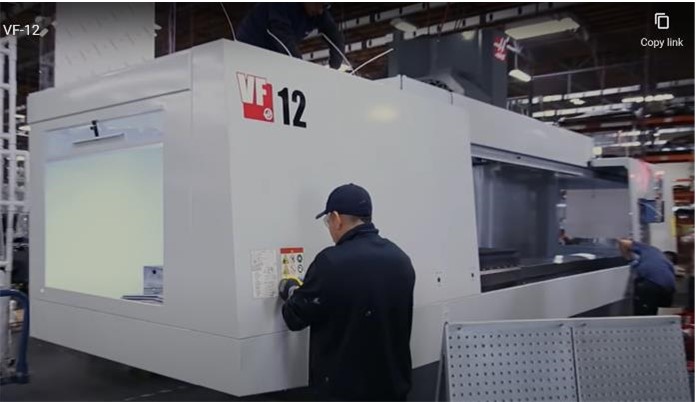
    Today, Taber Extrusions is proud of its recently added VF-12 CNC machining line and a complete offering of extruded aluminum components, value-added machining services, and raw material supply to the North American market. Adding these capabilities to a growing portfolio propels Taber into the future in a quest to continuously improve the quality and service we provide to our customers.

    Thank you for your continued support of Taber Extrusions, LLC. If you have any questions, please visit taberextrusions.com or contact one of Taber’s regional sales managers.

    Follow Taber Extrusions

    LINKEDIN: https://www.linkedin.com/company/taberextrusions/

    FACEBOOK: https://www.facebook.com/taberextrusions/

    TWITTER: https://twitter.com/taberextrusions

    29 07, 2021

    Taber Extrusions’ New Haas VF-12 CNC Machine is Ready to Serve You

    2022-03-07T19:21:02+00:00July 29th, 2021|

    A digital image of a VF-12 CNC machine made by Haas, which is a long rectangular box with four large connected viewing panels to allow operators to see the interior where a vertical column holds a spindle which is used to create aluminum extrusions.

    Taber Extrusions continues to invest in technologies that provide the broadest capabilities in the extrusion industry.  If the job can be done, it can be done at Taber.

    With this line of thought, Taber has added a new CNC Haas VF-12 vertical machining center to its operation. This VF series CNC machine allows our top engineers to design final extrusion shapes on specialized software, and then have them made inside of this “self-contained factory,” all in one precise and effective process.

    HAAS CNC machines are the cutting-edge of manufacturing prowess and contain several lifetime’s worth of know-how in material engineering, programming, software, and manufacturing. When a company in-bounds a Haas VF-12, it’s a guarantee that the company has hired and developed top talent who will operate these complex CNC machines, and without whom the full potential of the VF-40 could never be extracted.

    On the VF-12/40, the tools have travel lengths of 150 inches of an X-axis, 32 inches of Y, and 30 inches of Z. This means that long aluminum extrusions can be precisely made within the machine, cutting down on processing times and costs. With the internal, automatic tool change capacity (30+1), the VF-12 fits the bill for Taber’s focus on precision and effectiveness so customers can rest assured that if they can imagine it, we can form it for the best price.

    The 150 x 28-inch table can be loaded with up to 4000 pounds of base material that will be worked on by a high-power, direct-drive spindle equipped with programmable lubrication and coolant hoses. Everything from tool selection, to RPM, to feed rate and coolant flow can be altered to work on different alloys and acquire perfect aluminum extrusions.

    A close-up of the spindle and nozzles for lubrication and coolant of a CNC machine in full operation working on a metal “brick.”

    With in-house casting solutions, ultra-precision extrusion manufacturing, friction stir welding capacities, and a full range of hard and soft aluminum alloys, Taber continues to align itself as an industry leader in having the broadest available capabilities. The VF-12 propels Taber into the future with increased capabilities and the spirit of continued improvement in the service of customers in the automotive, defense, transportation, and marine industries, and beyond.


    About Taber Extrusions

    Taber is a minority-owned business enterprise which is AS 9100, NADCAP, and ABS certified. Founded in 1973, Taber Extrusions originally pioneered a process for extruding rectangular billet which enables the company to extrude solid profiles up to 31 inches wide or hollows up to 29 inches. Taber expanded with the purchase of an extrusion facility in Gulfport, MS, in 1995 which houses a cast house and two additional presses, and multiple expansions of value-added fabrication services. Taber continues to extrude billet in a wide range of alloys and sizes, including 7” billet molds, and has diversified its markets beyond military since its inception to include aerospace, automotive, marine, infrastructure, and sporting goods, among many others. For these markets, the company supplies extruded products in a variety of soft and hard alloys. In 2018, Taber added ultra-precision extrusions to their capabilities allowing them to further serve customers in electronics, computer, and medical industries. Recently, Taber was proud to announce yet another exciting launch into friction stir welding.

    11 01, 2021

    Industries That Use Friction Stir Welding

    2021-02-11T20:06:29+00:00January 11th, 2021|

    4 photographs: upper left – a high-speed white rail train with a red stripe zooming through a bright train station in a dynamic blur. Upper right – Fincantieri Marinette Marine Littoral Combat Ship plowing through a deep, dark ocean. Lower right – the view from a car roof as it speeds down the expressway towards a beautiful orange sunset. Lower left – A jet airplane high in the air creating stark white contrails against a clear turquoise sky.

    Amid the screech of saws cutting through metal, the beeping of forklifts, and the clank of metal components, workers in modern shipyards are producing some of the largest vessels in the world. A similar cacophony of sounds as those heard in a shipyard can be heard around the country in automotive, construction, aerospace, and transportation factories.

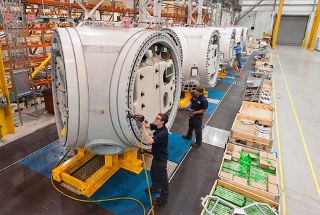
    Neatly organized assembly line workers with electric drills work on large metallic parts, bigger than the men working on them and resemble pvc pipe connectors with structures inside them. Behind them can be seen boxes with materials and in front of them are large metallic shelves for storage.

    Yet, one traditional sound associated with industrial manufacturing may soon go silent: the loud cracking, buzzing, electric sound associated with MIG welding. Sometimes likened to the sound bacon makes while frying, the sounds of MIG welding may eventually come to be completely replaced by the low buzzing of the spinning rotating tool used in Friction Stir Welding (FSW).

    As FSW becomes faster and more versatile, more industries than ever are moving toward this type of welding.

    The Benefits:

    FSW shows its high cast as a modern-form joining operation.

    A computer operator wearing blue, noise-canceling headphones with a small microphone attachment, sits working in front of 6 computer monitor stacked three on top of three. Behind the monitor is a large structure, which nose-cone to the Orion spaceship, it appears to be a green cylinder surrounded by white pipes and tubes.

    Unlike other forms of welding, FSW can be automated which increases precision and reduces manufacturing times. Manufacturing time is further decreased because FSW only takes one pass to weld metals and because there is no filler material nor melting, eliminating the need for post weld work, such as splatter cleaning.

    FSW is also hyper-modern by being more environmentally friendly and less wasteful (it does not have consumable parts) and not producing nauseous gases during the process.

    Other benefits of Friction Stir Welding include:

    • Increased strength (High tensile, fatigue & bend properties) ​
    • Improved sealing, completely void-free leak proof joints​
    • Reduced thermal distortion and shrinkage​
    • Improved repeatability​
    • The ability to join two different alloys​
    • Good for welding metals such as aluminum alloys that can be hard to weld
    • Cost effectivity

    The top users: Marine and Transportation

    Both of these gigantic industries – marine and transportation – incorporate FSW into their manufacturing operations. Public transportation alone has a market size of 75.6 billion dollars[i], and for shipbuilding, without considering the other sectors of the naval industry, the market size is 29 billion.

    Other key sectors are also keen on taking advantage of FSW. Below we highlight just one benefit FSW gives each of the following sectors:

    Air Transport:

    The Benefit: Weight Reduction

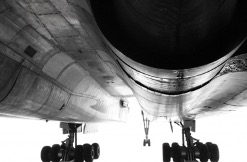
    The long underbelly of an airplane, which has two undulations for engines, and the landing gear down against a completely white backdrop giving the image a classic black & white feel.

    One of the simplest ways to increase efficiency in transport vehicles is by reducing weight. Marine, air, and land transport vehicles are foregoing rivets, clinch nuts, or traditional MIG or TIG welding in their manufacturing processes in favor of FSW which doesn’t add any weight to the structure.

    “Weight is one of the biggest challenges to aircraft manufacturers. Using FSW to join aluminum alloy stringers to skins for aircraft wings and fuselage structures will reduce weight by the removal of thousands of rivets, and any overlapping aluminum material. A leading aircraft manufacturer estimated that potential weight savings of approximately 2.2 lbs. per meter of FSW could be made.[i]”

    Aerospace:

    The benefit: Easy welding of hard-to-weld alloys.

    Space X’s Falcon 9 Flight 17's first stage attempting a controlled landing on the Autonomous Spaceport Drone Ship (ASDS) against an early evening sky as the fiery hot gasses are expelled toward the landing pad, creating a misty exhaust.

    Some types of difficult-to-weld aluminums can frustrate traditional welding attempts. In addition, joining dissimilar aluminum alloys has always been a challenge due to the different chemical and physical properties of the metal.

    Recently, aerospace companies have begun using FSW, a solid-state welding technique, to surpass these limitations. Today, some fuel tanks for spacecraft – made out of hard to weld aluminum alloys – are premanufactured using FSW[i].

    Marine Ships:

    The benefit: Better production habits, taking advantage of prefabrication, modular building, and assembly lines.

    A scene with a backdrop of green hills covered with small shrubs and trees. On a waterway, a large white cruise ship with one smoke stack creates white foam as its hull breaks through the water.

    As if a precursor of things to come, the first commercial use of FSW was on ships, specifically on hollow panels used for freezing fish on fishing boats.

    Today, many ships use friction stir welded floors, decks, and bulkheads. By using FSW, shipyards reduce the amount of work needed to be done, shifting the work to assembly-line factories[i]. Many parts can be manufactured in production lines improving safety, accuracy, and efficiency. Not only that, the industry can take advantage of the best pre-fab and modular practices that will further decrease production times.

    Today’s cruise ships are light weight structures which allow shipbuilders to build taller ships while keeping the center of gravity lower. Designed with all the heavy machinery at the bottom and lightweight aluminum materials at the top makes them inherently stable even as ship designs are getting taller and taller, demonstrating how sufficient safety can be achieved.

    Ultimately this translates to one thing: bigger ships mean MORE FUN!

    Whether it’s the freighters that carry the goods from our globalized economy, the military vessels that keep our oceans safe, or the cruise-lines that give families unforgettable vacations, all these sectors are seeing cost and efficiency saving with FSW.

    Trains:

    The benefit: Safety

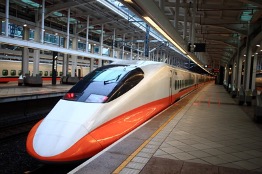
    a long, white high speed train with orange trim at the bottom. The train disappears into the distance as it rests at an empty platform with tile floors and a metal roof with a long row of lights and a skylight running down the middle on the roof.

    This industry in particular has honed in on the advantages FSW offers in crash safety. FSW is the best welding process for creating safe designs:

    “Modern passenger rail cars are increasingly produced from longitudinal aluminium extrusions with integrated stiffeners.

    This design approach can enhance the crashworthiness of vehicles […] Large aluminum extrusions with complicated shapes are [being used].[i]”

    Freight Trailers:

    The benefit: Stability

    Underneath a fiery red sky, a blue lorry and trailer travel along a paved highway road followed by a car while on the other side of the double yellow line, two empty lanes extend off into the distance.

    Anyone traveling behind an 18-wheeler on highways knows just how the wind and road shakes the trailers. By using FSW on the floorboard of their trailers, some freight companies argue that their trailers have become more stable than ever. “The aluminum extrusions become one at the molecular level, making the floor a single-piece of rigid aluminum.[i]” The end result? Less wear on the tires and better fuel mileage.

    Other industries:

    Other industries taking advantage of friction stir welding include the automotive, construction, and defense industries, among others. It has even been incorporated to make stronger snowmobiles and lighter coolant systems.

    The strong, lightweight welds that can be used on hard-to-weld alloys have every industry that uses aluminum and aluminum extrusions looking to gain a competitive advantage.

    Companies that have specialized in aluminum and aluminum extrusions are the front line for delivering FSW benefits to customers. For more information, please visit Taber Extrusions. With a long tradition of proving aluminum and aluminum extrusion solutions, Taber Extrusions provides companies all the advantages of FSW in one location.

    Industries Served by Taber Extrusions:


    • Distributors
    • Government | Military Contracts | Department of Defense
    • Aircraft | Aerospace
    • Marine | Shipbuilding
    • Infrastructure | Platforms | Decking
    • Electrical | Power Transmission | Electronics
    • Transportation
    • Sporting Goods
    • Industrial, Agricultural, and Mining Equipment
    • Structural Components
    • Specialty Architectural

    About Taber Extrusions: 

    Founded in 1973, Taber Extrusions originally pioneered a process for extruding rectangular billet which enables the company to extrude solid profiles up to 31 inches wide or hollows up to 29 inches. Taber expanded with the purchase of an extrusion facility in Gulfport, MS., in 1995 which houses a new state of the art cast house and two additional presses, micro-extrusion capabilities, and the fabrication area has been expanded multiple times.

    Taber continues to extrude billet in a wide range of alloys and sizes, and has diversified its markets beyond military since its inception to include aerospace, automotive, marine, infrastructure, and sporting goods, among many others. For these markets, the company supplies cast and extruded products in a variety of soft and hard alloys.

    Today, Taber Extrusions has completed the addition of in-house Friction Stir Welding capabilities, and carries on their offering of extruded aluminum components, value-added machining services and raw material supply to the North American market – making them a vertically integrated supplier of FSW panels and assemblies never before seen in North America.

    Follow Taber Extrusions

    LINKEDIN: https://www.linkedin.com/company/8843183/

    FACEBOOK: https://www.facebook.com/taberextrusions/

    TWITTER: https://twitter.com/taberextrusions

    Interested in becoming a part of the Taber Team?  Submit your resume to careers@taberextrusions.com.

    Become a customer today! Visit us or request a quote: https://taberextrusions.com or call us at (888) 985-5319.


    ______


    i https://www.ibisworld.com/industry-statistics/market-size/public-transportation-united-states

    ii https://www.twi-global.com/who-we-are/who-we-work-with/industry-sectors/aerospace/joining-of-airframe-structures/friction-stir-welding-of-airframe-structures

    iii https://www.twi-global.com/technical-knowledge/published-papers/industrialisation-of-friction-stir-welding-for-aerospace-structures-december-2001

    iv https://www.twi-global.com/who-we-are/who-we-work-with/industry-sectors/aerospace/joining-of-airframe-structures/friction-stir-welding-of-airframe-structures

    v https://www.twi-global.com/technical-knowledge/published-papers/creating-a-stir-in-the-rail-industry-november-2001

    vi https://www.ttnews.com/articles/fontaine-brings-friction-stir-welding-revolution-trailer


    ###

    17 02, 2020

    Taber: Advanced Friction Stir Welding Capabilities

    2020-02-17T19:42:22+00:00February 17th, 2020|

    Something big is happening at Taber: Friction Stir Welding has been added to their already extensive portfolio of capabilities. #TheShapeOfEndlessPossibilitiies #Taber #Aluminum Extrusions #FSW

    29 09, 2012

    Taber Extrusions LLC: Contract Advantages

    2020-04-03T21:57:47+00:00September 29th, 2012|

    Taber Extrusions LLC has a long history of working with defense contractors and their related sub-contractors. While we feel our experience, track record, and capabilities speak for themselves, it’s important to note two key designations that provide Taber’s clients with extra contract advantages.

    First, Taber is designated as a Small Business in accordance with the guidelines set forth by the United States Small Business Administration. This designation is available for confirmation by searching the System for Award Management website (www.sam.gov); both of Taber’s locations (Russellville, AR and Gulfport, MS) are individually listed.

    Taber’s track record of quality performance stands on its own. However, these additional designations offer some unique benefits — companies that use recognized suppliers can receive additional contract benefits from the government.

    For more information on how this works, feel free to contact Taber — we’re happy to help!

    Go to Top