

Key Takeaways:
- The hidden challenge in modern manufacturing, from medical devices to aerospace electronics, depend on aluminum components so small and precise that traditional presses can’t produce them, quietly limiting innovation.
- The technology redefining what’s possible is unlocking design freedom at microscopic scales, delivering tolerances, efficiency gains, and sustainability benefits.
- The precision advantage behind the industry’s next breakthroughs, micro-scale extrusion processes, advanced tooling, and vertically aligned production models, allows manufacturers to achieve consistent, ultra-detailed profiles.
Micropress for aluminum extrusion is transforming the manufacturing of ultra-precision aluminum profiles and intricate parts, a technology often overlooked in favor of larger presses. By enabling miniature extrusion production runs, micropresses push the boundaries of design and precision for sectors such as medical, aerospace, and high-performance electronics. This technology enhances accuracy, reduces waste, and allows greater design flexibility. Additionally, its integration within a vertically aligned manufacturing model demonstrates how complex industry demands can be met efficiently, shaping the future of precision aluminum extrusion.
Precision in the Smallest Details: Why Micropress Technology Matters
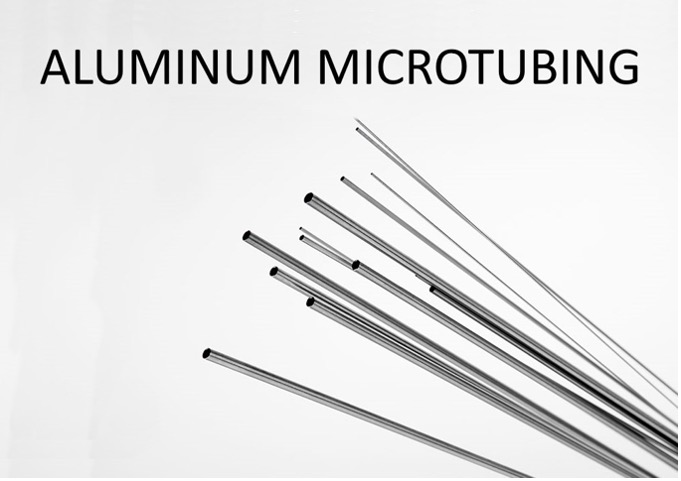
In aluminum extrusion, it is recognized that size does not always determine strength. Small press extrusion technology is often used to achieve what the largest presses cannot: dimensional accuracy and surface perfection on a micro scale. Profiles with wall thicknesses as thin as 0.020 inches and tolerances as tight as ±0.001 inches can be produced through the microextrusion process. For ultra-lightweight and compact applications, such as aluminum microtubing for medical catheters or precision electronics, these tolerances are critical to ensuring a perfect fit rather than a near match.
As a matter of fact, research published in Coatings by MDPI indicates that energy consumption is significantly reduced when aluminum micro-extrusion is optimized with advanced tool coatings. This highlights a broader trend in manufacturing, where precision is paired with sustainable efficiency. By producing smaller profiles with less material waste and fewer reworks, micropresses for aluminum extrusion are aligned with Industry 4.0 and circular manufacturing objectives.
Additionally, government-backed innovation projects, such as the National Renewable Energy Laboratory’s (NREL) Shear Assisted Processing and Extrusion (ShAPE), have shown that advanced extrusion techniques improve energy efficiency and metallurgical performance across aluminum alloys. These developments demonstrate that, even at the microscale, the technology contributes to the ongoing evolution toward sustainable, high-efficiency metalworking.
From Microextrusion Manufacturing to Advanced Applications
Precision microextrusion is used to enable complex geometries that were once considered unattainable. Through microextrusion manufacturing, intricate channels, ultra-thin fins, and internal cavities can be formed, which are essential for cooling systems, sensors, and lightweight structures. These capabilities are regarded as critical for next-generation products in aerospace, defense, electronics, and medical manufacturing.
For example, according to this study, microextrusion and microstructure evolution in 6063 aluminum alloy has been shown to enhance microstructural control, yielding higher strength-to-weight ratios and smoother surface finishes. In medical microextrusions, these benefits are translated into safer, more consistent components in devices where precision is life-critical.
Furthermore, aluminum microtubing is increasingly used in both fluid and electronic systems, driven by industries requiring exacting dimensions and seamless finishes at microscopic scales.
In every case, micropress for aluminum extrusion is employed alongside large presses, providing complementary precision and nuance. While high tonnage is relied upon to deliver volume, micropresses are used to deliver exacting detail and preci
Efficiency, Waste Reduction, and Sustainability
A cleaner, leaner manufacturing cycle is supported by micropress technology. Because excess material is minimized during the microextrusion process, less scrap is produced, and fewer secondary operations are required. It has been shown in studies on microextrusion of aluminum 6063 that forming forces and energy demand are reduced compared to conventional-scale processes (MDPI, 2020).
This efficiency is also extended beyond the press. Small-press extrusion technology is used to enable rapid prototyping and limited production runs, both of which are considered critical for innovation-driven sectors such as defense and medical device design. Tiny high-precision prototypes can be tested and validated by engineers before full production is scaled, allowing development cycles to be shortened and risk to be reduced.
Beyond energy and waste reduction, sustainable manufacturing goals are advanced by micropress systems through the conservation of raw materials while exceptional accuracy is achieved. In this way, both lower per-unit costs and smaller environmental footprints are delivered, benefits increasingly recognized by regulators and global markets through sustainability standards and fair production (CBSA aluminum measures).
Bringing Micropress Expertise to Modern Manufacturing
While much of the industry looks to massive extrusion capacity as a benchmark of progress, Taber Extrusions takes a balanced view, understanding that innovation also happens in the finer details. As outlined in their Ultra-Precision Extrusions® overview, Taber’s micropress capabilities are engineered to meet the tightest tolerances demanded by advanced OEMs.
Their microextrusion presses can produce complex, high-performance profiles with repeatable accuracy, while their vertical integration model ensures that every stage remains under strict quality control. For industries where precision and reliability are non-negotiable, Taber’s approach offers both.
For engineers or procurement specialists looking to explore precision extrusion options, Taber provides design guides and technical resources on aluminum profiles. It’s an excellent starting point for understanding available shapes, sizes, and specifications before beginning a new design. When precision sets the standard, micropress technology stands out as an advanced and intelligent solution, not merely a smaller tool.
Let’s discuss how microextrusion can advance your next project. Fill out the form below to connect with Taber Extrusions, a partner in aluminum innovation from large presses to the finest micro-scale solutions.