

Key Takeaways:
- Large structural aluminum extrusions improve durability and readiness by reducing welds, minimizing fatigue points, and enhancing corrosion resistance in defense and naval applications.
- Press size and container capacity determine feasibility, enabling wide, thick-wall profiles that eliminate multi-part assemblies and improve structural continuity.
- Compliance, traceability, and domestic production are critical, as government infrastructure programs require controlled metallurgy, documentation, and supply chain resilience.
Large aluminum extrusions support defense, naval, and government infrastructure programs that operate under heavy loads and harsh environments. Over long service cycles, structural reliability must be maintained. These extrusions combine mechanical strength with corrosion resistance in a manufacturable form. However, extrusion size, wall thickness, and production capacity must align with military and naval requirements. As a result, press capability and profile scale directly influence structural performance and mission readiness.
Why Structural Aluminum Extrusions Matter in Defense and Government Infrastructure
Structural aluminum profiles are essential in defense manufacturing, reducing part count and eliminating unnecessary welds. Consolidation improves structural continuity and enhances fatigue performance, critical for armored vehicles and modular defense facilities.
Moreover, corrosion resistance is crucial for naval aluminum extrusions and coastal installations. Long-term resistance to saltwater and atmospheric exposure is provided by commonly used aluminum alloys. Standards for naval engineering emphasize corrosion control, and maintenance cycles and fleet readiness are directly affected by material durability, as noted in the U.S. Government Shipbuilding Industry report.
Aluminum’s role in defense is also codified in federal policy. Extrusions are identified as essential to military systems and industrial resilience in the Federal Register report on aluminum imports, and domestic production capacity is highlighted in the Department of Defense’s FY20 Industrial Capabilities Report. Integrated features, such as mounting channels and load paths, are built into structural profiles. In response, reliability is increased, fabrication complexity is reduced, and government contract requirements for consistency and traceability are met.
Thick-Wall and Wide Structural Aluminum Profiles in Critical Applications
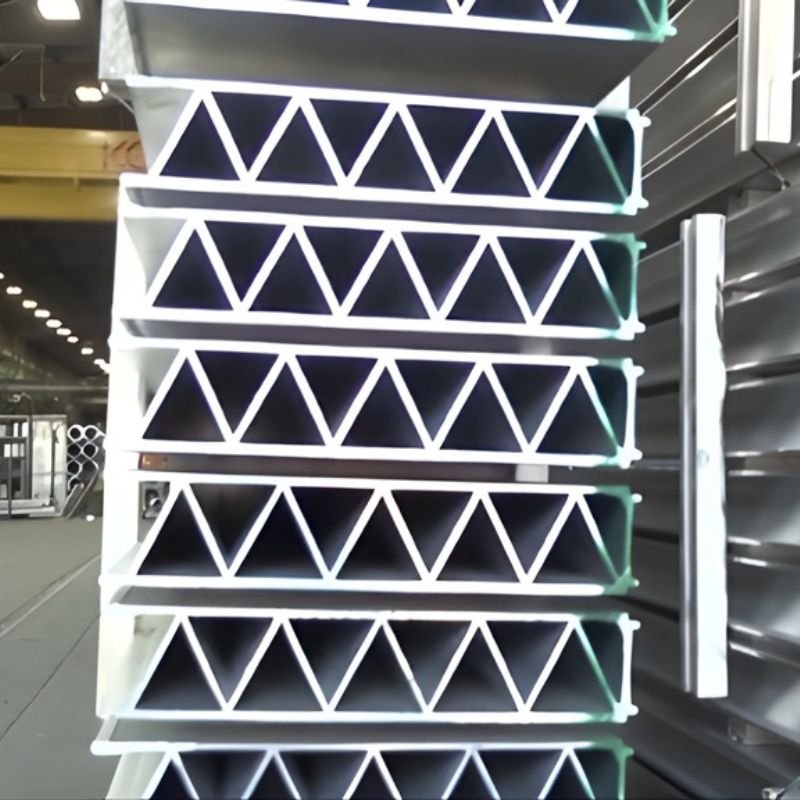
Thick-wall aluminum extrusions are needed when stiffness and load-bearing capacity must be achieved without secondary reinforcement. Defense platforms and infrastructure systems face dynamic loads and thermal cycling. Using thick-wall profiles ensures dimensional stability is maintained.
Similarly, wide-profile aluminum extrusions provide large-scale structural support. In shipbuilding, broad sections allow continuous deck beams and superstructure components to be produced with fewer joints. Assembly is streamlined, improving structural continuity and reducing maintenance risk. Material continuity is emphasized in government shipbuilding standards, especially for vessels with long service lives.
Research on alloys such as 6061 shows that properly processed extrusions retain mechanical integrity under demanding conditions. In fact, a peer-reviewed study confirmed that performance is maintained even under environmental stress. Consequently, wide aluminum profiles combine structural reliability with manufacturability, reducing lifecycle costs for infrastructure and marine applications.
Why Press Size and Container Capacity Define Infrastructure Readiness
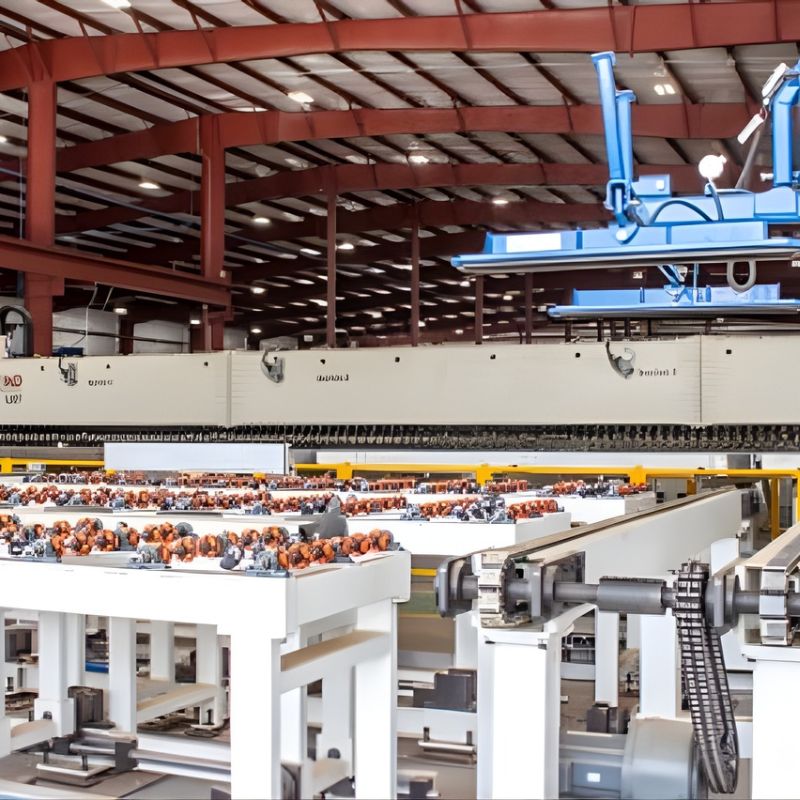
Only select extrusion facilities can produce structural aluminum profiles at infrastructure scale. Press size and container capacity set the limits for maximum profile width and alloy consistency in a single extrusion.
For example, a 16-inch press with 20-inch and 28-inch containers allows wide structural members and thick-wall profiles to be produced. These dimensions often exceed standard commercial equipment limits. Without sufficient press tonnage, multi-part assemblies must be used, which adds fabrication steps and raises quality risks. Structural-scale extrusion, however, ensures members are dimensionally stable as-extruded.
Additionally, when paired with integrated aluminum fabrication services, extrusions become complete systems. Advanced joining techniques, such as friction stir welding, are employed to create high-strength joints that surpass traditional fusion welding. In many defense applications, performance advantages of these methods have been documented in industry publications.
Compliance, Traceability, and Domestic Manufacturing Alignment
Aluminum extrusions for government contracts must comply with strict standards for material traceability and domestic sourcing. For structural-scale profiles, process control becomes even more critical, and profile size and mechanical consistency must be maintained across heavy cross-sections.
Congressional reporting on the defense industrial base highlight aluminum extrusions as a key element of domestic manufacturing. National security relies on manufacturers capable of delivering precision-engineered components within U.S. borders.
Therefore, procurement professionals should assess extrusion size capabilities and integrated production systems, including billet casting and quality management. Suppliers that control the full production chain help minimize supply risks for long-term government infrastructure programs.
What Infrastructure Buyers Should Evaluate
When sourcing large aluminum extrusions for military, naval, or government infrastructure applications, decision-makers should assess:
- Maximum press size and container capacity.
- Ability to produce thick-wall aluminum extrusions.
- Alloy range and metallurgical control.
- Integrated aluminum fabrication services.
- Experience with defense and infrastructure programs.
- Compliance with government contract documentation standards.
These criteria define manufacturing capability and long-term infrastructure performance.
Why Taber Extrusions Fits These Requirements
Where does Taber Extrusions fit in? The company supports defense and government infrastructure programs by producing structural aluminum extrusions at its Russellville, Arkansas facility. Equipped with 16-inch press capacity and 20-inch and 28-inch containers, the operation can produce wide sections and thick-walled components that meet infrastructure-scale requirements.
Taber operates an integrated production platform that features an aluminum casthouse, extrusion operations, and friction-stir welding capabilities. Vertical integration supports alloy control and compliance documentation across defense aluminum manufacturing programs.
Stakeholders can review Taber’s full capabilities overview to understand available extrusion sizes and alloys: https://taberextrusions.com/taber-extrusions-capabilities/
Looking for large aluminum extrusions built for government, military, or marine applications? Work with an extrusion partner equipped to handle wide profiles, thick walls, and demanding compliance requirements without compromising precision or delivery.
Fill out the form below to get started with Taber Extrusions.