17 02, 2026

When Medical Meets Military Needs, Microextrusions Matter
2026-02-24T22:57:54+00:00February 17th, 2026|

Promotional graphic featuring metal microextrusions as a textured backdrop, overlaid with icons representing medical and military sectors.

Key Takeaways:

  • Miniaturization and mobility demand uncompromising performance. Medical and defense applications require ultra-precise, lightweight components that can withstand extreme conditions without sacrificing reliability.
  • Microextrusions solve the strength-to-size challenge. Precision profiles made from defense-grade aluminum and high-strength alloys deliver the rigidity, durability, and tight tolerances needed in mission-critical environments.
  • Taber delivers compliant, high precision microextrusion solutions. With decades of experience and full vertical integration, Taber supports both sectors with traceable materials, strict tolerances, and MIL-SPEC and medical-grade compliance.

Microextrusions sit at the intersection of medical and military innovation, as the demands of battlefield medicine are often used to define the design parameters of advanced medical devices. Consequently, precision tubing and complex profiles are required to meet strict weight-reduction goals and micron-level tolerances. In both operating rooms and forward aid stations, reliability is treated as the primary specification. As a result, defense-grade materials and military aluminum are used to ensure structural integrity and consistent performance. This article, therefore, examines how precision extrusions and high-strength alloys support applications ranging from field surgery kits to ruggedized sensors in harsh operating environments.

Bridging Medical and Military Requirements

Microextrusions are used to meet simultaneous demands for dimensional reduction and structural rigidity as strict tolerances are enforced in both medical and military environments. In addition to facilitating miniaturization, components must be engineered to withstand thermal cycling, vibration, and corrosive exposure. As mobility becomes increasingly critical in modern field operations, lighter and more compact configurations are required without a loss in durability.

Moreover, Department of Defense directives prioritize lightweight, high-performance materials to reduce personnel burden and increase system reliability. For this reason, military aluminum is selected for its superior strength-to-weight ratio, and precision extrusions are widely adopted in weapon systems, portable medical kits, and sensor housings.

Within medical manufacturing, microextrusions are utilized as essential structural elements in endoscopic instruments and heat-exchange systems. While polymers are typically used for flexible internal tubing, aluminum microextrusions are implemented to provide rigid, lightweight frameworks for handheld surgical tools. Notably, research published by the National Institutes of Health indicates growing demand for smaller interventional tools, which in turn requires processes capable of producing thin walls without compromising tensile strength.

Finally, defense-grade materials once limited to combat applications are increasingly incorporated into civilian healthcare systems. Ruggedized sensor housings are being adapted for emergency response equipment, enabled by microextrusion processes that support tighter radii and consistent tolerances at scale, thereby matching the durability expected of military hardware.

Microextrusions in Battlefield Medicine and Field Surgery

Battlefield medicine is governed by mobility, as medical kits are required to remain compact, transportable, and resilient under significant logistical strain. In alignment with Department of Defense priorities, portability and modular construction are emphasized for dispersed operations; therefore, microextrusions are relied upon to meet these specifications.

Through microextrusion processes, precision tubing and profiles are produced to maintain the structural integrity of fluid pumps, medication manifolds, and compact sterilization units. Simultaneously, aluminum micro-profiles are used to frame diagnostic enclosures and reinforce handheld medical tools without increasing payload. Beyond this, these profiles are incorporated into field robotics, UAV-mounted sensors, and point-of-care diagnostic units, allowing effective triage in austere environments.

In evacuation equipment design, microextruded components are applied to enhance portability and deployment speed. By means of thinner structural elements with higher stiffness-to-weight ratios, litter frames, diagnostic docks, and stabilization tools are made lighter and faster to deploy.

According to battlefield trauma studies, dependable fluid management systems are critical to survivability in forward care stations. Microextruded aluminum components are implemented to reduce system footprints while maintaining durability. As techniques in field surgery continue to advance, greater demand is placed on ultra-thin, rigid structural tubing for portable medical equipment.
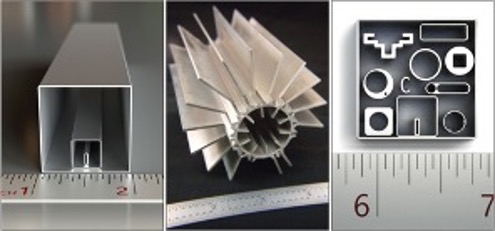
Cross-Sector Innovation: Reciprocal Engineering Advances

Technology transfer moves in both directions between the medical and defense sectors. First, strict tolerance requirements in medical device manufacturing push defense suppliers to refine their extrusion capabilities. Conversely, the ruggedness demanded by military hardware directly shapes the design standards of hospital-grade equipment. As a result, performance expectations continue to rise across both industries.

Prominent examples of this cross-sector application can be seen in:

  • Ruggedized sensors originally developed for battlefield diagnostics now used in high-volume civilian emergency rooms
  • Field surgery kits built with military aluminum alloys first specified for aerospace applications to reduce weight
  • Defense R&D programs adopting medical micro-tubing flow-control standards for precision fluid delivery systems
  • Portable imaging devices designed around extruded framing architectures modeled after field sensor housings


Federal initiatives further accelerate this integration by strengthening materials supply chains and advancing lightweight structural systems in defense manufacturing. In turn, the medical sector benefits from improved access to reliable, traceable, high-precision defense-grade materials.

At the same time, sustainability mandates continue to align both industries. Enhanced extrusion efficiency reduces scrap, lowers energy use, and decreases long-term costs. Ultimately, medical OEMs minimize material waste while defense programs gain logistical efficiency and extended equipment lifecycles.

Why Taber Extrusions Supports Both Sectors

Taber Extrusions has decades of manufacturing experience, delivering ultra-precise aluminum extrusions and micro-aluminum extrusions for high-stakes applications. This dual experience supports engineers who require strict geometric tolerances, supply chain stability, and absolute material traceability.
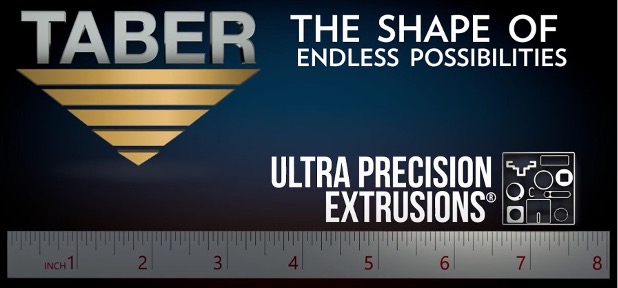
Promotional graphic featuring the Taber logo, a ruler for scale, and a variety of precision-shaped aluminum profiles. Selected to emphasize the dimensional accuracy and design flexibility of microextrusions in ultra-precision manufacturing.

For programs requiring microextrusion technology that can withstand extreme operational stress, Taber offers full vertical integration. In fact, the engineering team actively navigates the complex compliance landscapes of regulated medical environments and military specifications (MIL-SPEC), ensuring they incorporate these standards into their process.

Taber defines reliability as a quantifiable manufacturing metric. For detailed specifications regarding extrusion sizes, alloy options, and fabrication tolerances, review their full capability guide or contact an engineer today to discuss program requirements.

Ready to reduce size without sacrificing strength? Request a custom microextrusion quote below to get started with Taber!

Request A Quote

    CONTACT INFORMATION

    YOUR PROJECT NEEDS

    Please specify extrusion alloy and length below

    If you have design files for extrusion or FSW please upload below

    Excepted file formats: jpg, pdf, png.

    Please specify FSW alloy class, welding type and panel dimensions below.

    Alloy*

    Welding Type*

    Select Billet Size *

    ANY CUI OR FCI DATA IS STRICTLY PROHIBITED FROM BEING UPLOADED DIRECTLY THROUGH THIS FORM. IF YOU NEED TO SHARE ANY SENSITIVE DATA PLEASE CONTACT A TABER SALES TEAM MEMBER AND THEY WILL PROVIDE A SECURE METHOD OF SHARING ANY SENSITIVE INFORMATION.

    3 04, 2022

    Our Top Aluminum Microextrusion Blogs of All Time

    2022-07-08T17:14:48+00:00April 3rd, 2022|

    Blue shaded gradient over a photograph of a bridge tower and its suspension cables on the left and the U.S. flag on the right. Taber’s logo is at the very top and beneath it are the words, “The Shape of Endless Possibilities.” The logos designating minority-owned business enterprise (ISO 9001, AS 9100, NADCAP, and ABS-certified) are across the bottom in white print.

    A lot has been said about the future of nano and microtechnology. This area of aluminum extrusion, which focuses on creating ever smaller products, promises solutions to age-old problems. On the silver screen, sci-fi productions have shown nano bots crawling into humans as a futuristic form of medicine. The Terminator film franchise explored the military potential of nano technology in a self-healing liquid metal of robots. Yet, examples like these are not actually all that farfetched. From self-healing metal to invasive medicine, a whole new realm of possibilities has been opened by tiny manufacturing.

    At Taber, we are part of this revolution with our microextrusions. Like conventional aluminum extrusions, microextrusions are pushed through a die. Unlike conventional extrusions, the entire extrusion process is performed at a submillimeter level. In other words, the resulting product’s cross section can fit through a 1-millimeter square. Our microextrusions have found application in a wide range of industries, which we have previously explored in a series of articles on these miniscule creations.

    1) Taber: Microextrusions for Defense and Aerospace

    6 military jets flying across a blue sky above two military vehicles (tank and a ship) facing away from each other. The words “Taber: Microextrusions for Defense and Aerospace” are in black above the ship.

    Taber Extrusions has experienced many evolutions since its founding in the early 1970s. Taber pioneered a process for extruding rectangular billet of solid profiles up to 31 inches wide or hollows up to 29 inches. Since then, it increased Taber’s billet capacity, alloy range, and ability to reuse materials. Within the last decade, fabrication capabilities were upgraded, friction stir welding was added, and of course, microextrusions became an offering. Lightweight, strong, and widely functional, microextrusions are perfect for military and aerospace components. Interior aircraft systems, AC condensers, communication systems, and firearm components all use microextrusions. Read more about it here.

    2) Process, Benefits, and Examples of Medical Microextrusions

    A darkened photograph of a medical room with a bunch of white medical appliances. The words, “Process, Benefits, and Examples of Medical Microextrusions” are positioned on top of the photo in white.

    You don’t have to go in for a colonoscopy to understand the benefit of smaller medical tools. The microextrusions used in medicine include components that overwhelmingly support cardio- and neurovascular procedures, drug delivery, IV procedures, and other procedures that require work on a micro level. An added challenge for medical manufacturing is that conventional extrusion machinery is not quite precise enough, so it calls for special machinery. Medical microextrusions are created at a very slow rate to maintain the physical properties of the delicate material and create ultra-precise extrusions.

    3) Microextrusions in the Consumer Electronics Sector

    A lengthwise photograph of an open computer motherboard with all the different ports and circuits exposed, many of which are made of aluminum microextrusions. In the center of the photo are the words, “Microextrusions in the Consumer Electronics Sector” in white text.

    The most widespread and easy-to-spot place where miniature extrusions are making a difference in consumer products is in electronic products. Portable, durable, and complex, computational devises like laptops and smartphones have increasingly smaller parts. From enclosures to motherboards and LED profile bays, microextrusions have become a fundamental part of electronic devices. This article outlines more aspects of consumer electronics that use precision aluminum extrusions in their design.

    Often used in medical and surgical procedures, microtubing is a highly-valued type of microextrusion. Aluminum can provide three times as much volume per pound as other metal products – so when too much weight is detrimental, aluminum is an obvious choice. Aluminum is also anti-corrosive, making it an ideal material for many types of environments.

    A metal ruler lying flat on the surface of a table showing a length of 8 inches, while several aluminum microtubes are suspended above the ruler and the words “Aluminum Microtubing Rapidly Developing in Sync: Microextrusions” are in black above the ruler and on top of the tubes.
    Blue shaded gradient over a photograph of a bridge tower and its suspension cables on the left and the U.S. flag on the right. Taber’s logo is at the very top and beneath it are the words, “The Shape of Endless Possibilities.” The logos designating minority-owned business enterprise (ISO 9001, AS 9100, NADCAP, and ABS-certified) are across the bottom in white print.

    This last blog outlines Taber’s capabilities, ranging from friction stir welding to microextrusions. Through Taber’s unwavering commitment, present and future customers can expect expanded extrusion solutions, programs, and services in the coming years… and find endless possibilities. Read more about it here.

    Despite its broad application in today’s products, the potential of microextrusions is still just being explored. As miniature aluminum extrusions become smaller and more precise, industries will continue to find new ways to create futuristic solutions to modern problems. Taber offers the highest levels of quality and the broadest range of capabilities in the industry, designed to be ready for whatever design tomorrow brings.


    Taber Extrusions: Summary

    Founded in 1973, Taber Extrusions originally pioneered a process for extruding rectangular billet, enabling the company to extrude extra-large aluminum extrusion profiles up to 31 inches wide or hollows up to 29 inches. Taber expanded with the purchase of an extrusion facility in Gulfport, MS, in 1995, which houses a state-of-the-art cast house and two additional presses, micro-extrusion capabilities, and the fabrication area has been expanded multiple times.

    Taber continues to extrude billet in a wide range of alloys and sizes and has diversified its markets beyond the military since its inception to include aerospace, automotive, marine, infrastructure, and sporting goods, among many others. With in-house casting solutions, ultra-precision extrusion manufacturing, friction stir welding capacities, and a full range of hard and soft aluminum alloys, Taber continues to align itself as an industry leader in having the broadest available capabilities.

    Today, Taber Extrusions is proud of its recently added VF-12 CNC machining line and a complete offering of extruded aluminum components, value-added machining services, and raw material supply to the North American market. Adding these capabilities to a growing portfolio propels Taber into the future in a quest to continuously improve the quality and service we provide to our customers.

    Thank you for your continued support of Taber Extrusions, LLC. If you have any questions, please visit taberextrusions.com or contact one of Taber’s regional sales managers.

    Follow Taber Extrusions

    LINKEDIN: https://www.linkedin.com/company/taberextrusions/

    FACEBOOK: https://www.facebook.com/taberextrusions/

    TWITTER: https://twitter.com/taberextrusions

    4 12, 2020

    Process, Benefits, and Examples of Medical Microextrusions

    2020-12-04T01:28:40+00:00December 4th, 2020|

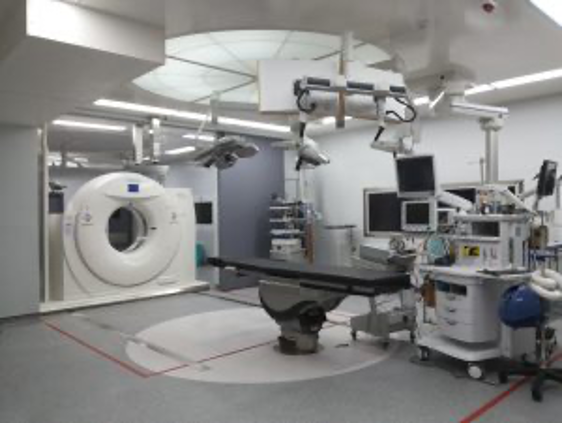
    A brightly lit medical office containing an MRI machine and various other high tech medical testing equipment.

    A SPECIAL NOTE ON VIRUSES AND BACTERIA IN RESPECT TO ALUMINUM SURFACES:


    At this time of extreme health concern, specifiers must carefully consider how material choices may impact the spread of viruses, bacteria and infectious diseases in healthcare facilities and other public spaces.

    While much about the coronavirus is still under investigation, research has demonstrated significant differences in the longevity of viruses on various surfaces, and there are a variety of treatments that appear to further reduce the growth and survival of viruses and bacteria, enhancing the surface’s ability to destroy pathogens.

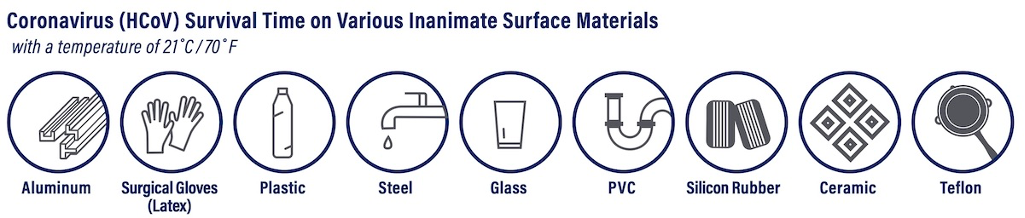
    A major research study published in the Journal of Hospital Infection tested human coronavirus strains for longevity on various material surfaces and found that the virus lasted only two to eight hours on aluminum, but days on many other materials.

    We encourage you to access the full white paper on this topic which can be found at AEC.org.

    An infographic consisting of icons depicting various surface material (aluminum, surgical gloves, plastic, steel, glass, PVC, silicon rubber, ceramic, and Teflon.) with the headline, “Coronavirus (HCoV)) Survival Time on Various Inanimate Materials”

    Medical Microextrusions: Process, Benefits, and Examples

    Advancements in medical microextrusions technology in recent years have allowed manufacturers to create high quality products for the world of medical OEMs. With a range of dimensions that can reach as small as 0.024 in., OD with up to 6 lumens, and an ID range that can reach 0.003, it’s no surprise that many OEMs are turning to companies like Taber Extrusions that can provide products within these parameters. (Source: medicaldesignbriefs.com)

    In fact, micro-sized medical components are quickly becoming crucial to modern hospital safety and cost-efficiency. Whether it be for micro-tubing or micro sized components, the microextrusion process provides a number of benefits to engineers, OEMs, and patients.

    In the quest to create higher quality medical devices, companies are looking to enhance existing products (including catheters and precise flow restrictors) through miniaturization, while ultimately reducing the costs of production.

    Medical products that utilize microextrusion technology overwhelmingly support cardio-and-neurovascular procedures, drug delivery, IV procedures, and other procedures that require work on a micro level.

    By minimizing the impact of invasive procedures, the medical industry can reduce complications, make procedures faster and more efficient, and ultimately reduce patient in-time and overall healthcare costs.

    Closeup angle of a bundle of medical microextrusions with a blue overlay on the photo.

    WHAT’S THE MICROEXTRUSION PROCESS LIKE?

    Manufacturing the miniature components used in a medical microextrusion device poses a unique challenge for microextrusion providers. These components cannot be created using conventional extrusion machinery. Instead, they require precise, state-of-the-art equipment that allows for a high degree of precision and control over the process, as well as Engineers and technicians that possess deep knowledge of both the material and the process itself.

    However, at its core, the process is similar to that of regular extrusion.

    The material is either pushed forward (direct) or pulled through (indirect) a die orifice to create the shape required. Unlike macro-level extrusions, microextrusions are extruded at a very slow rate to maintain the physical properties of materials that are often delicate.

    Done properly, microextrusions can create end products that have complex cross sections and preserved chemical properties.

    BENEFITS TO OEMs

    Lower Time-to-Market

    In years previous, OEM’s requests for medical products would require them to re-outfit their existing extrusion machines, which would take more time and far less efficient. With many manufacturers outfitting themselves with microextrusion machinery, the time required to create the product is drastically reduced.

    Lower Costs

    As stated above, microextrusions can achieve their desired performance at fractions of the cost, due to the lower cost in materials that are used. As the development of the technology continues to improve, so to do the devices that are used in tandem with them. (i.e fibre optic cable, sensors, stints, etc.)

    Psychological benefit to patients

    A patient’s positive mental state can be a great asset to their recovery. Waning are the days of large, invasive medical devices that can cause patients discomfort. Smaller, less intrusive devices can go a long way. (source: Medical Plastic News)

    POTENTIAL APPLICATIONS

    • Infant/pediatric care
    • Heart leads
    • Neurological
    • Vascular Surgery
    • Catheters
    • Radiology
    • Urology
    • Oncology

    About Taber Extrusions

    Founded in 1973, Taber Extrusions originally pioneered a process for extruding rectangular billet which enables the company to extrude solid profiles up to 31 inches wide or hollows up to 29 inches. Taber expanded with the purchase of an extrusion facility in Gulfport, MS., in 1995 which houses a new state of the art cast house and two additional presses, micro-extrusion capabilities, and the fabrication area has been expanded multiple times.

    Taber continues to extrude billet in a wide range of alloys and sizes, and has diversified its markets beyond military since its inception to include aerospace, automotive, marine, infrastructure, and sporting goods, among many others. For these markets, the company supplies cast and extruded products in a variety of soft and hard alloys.

    Today, Taber Extrusions has completed the addition of in-house Friction Stir Welding capabilities, and carries on their offering of extruded aluminum components, value-added machining services and raw material supply to the North American market – making them a vertically integrated supplier of FSW panels and assemblies never before seen in North America.

    Follow Taber Extrusions

    LINKEDIN: https://www.linkedin.com/company/8843183/

    FACEBOOK: https://www.facebook.com/taberextrusions/

    TWITTER: https://twitter.com/taberextrusions

    Interested in becoming a part of the Taber Team?  Submit your resume to careers@taberextrusions.com.

    Become a customer today! Visit us or request a quote: https://taberextrusions.com or call us at (888) 985-5319.

    22 06, 2018

    Medical Microextrusions | Process, Benefits, and Examples

    2018-06-22T22:04:25+00:00June 22nd, 2018|

    medical microextrusions

    Advancements in medical microextrusions technology in recent years have allowed manufacturers to create high quality products for the world of medical OEMs. With a range of dimensions that can reach as small as 0.024 in., OD with up to 6 lumens, and an ID range that can reach 0.003, it’s no surprise that many OEMs are turning to companies like Taber Extrusions that can provide products within these parameters. (Source: medicaldesignbriefs.com)

    In fact, micro-sized medical components are quickly becoming crucial to modern hospital safety and cost-efficiency. Whether it be for micro-tubing or micro sized components, the microextrusion process provides a number of benefits to engineers, OEMs, and patients.

    In the quest to create higher quality medical devices, companies are looking to enhance existing products (including catheters and precise flow restrictors) through miniaturization, while ultimately reducing the costs of production.

    Medical products that utilize microextrusion technology overwhelmingly support cardio-and-neurovascular procedures, drug delivery, IV procedures, and other procedures that require work on a micro level.

    By minimizing the impact of invasive procedures, the medical industry can reduce complications, make procedures faster and more efficient, and ultimately reduce patient in-time and overall healthcare costs.

    WHAT’S THE MICROEXTRUSION PROCESS LIKE?

    Manufacturing the miniature components used in a medical microextrusion device poses a unique challenge for microextrusion providers. These components cannot be created using conventional extrusion machinery. Instead, they require precise, state-of-the-art equipment that allows for a high degree of precision and control over the process, as well as Engineers and technicians that possess deep knowledge of both the material and the process itself.

    However, at its core, the process is similar to that of regular extrusion.

    The material is either pushed forward (direct) or pulled through (indirect) a die orifice to create the shape required. Unlike macro-level extrusions, microextrusions are extruded at a very slow rate to maintain the physical properties of materials that are often delicate.

    Done properly, microextrusions can create end products that have complex cross sections and preserved chemical properties.

    BENEFITS TO OEMs

    Lower Time-to-Market

    In years previous, OEM’s requests for medical products would require them to re-outfit their existing extrusion machines, which would take more time and far less efficient. With many manufacturers outfitting themselves with microextrusion machinery, the time required to create the product is drastically reduced.

    Lower Costs

    As stated above, microextrusions can achieve their desired performance at fractions of the cost, due to the lower cost in materials that are used. As the development of the technology continues to improve, so to do the devices that are used in tandem with them. (i.e fibre optic cable, sensors, stints, etc.)

    Psychological benefit to patients

    A patient’s positive mental state can be a great asset to their recovery. Waning are the days of large, invasive medical devices that can cause patients discomfort. Smaller, less intrusive devices can go a long way. (source: Medical Plastic News)

    POTENTIAL APPLICATIONS

    • Infant/paediatric care
    • Heart leads
    • Neurological
    • Vascular Surgery
    • Catheters
    • Radiology
    • Urology
    • Oncology

    About Taber Extrusions

    Founded in 1973, Taber Extrusions originally pioneered a process for extruding rectangular billet which enables the company to extrude solid profiles up to 31 inches wide or hollows up to 29 inches. Taber expanded with the purchase of an extrusion facility in Gulfport, MS in 1995 which houses a new state of the art cast house, two additional presses, and a fabrication area that has been expanded multiple times. Taber continues to extrude billet in a wide range of alloys. and sizes.

    Taber Extrusions has recently purchased the Exact Manufacturing division of Lou-Rich, Inc. which will now expand Taber’s capabilities to include ultra-precision aluminum extrusions®.

    Today, Taber Extrusions is proud to announce expanded capabilities to include aluminum ultra-precision extrusions®.

    Follow Taber Extrusions

    LINKEDIN: https://www.linkedin.com/company/8843183/

    FACEBOOK: https://www.facebook.com/taberextrusions/

    TWITTER: https://twitter.com/taberextrusions

    Interested in becoming a part of the Taber Team?  Submit your resume to careers@taberextrusions.com.

    Go to Top